
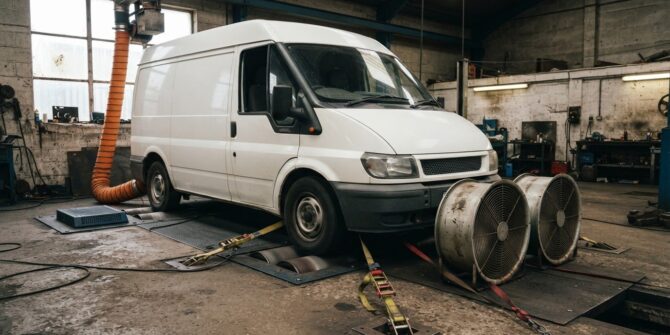
More diesel horsepower comes from balancing fuel delivery, turbocharger capacity and intake airflow, then matching torque and RPM to how you drive. If you’re asking how to get more horsepower from a diesel engine, the answer isn’t simply to add fuel: the engine needs enough air to burn it effectively and enough power to maintain speed under load.
It’s natural to focus on acceleration or peak power, but a setup that pulls strongly at low RPM may suit towing better than one tuned for speed. Horsepower also helps maintain momentum on longer, faster journeys, where aerodynamic drag places a steady demand on the engine.
This guide explains how injector condition, turbo matching and clean intake airflow affect output, and how torque and RPM shape the result. It also covers sustained speed, so you can identify which factors matter most for your diesel’s intended use.
Key Takeaways
- Check injector condition first: uneven fuel delivery can hold back engine output.
- Match turbo capacity to the engine and its intended use, rather than assuming a larger unit is always better.
- Keep intake airflow in mind, as a restricted filter or intake can limit performance.
- Consider torque and RPM together: towing needs can call for a different power delivery from sustained faster driving.
- A Stage 1 Performance Remap from Dynogen Remapping Solutions can be a next step when you want to explore ECU tuning for improved performance.
1. Fuel injector condition and spray patterns
Start with the fuel injectors: extra fuel only helps when each cylinder receives it correctly. A clogged injector may deliver too little fuel, while a leaking one can disrupt combustion. Either fault can reduce output before any performance modification. Uneven spray can also make the engine hesitate under acceleration or produce inconsistent power. Look for rough running, smoke or changes in responsiveness, then diagnose the cause before altering the fuel map.
On a common-rail diesel, the ECU controls injection timing, pressure and duration. These settings determine when fuel enters the cylinder, how much is delivered and how it is atomised. A remap changes calibration parameters, so injector condition matters: adjusting the map won’t repair a worn or blocked component. If there’s a fault, restore correct spray and fuel delivery first. New or reconditioned injectors can restore the intended pattern when replacement is appropriate.
Keep the throttle body distinct from the injectors. Injectors meter fuel; a throttle body controls airflow in engines equipped with one. It cannot replace accurate fuel delivery, and changing it won’t correct a poor injector spray pattern. For example, if a restricted injector makes the engine run unevenly, the useful next step is diagnosis and repair, not simply adding fuel with an aftermarket tuner.
Are diesel engine remaps legal in the UK, and do they affect MOT emissions tests? A remap must leave the vehicle compliant with applicable roadworthiness and emissions requirements. Changes that defeat emissions controls can create compliance problems. An MOT emissions result depends on the vehicle’s condition and the applicable test, so a performance map is not a way around it.
Do I need to tell my insurer or DVLA about a diesel performance modification? Tell your insurer, as the modification may affect your policy terms. Notify DVLA if the work changes vehicle details recorded on the registration, rather than assuming every ECU calibration needs a separate update.
What are the safest ways to increase horsepower in a diesel engine? Start with a healthy engine, correctly functioning injectors and an ECU calibration suited to the hardware. Avoid increasing fuel delivery without balancing the available air, as this can contribute to smoke and particulate emissions.
How can I increase diesel engine power without reducing reliability? Address existing faults first, then make measured calibration changes that respect the engine’s limits. Added power can increase fuel consumption and wear, so the map should suit how you use the vehicle rather than chase peak output alone.
How much can a diesel remap improve or worsen fuel economy? There’s no single figure: fuel use depends on the calibration, engine condition and driving style. A driver who often uses the extra power may use more fuel; an economy-focused map prioritises efficiency over peak horsepower.
2. Matching a performance turbocharger to the engine
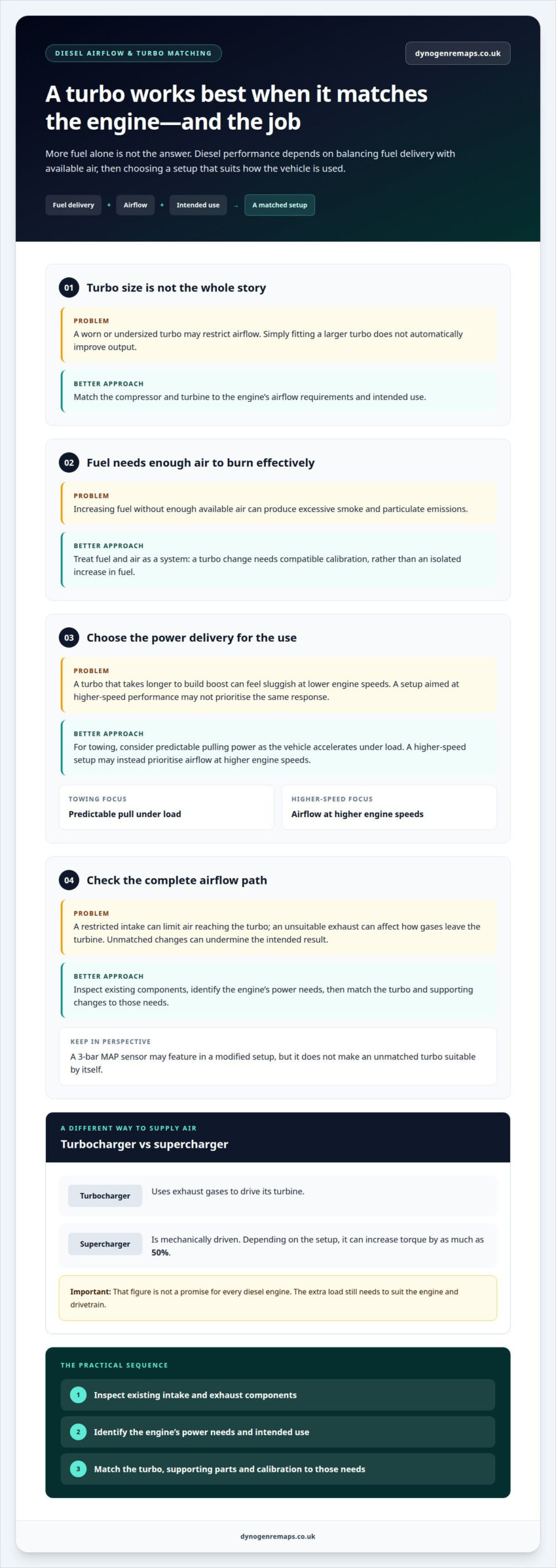
A turbocharger forces more air into a diesel engine’s cylinders, supplying oxygen for combustion. That airflow can support higher fuel delivery and engine performance, but only when the turbo suits the engine and its intended use. A worn or undersized unit may restrict airflow, while simply fitting a larger turbo doesn’t automatically improve output. Its compressor and turbine need to match the engine’s airflow requirements and how the power will be used.
Consider response as well as peak output. A turbo that takes longer to build boost can feel sluggish at lower engine speeds, while a smaller, well-matched unit may respond sooner. For example, a vehicle used for towing needs predictable pulling power as it accelerates under load. A setup aimed at higher-speed performance may prioritise airflow at higher engine speeds. The right match depends on the use, not turbo size alone.
Fuel and air must work together. Increasing fuel without enough available air can produce excessive smoke and particulate emissions. A turbo upgrade therefore needs a compatible calibration, not an isolated increase in fuel. Tuners may also consider a redesigned turbocharger, upgraded air intake or performance-grade exhaust system. Each part affects airflow through the engine, so combining changes without matching them can undermine the intended result.
Check the full intake and exhaust path before choosing parts. A restricted intake can limit air reaching the turbo, whilst an unsuitable exhaust can affect how gases leave the turbine. The practical sequence is to inspect existing components, identify the engine’s power needs, then match the turbo and supporting changes to those needs. A 3-bar MAP sensor, for instance, is a component that may feature in a modified setup, but it doesn’t make an unmatched turbo suitable by itself.
Turbocharging and supercharging both increase the air supplied to an engine, but they use different drive methods. A turbocharger uses exhaust gases to drive its turbine; a supercharger is mechanically driven. A supercharger can increase torque by as much as 50 percent, depending on the setup. That figure isn’t a promise for every diesel engine, and the extra load still needs to suit the engine and drivetrain.
What are the risks of tuning a diesel engine, including turbo, clutch and DPF damage? Higher boost and fuel demand can place extra stress on the turbo and engine, while increased torque can strain the clutch. Poorly balanced fuelling can increase soot production and put extra load on the DPF, so airflow and calibration need to be considered together.
For a considered approach, explore diesel performance calibration alongside any hardware changes. Matching the map to the turbo, intake and intended use helps keep the complete setup working as one system.
3. Air filters and intake airflow
A dirty air filter can restrict airflow and reduce diesel engine performance. Replacing a clogged filter restores the intended path for air, but doesn’t automatically add horsepower beyond the engine’s designed output. Start with a practical inspection: check the filter and airbox for dirt, damage or poor seating. Even a clean filter can allow unfiltered air past its edges if it’s fitted incorrectly, so inspect the seal as well as the element.
Follow the intake from the airbox towards the engine, checking for crushed sections, loose connections and accumulated debris. A blocked duct can limit the air reaching the cylinders, even with a new filter fitted. For example, if a diesel feels flat under acceleration, inspect the whole intake path before buying performance parts. This helps distinguish a maintenance restriction from a hardware change that might suit the vehicle.
Some cold air intake filters are described as up to three times larger than a stock air filter. Size alone doesn’t establish how much power the engine will gain. The complete intake design matters, including how air reaches the filter and whether the system fits correctly. A larger element cannot compensate for a restricted duct or poor seal. Choose components for the specific engine, rather than assuming a larger filter always improves airflow.
For drivers asking how to get more horsepower from a diesel engine, a clear intake is a sensible baseline, not a power upgrade by itself. The engine needs air to support combustion, and fuelling changes must suit the available airflow. If fuel delivery rises without enough air, smoke and particulate emissions can increase. That’s why intake condition matters before evaluating a performance map or other modifications.
Keep airflow and compression separate when diagnosing lost performance. Intake restrictions affect the air entering the engine; worn internal components can contribute to low compression. If a clean filter and clear ducts haven’t resolved a noticeable loss, investigate other mechanical causes. This avoids replacing intake parts when the issue lies with cylinder sealing or another fault.
After correcting a restriction, compare engine response under the same driving conditions. Note whether acceleration feels smoother and whether the power loss remains. Knowing how to get more horsepower from a diesel engine also means identifying what limits output before choosing modifications. A clean, correctly fitted filter gives you a useful baseline, while persistent symptoms call for diagnosis rather than guesswork.
4. The relationship between torque, RPM and horsepower
Torque, RPM and horsepower describe connected aspects of engine performance. Torque is rotational force delivered to the drivetrain; horsepower measures how quickly the engine performs work. A diesel can feel powerful at low engine speeds because it produces substantial torque there. For towing, that low-RPM pulling force helps move a heavy load from a standstill and climb an incline.
RPM means revolutions per minute. Torque is typically stronger at lower RPM, whilst horsepower rises as engine speed increases. The relationship is captured by a formula: horsepower equals torque in ft-lb multiplied by RPM, then divided by 5,252. So horsepower can rise when an engine maintains torque at higher RPM. That doesn’t mean every diesel should be tuned to rev higher.
Consider the ALH example: 155 ft-lb at 1,900 RPM produces 56 hp. If the engine maintains that same torque at 3,800 RPM, output becomes 112 hp. The torque figure hasn’t changed, but the higher engine speed increases the work delivered over time. This illustrates why a peak horsepower rating alone doesn’t describe how an engine behaves across its rev range.
A 1.9-litre PD TDI example reaches peak torque at 2,100-2,300 RPM and peak horsepower around 3,800-4,000 RPM. Those figures show how the two peaks can occur at different engine speeds. A tune aimed at strong response in everyday driving may favour accessible torque, while a setup intended to sustain power higher in the rev range needs a different balance.
For hauling, torque delivery at lower RPM can matter more than chasing the highest peak horsepower figure. A vehicle moving 40 tonnes from a standstill illustrates why pulling force matters under load. Conversely, horsepower helps maintain momentum as speed rises. The useful question is where the engine needs to deliver power, not simply what number appears at the top of its rating.
Read a dyno result as a curve, not a single headline. Compare where torque builds and peaks, and how horsepower changes across RPM. Then relate that pattern to the vehicle’s job: frequent towing calls for usable low-speed pull, while sustained faster driving needs power that continues through higher engine speeds. This distinction helps set a sensible calibration target without confusing torque with horsepower.
5. Horsepower and sustained speed
Peak horsepower describes maximum output, not how long an engine can maintain it. During long-haul highway driving, horsepower helps diesel trucks maintain momentum and overcome aerodynamic drag. As a vehicle pushes through the air, the engine must keep supplying power against that resistance. A strong peak figure may feel impressive during acceleration, but sustained output matters more when the vehicle needs to hold speed over a long journey.
Consider a loaded van travelling along a motorway: its engine must maintain momentum as drag, payload and road gradients place ongoing demands on it. A climb can require more power than level ground, while easing off afterwards reduces the load. Real-world performance therefore depends on usable power across the engine’s operating range, not a single maximum figure from a test.
Gearing also shapes how horsepower reaches the road. The gearbox keeps the engine within a useful RPM range as the vehicle accelerates or meets resistance. If a gear is too high for a steep incline, the engine may struggle to maintain speed; selecting a lower gear can help it work in a more effective range. The best result comes from the engine and transmission working together, not simply raising peak output.
Temperature and component condition matter under sustained demand. The cooling system, turbocharger, oil and transmission all experience ongoing work when a diesel carries a load over an extended drive. A vehicle that performs well briefly may behave differently under continuous strain. If power fades during a long climb or towing journey, note when it happens and under what load. Those details help distinguish a calibration question from a maintenance issue.
Match the goal to the journey. A driver seeking stronger acceleration may value a different power delivery from someone who regularly carries heavy loads or covers long distances. For the latter, consistent output and smooth response under load are practical priorities. If an existing vehicle simply lacks the baseline capacity for the job, exploring capable models from dealers like QPX Wheels can be more practical than pushing an older engine past its limits. Assess performance during the kind of driving the vehicle actually does, rather than judging it solely by a brief burst of acceleration.
A speed limiter affects the vehicle’s maximum permitted speed setting; it doesn’t create engine horsepower or help the engine sustain output under load. If a vehicle-specific limiter is the concern, explore speed limiter removal as a separate consideration. For sustained performance, focus on the engine’s ability to deliver power consistently, alongside the gearbox and supporting components.
Dynogen Remapping Solutions: Stage 1 Performance Remap
Dynogen Remapping Solutions offers a Stage 1 Performance Remap for drivers seeking an ECU-led change to diesel performance. It’s a relevant next step after checking the engine’s condition and deciding whether stronger response, towing ability or sustained power matters most. That goal helps shape the calibration priorities, rather than focusing on a peak figure alone.
If lower fuel use is the priority, an Economy Remap is a different option, focused on efficiency rather than performance. The right choice depends on how you use your vehicle and what you want from its power delivery. A considered remap should complement the engine’s condition and intended use, not replace necessary maintenance.
To discuss your diesel’s performance goals, contact Dynogen Remapping Solutions.
Set a performance goal that suits your driving
Before choosing a modification, decide what you want your vehicle to do differently. Stronger everyday response, power for regular towing and improved fuel efficiency call for distinct priorities. The best approach to how to get more horsepower from a diesel engine starts with a clear goal, alongside an honest view of the vehicle’s condition and how you use it.
Dynogen Remapping Solutions offers a Stage 1 Performance Remap for performance-focused drivers and an Economy Remap for those prioritising efficiency. Its AdBlue Solution addresses a different vehicle-system need, rather than serving as a horsepower upgrade. Matching the right service to your aim helps keep the next step relevant instead of adding changes that don’t support your intended use.
If you’re ready to discuss a suitable direction for your vehicle, contact Dynogen Remapping Solutions. A clear idea of how you drive and what you’d like to improve makes a useful starting point for that conversation. Take the next step with your vehicle’s real-world needs in focus.
Frequently Asked Questions
How much horsepower can a diesel remap or ECU tune add?
There isn’t one horsepower increase that applies to every diesel remap. The result depends on the engine’s original output, condition, ECU calibration and supporting hardware. A car used mainly for commuting may need a different target from a van that regularly carries heavy loads. For a realistic expectation, compare current performance with intended use and treat any quoted gain as specific to that vehicle, not a universal figure.
How much does a diesel remap cost in the UK?
The price depends on the vehicle and is given after a quote request; the cost factors include ECU complexity and whether the aim is performance or economy. A straightforward calibration and a more involved vehicle-specific job may require different work. Dynogen Remapping Solutions offers both a Stage 1 Performance Remap and an Economy Remap, so identify your priority when requesting a quote. Avoid comparing prices without checking what work each covers.
What supporting upgrades are needed for a high-power diesel tune?
There’s no fixed upgrade list: supporting parts depend on the engine, its condition and the intended power delivery. A vehicle with standard hardware may need a different approach from one already fitted with an upgraded turbo. Before choosing parts, establish whether the clutch, cooling system and drivetrain can handle the planned output. Changes should work as a matched system, not as individual additions made without considering their combined effect.
How do air filters, intercoolers and exhaust upgrades affect diesel horsepower?
An air filter can restrict intake flow if it’s dirty or poorly fitted, while a suitable intake helps deliver air to the engine. An intercooler cools compressed intake air, and exhaust changes affect how gases leave the engine. Their contribution depends on the vehicle and its setup; fitting one part alone doesn’t guarantee more horsepower. For example, a freer-flowing exhaust won’t resolve an intake restriction elsewhere.
What is the difference between a diesel remap, tuning box and tuning chip?
A remap changes calibration data within the engine control unit. A tuning box is an external module connected to vehicle wiring, while “tuning chip” can describe a replacement or add-on electronic component, depending on the product. These approaches don’t necessarily adjust the same parameters or work in the same way. Before choosing, understand what is altered and whether the method suits your vehicle; the name alone doesn’t explain how it works.