
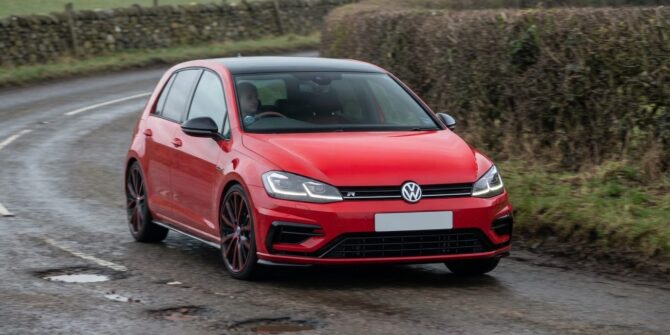
The Mk7 and Mk7.5 Golf R can reach around 360 hp and 500 Nm with a Stage 1 remap. The VW Golf R’s Stage 1 power gains are about more than peak output: the factory figure for these generations is 300 bhp, and the change can make the car feel more responsive across the rev range.
It’s natural to want a clear figure before deciding whether a remap is right for your car. This guide explains how Stage 1 engine and DSG remapping can affect power, torque, acceleration and everyday drivability, and why results vary between cars and generations.
You’ll also learn what the figures mean in everyday driving, what affects the result, and how engine software and gearbox tuning work together. This helps you weigh headline gains against the smoother, more immediate response you want from your Golf R.
Key Takeaways
- Separate engine remapping from DSG tuning: the engine map changes power delivery, while gearbox software can shape how the transmission responds.
- Compare Mk7 and Mk7.5 figures with their different factory outputs in mind, rather than treating every Golf R as identical.
- Use dyno figures as a guide, and consider how the car’s condition and fuel affect the result.
- Assess torque and throttle response alongside peak power to understand how a remap may change everyday driving.
- Learn when a Stage 1 Performance Remap is the appropriate route, and how Dynogen Remapping Solutions fits into that decision.
Stage 1 engine and DSG gearbox remapping
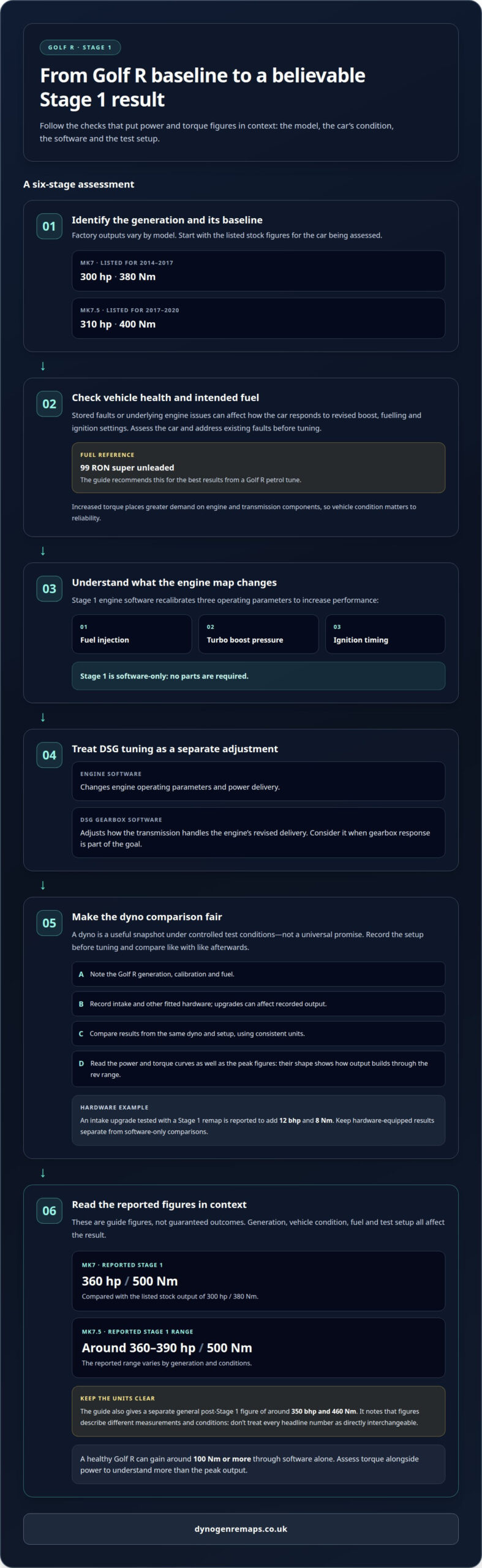
Stage 1 engine software recalibrates fuel injection, turbo boost pressure and ignition timing to increase performance. DSG gearbox tuning is a separate software adjustment, focused on how the transmission handles the engine’s revised delivery.
Stage 1 power and torque gains
A Stage 1 Golf R Mk7 is typically reported at 360 hp and 500 Nm, compared with its listed factory output of 300 bhp. A healthy Golf R can gain around 100 Nm or more through software alone. These figures describe different measurements and conditions, so assess torque and power together rather than treating one peak figure as the whole driving experience.
For the Mk7.5, reported Stage 1 figures sit within a broader range of around 360-390 hp and 500 Nm, depending on generation. A separate general figure for a standard Golf R after Stage 1 is around 350 bhp and 460 Nm. Remapping remains software-only, with no parts required for Stage 1.
Comparing stock and higher-stage gains
Factory output figures vary by Golf R generation and specification. A Mk7 Stage 2 setup is typically reported at 370 hp and 515 Nm, above its Stage 1 figure, and requires supporting hardware such as a downpipe, intake and intercooler. Stage 2+ and Stage 3 figures supplied for the Mk5 Golf GTI TFSI are 275-290 hp and 355-360 lbft, and 330-350 hp and 350-370 lbft respectively. Those figures apply to the GTI, not the Golf R.
Typical Mk8 Golf R gains
A Stage 1 Mk8 Golf R typically produces 390 hp and 500 Nm. The Mk8.5 figure is different: around 380 hp and 500 Nm. These generation-specific results show why the model year matters when estimating output. They also answer the question of whether one Stage 1 figure fits every Golf R: it doesn’t, because reported outputs vary by generation.
Engine remapping adjusts the engine’s operating parameters, while DSG tuning changes gearbox behaviour. Considering both helps explain how the car delivers power, not just the peak figure recorded during a test.
Fuel grade and pre-remap checks
For the best results from a Golf R petrol tune, use 99 RON super unleaded. Before remapping, the car’s existing condition matters: stored faults or underlying engine issues can affect how it responds to revised boost, fuelling and ignition settings. Increased torque also places greater demand on engine and transmission components, making vehicle health an important reliability consideration.
A sound process starts by assessing the vehicle’s condition and identifying existing faults, then matching the engine calibration to the car and intended fuel. DSG tuning can also be considered if gearbox response is part of the goal. Addressing faults first helps distinguish an existing problem from a remapping issue.
Dyno testing and power figures
A dyno measures an engine’s output under controlled test conditions, providing a useful snapshot of a Golf R’s performance. Read the result alongside the car’s generation, calibration, fuel and hardware, rather than treating one headline figure as universal.
How to read a dyno result
For a meaningful comparison, record the vehicle’s specification before tuning, then compare results from the same dyno and setup afterwards. Note the calibration, fuel and any intake or other hardware upgrade; each can affect the recorded output. A custom Stage 1 Golf R can produce around 370 bhp, depending on vehicle condition and fuel. That figure is a useful reference, not a guaranteed result for every car.
Keep the units consistent, too. Figures may be reported in bhp or hp, while torque is measured in Nm. Read a dyno printout as a set of measurements, not just its peak power line. The shape of the power and torque curves can show how output builds through the rev range.
How hardware changes the comparison
An intake upgrade tested with a Stage 1 remap is reported to add 12 bhp and 8 Nm. A Golf R with a Stage 1 remap and intake upgrade package is reported at around 360 bhp. These figures describe a package and test result, so they shouldn’t be treated as the software-only output of every Mk7 or Mk7.5.
Other examples illustrate how much the specification matters. A UK tuning business reported 375 hp from a Golf R with hardware upgrades. A custom Mk8 test combining Stage 1 software, an uprated intake and a DQ381 gearbox tune recorded 409 bhp and 577 Nm. That modified test is not a like-for-like comparison with a standard Mk7 or Mk7.5.
Making a fair before-and-after comparison
Use a simple record for each dyno session: note the Golf R generation, fuel, software and fitted upgrades, then compare the same output units. If the setup changes between runs, such as adding an intake, the result reflects both tuning and hardware. For example, the reported 12 bhp and 8 Nm intake contribution helps distinguish the upgrade’s effect from the remap alone.
Dyno data can make tuning results easier to interpret, but the conditions and vehicle specification matter. For relevant performance tuning information, consider how the recorded figures relate to your Golf R’s setup.
Golf R Mk7 and Mk7.5 power and torque gains
Factory output varies between Golf R generations, so identify the model before comparing remapped figures. Stock power and torque provide a baseline for assessing a custom calibration and its reported results.
Stock output by Golf R generation
The Mk7, listed for 2014-2017, produces 300 hp and 380 Nm as standard. The Mk7.5, listed for 2017-2020, produces 310 hp and 400 Nm. These figures establish distinct starting points, even though both cars belong to the same Golf R generation family.
Later models underline the importance of checking generation. Stock output varies by Golf R generation, so check the factory baseline for the specific model. The Mk8.5, listed from 2024 onwards, is listed at 333 hp and 420 Nm. A Mk7 result isn’t a direct factory-baseline comparison for an Mk8.5.
Keep the stated units alongside each figure. Some outputs are expressed in hp, others in bhp, while torque is stated in Nm. The VW Golf R Stage 1 power gains are easier to assess when you compare like units and the correct generation, rather than relying on a headline number alone.
Typical Mk7 and Mk7.5 gains
A Stage 1 Mk7 is typically reported at 360 hp and 500 Nm, compared with its listed factory output of 300 bhp. Across Mk7 and Mk7.5 cars, typical Stage 1 figures fall around 360-390 hp and 500 Nm, depending on generation. Use the specific car’s factory figures as its baseline, rather than a broad Golf R average.
Torque provides another useful comparison. A healthy Golf R can gain around 100 Nm or more through software alone, while a Stage 1 Mk7 is typically reported at 500 Nm. Consider torque alongside peak power: each describes a different aspect of engine output. For VW Golf R Stage 1 power gains, comparing both figures gives a fuller view than focusing on horsepower alone.
For the Mk7.5, start with its listed factory baseline of 310 hp and 400 Nm. The broader 360-390 hp Stage 1 range provides context, but doesn’t mean every car reaches the same output. Model generation and vehicle condition affect how a custom result should be interpreted.
Make each comparison useful by recording the Golf R generation, factory figures and remapped output with units. Also note whether the example describes software alone or includes hardware. An intake upgrade, for example, has been reported to add 12 bhp and 8 Nm alongside Stage 1 tuning, so it shouldn’t be confused with a software-only result.
Acceleration and drivability improvements
A remapped Volkswagen Golf R can achieve 0-60 mph in under 4 seconds. That figure illustrates the car’s acceleration potential, but the driving experience also depends on how power arrives. Engine software adjusts fuel injection, turbo boost pressure and ignition timing. Together, these changes can make acceleration feel more immediate when the driver requests power.
Torque affects how strongly the Golf R gathers speed under acceleration. The Mk7 and Mk7.5 Stage 1 reference of 500 Nm helps explain the stronger response drivers may notice when accelerating. Peak torque alone doesn’t describe every moment on the road, though. The shape of the power delivery and the selected gear also influence how readily the car responds.
DSG gearbox tuning can complement engine tuning by changing transmission behaviour alongside the revised engine output. The engine calibration and gearbox software address different parts of the driving experience: one changes engine operation, while the other affects gear changes. This distinction matters in a Mk7 or Mk7.5 used for both everyday driving and brisk acceleration.
Acceleration figures also depend on the conditions surrounding a run. Tyre grip, road surface, vehicle condition and launch technique all influence how effectively a Golf R puts its power down. An under-4-second 0-60 mph capability shouldn’t be mistaken for the result of every drive. It describes what a remapped car can achieve under suitable conditions, rather than a fixed outcome in all circumstances.
For everyday drivability, consider the response you want in ordinary situations, not only maximum acceleration. A smoother build of power can feel more composed in traffic, while a sharper response may suit more purposeful driving. The Mk7’s DSG and the Mk7.5’s engine calibration should be considered as a complete vehicle setup, rather than judged solely by a stopwatch result.
An intake upgrade is another factor in the overall setup, but its contribution should be separated from the software’s effect. Testing has reported an intake package adding 12 bhp and 8 Nm alongside Stage 1 tuning. That example shows why acceleration comparisons need consistent conditions and specifications. Compare like-for-like Golf R configurations, then consider how the engine, gearbox and intake work together in real driving.
What Stage 1 power gains are typical for the Mk7 and Mk7.5 Golf R?
For a Mk7 Golf R, a typical Stage 1 output is around 360 hp and 500 Nm. The Mk7 and Mk7.5 sit within a broader reported range of 360-390 hp and 500 Nm, depending on generation. Treat these as reference figures, not identical results for every car.
The Mk7’s listed factory output is 300 bhp. Comparing that baseline with a Stage 1 figure gives a practical sense of the scale of the change, but keep the units in view: the factory value is stated in bhp, while the remapped figure is stated in hp. Don’t treat differently labelled measurements as perfectly interchangeable.
The Mk7.5 needs its own reference point. Its listed stock output is 310 hp and 400 Nm for 2017-2020, while the broader factory figure given for the Mk7 and Mk7.5 is 300 bhp. These figures use different descriptions and units, so identify the exact generation and stated measurement before comparing outputs.
Torque adds another useful dimension. A healthy Golf R can gain around 100 Nm or more through software alone, while a Stage 1 Mk7 is typically reported at 500 Nm. Consider that alongside peak power: the two measurements describe different aspects of engine output and together provide a fuller view of the remap.
To interpret a claimed result, first match the model generation, then compare its factory and remapped figures using the same units. Next, note whether the example describes software alone or a modified setup. An intake upgrade, for instance, has been reported to add 12 bhp and 8 Nm alongside Stage 1 tuning, so that result shouldn’t be confused with software-only output.
Fuel and vehicle condition also help explain variation. Custom tuning can produce around 370 bhp, depending on the car’s condition and fuel used. That figure sits within the wider range, but it represents a different reported result. A useful comparison therefore records generation, fuel, hardware and calibration together, rather than relying on a single headline number.
If you’re weighing these figures against your own Golf R, explore Stage 1 remapping as the next step towards a suitable calibration.
Dynogen Remapping Solutions: Stage 1 Performance Remap
Dynogen Remapping Solutions offers a Stage 1 Performance Remap for Golf R owners looking to improve engine response and performance through software calibration. It’s a natural next step if you’ve compared the Mk7 and Mk7.5 figures and want to discuss how remapping relates to your car’s generation, condition and driving priorities.
A considered calibration takes the vehicle’s existing setup into account and aims to balance power delivery with everyday drivability. If fuel economy matters more to you than performance, an Economy Remap may be a better fit. The right option depends on what you want from the car.
For guidance on a Stage 1 Performance Remap for your Golf R, contact Dynogen Remapping Solutions.
Choose the remap that suits your next drive
Your expectations for VW Golf R Stage 1 power gains should reflect how you use the car, not just the figures you hope to see. Think about whether sharper performance, more economical driving or a different vehicle solution best matches your priorities. That focus makes the next conversation more useful and helps frame the right option for your Golf R.
Dynogen Remapping Solutions offers a Stage 1 Performance Remap for performance-focused drivers and an Economy Remap for those prioritising efficiency. Its AdBlue Solution addresses a different vehicle need. Each option serves a distinct purpose, so choose according to what you want to improve.
When you’re ready to discuss the right direction for your vehicle, contact Dynogen Remapping Solutions. A clear idea of your driving priorities is a strong place to begin.
Frequently Asked Questions
How much bhp does a Stage 1 Golf R make?
A Stage 1 Mk7 Golf R is typically reported at 360 hp, with broader Mk7 and Mk7.5 figures around 360-390 hp. A separate general Stage 1 figure is around 350 bhp, so check the unit and model generation when comparing claims. Dyno readings also depend on the car’s specification and test setup. Treat a figure as a useful reference, not a guaranteed result for every vehicle.
How much is a Golf R remap?
The cost depends on the ECU’s complexity and your performance or economy goals. There is no single price for every Golf R; a specific quote is provided after a quote request. When weighing the cost, distinguish an engine remap from separate gearbox tuning or hardware work. These are different parts of a vehicle’s tuning specification.
How much tuning potential does a Golf R have?
A Stage 1 Mk7 Golf R is typically reported at 360 hp and 500 Nm, while Mk7 and Mk7.5 results sit within a broader 360-390 hp range. Beyond Stage 1, a Mk7 Stage 2 setup is reported at 370 hp and 515 Nm, with supporting hardware such as a downpipe, intake and intercooler. The appropriate stage therefore depends on whether you want software-only tuning or a hardware-supported setup.
Will it affect my warranty?
A remap can affect warranty coverage, particularly for claims related to the engine or transmission. The outcome depends on the warranty terms and the nature of any later fault. Before changing the ECU calibration, read the relevant warranty conditions and keep records of the original and modified software. This gives you clear information about the modification if you need to discuss a warranty claim.
What power and torque does a Stage 1 tune add to a VW Golf R?
For a Mk7, a typical Stage 1 figure is 360 hp and 500 Nm, compared with its listed stock output of 300 hp and 380 Nm. A healthy Golf R can gain around 100 Nm or more through software alone. The useful comparison is the individual car’s factory baseline against its tuned result, with the same units and a clear note of any fitted hardware.
How much torque does a Stage 1 Golf R produce, and is it limited by gearbox?
A Stage 1 Mk7 Golf R is typically reported at 500 Nm. Gearbox behaviour matters because engine torque and transmission calibration work together, but no single gearbox limit applies across every Golf R configuration. Early Mk7 models use a 6-speed DQ250 DSG gearbox. Consider the transmission type and whether gearbox software is included when interpreting a torque figure.
Can a Stage 1 Golf R remap affect the warranty, insurance or MOT in the UK?
Yes, a remap can affect warranty coverage. Insurance and MOT considerations are separate. Tell your insurer about the ECU modification and review your policy terms. An MOT result concerns the vehicle’s condition at the test, not just its power figure. Keep details of the calibration and any hardware changes so you can accurately describe the car’s specification when discussing cover or its test condition.