

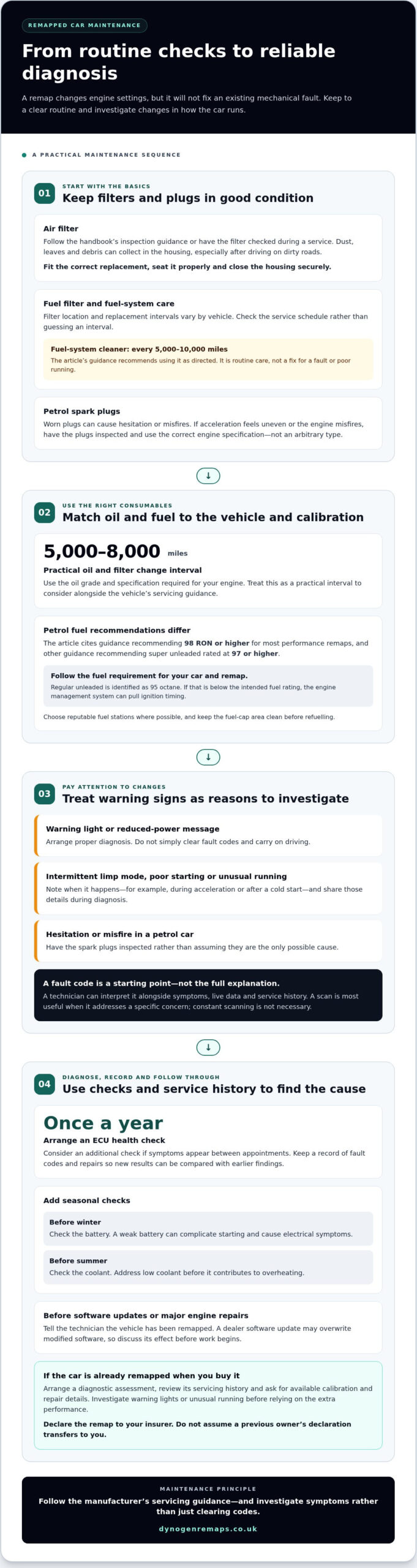
A remap needs consistent maintenance to support reliable performance. Knowing how to maintain a remapped car means keeping filters in good condition, using the correct fuel and oil, and acting promptly on warning lights. A practical oil and filter interval is every 5,000 to 8,000 miles.
Extra responsiveness can be rewarding, but it makes routine care and attention to changes in how the car runs especially important. A remap won’t fix an existing mechanical fault, so regular checks help you spot problems before they affect performance.
This guide explains how to care for air and fuel filters, spark plugs, cooling components and boost hoses, and when to arrange diagnostics and servicing. It also covers diesel DPF and emissions-system care, helping you build a practical maintenance routine around your vehicle and driving.
Key Takeaways
- Keep filters clean and inspect petrol spark plugs; worn plugs can lead to hesitation or misfires.
- Get warning lights, reduced-power messages and intermittent limp mode diagnosed rather than simply clearing fault codes.
- Check coolant levels and inspect intercooler hoses and clamps, paying attention to repeated coolant loss or overheating warnings.
- Use the oil grade and specification required for your engine, and consider an oil and filter change every 5,000 to 8,000 miles.
- For a diesel, a 20-30 minute motorway drive once a week can help the DPF last longer; drive smoothly and avoid full throttle at very low revs.
1. Air filters, fuel filters and spark plugs
A remap adjusts engine settings such as fuel delivery, ignition timing and turbo boost. Clean filters and correctly specified spark plugs help these systems work as intended. A clogged air filter restricts airflow, while a restricted fuel filter can affect fuel delivery. Check both during routine servicing and replace them according to the vehicle’s maintenance schedule and condition. When considering how to maintain a remapped car, start with these basic checks.
Start with the air filter. Follow the handbook’s inspection guidance, or have it checked during a service. Dust, leaves and other debris can collect in the filter housing, particularly after driving on dirty roads. Fit the correct replacement, seat it properly and close the housing securely. This helps maintain consistent airflow, engine response and efficiency.
Fuel filters also need attention, although their location and replacement interval vary by vehicle. Check the service schedule rather than guessing an interval. A fuel-system cleaner is recommended every 5,000-10,000 miles in the guidance for this article. Use it as directed, and treat it as routine care, not a fix for an existing fault or poor running.
Fuel quality matters because a petrol engine’s calibration relies on the fuel’s octane rating. Guidance for most performance remaps recommends 98 RON or higher; other guidance recommends super unleaded rated at 97 or higher. These recommendations differ, so use the fuel specified for your car and remap. Regular unleaded is identified as 95 octane; if that’s lower than the fuel intended, the engine management system can pull ignition timing.
Choose reputable fuel stations where possible, and keep the fuel cap area clean before refuelling. For a petrol car, follow the vehicle and calibration requirements rather than assuming every remap needs the same fuel. The right octane supports the intended ignition timing; using a lower rating can change how the engine responds. Fuel choice affects how reliably the engine runs under load, not just its advertised performance.
Spark-plug condition is another useful consideration when learning how to maintain a remapped car. Worn plugs in a remapped petrol car can cause hesitation or misfires. If acceleration feels uneven or the engine misfires, have the plugs inspected rather than fitting an arbitrary type. Use the correct specification for the engine and follow its service schedule. A technician can assess plug condition and ignition performance together, helping distinguish worn plugs from other issues. Correct maintenance supports smooth combustion and the engine’s intended emissions behaviour.
2. Warning lights and diagnostic checks
Warning lights, reduced-power messages and intermittent limp mode need proper diagnosis. Don’t simply clear fault codes and carry on driving. A diagnostic scan can identify stored faults, but a code is a starting point, not a complete explanation. A technician should interpret it alongside symptoms, live data and the vehicle’s service history. For example, reduced acceleration may accompany a fault that needs investigation before normal use resumes.
A remap changes engine software; it doesn’t repair an unhealthy engine. Before a remap, a diagnostic scan can reveal hidden faults that might affect performance or economy. Addressing them first helps distinguish an existing mechanical problem from a later change in vehicle behaviour. If warning lights appear after remapping, note when they occur, such as during acceleration or after a cold start, and share those details during diagnosis.
Arrange an ECU health check once a year, and consider an additional check if symptoms appear between appointments. Constant scanning isn’t necessary. A scan is most useful when it addresses a specific concern, such as a warning light, poor starting or repeated limp mode. Keep a record of fault codes and repairs. Comparing new results with earlier findings can help trace recurring problems instead of treating each warning as an isolated event.
If you buy a used car that’s already remapped, arrange a diagnostic assessment and review its servicing history before relying on the extra performance. Ask for any available details of the calibration and previous repairs, then have warning lights or unusual running investigated. Tell your insurer about the modification, as UK drivers must declare a remap and failing to do so could invalidate a policy.
Insurance cover varies between policies, and a remap may affect the premium. Give your insurer accurate details of the modification and keep a record of the response. Don’t assume a previous owner’s declaration transfers to you. The vehicle’s paperwork and your policy should reflect the car’s current specification, including any remap that changes its performance.
Seasonal checks also support reliable diagnosis. Before winter, check the battery; before summer, check the coolant. A weak battery can complicate starting and cause electrical symptoms, while low coolant needs attention before it contributes to overheating. Record any warning messages alongside these checks. Include fresh oil in the service history too, so a technician can consider recent maintenance when interpreting engine faults.
Follow the manufacturer’s servicing guidance and consider the car’s symptoms and maintenance records. A scan can reveal stored or intermittent faults even after a warning light goes out, but clearing the code alone won’t address the cause. If a dealer software update or major engine repair is planned, tell the technician the vehicle has been remapped. An update may overwrite modified software, so discuss its effect before work begins.
3. Cooling systems, intercoolers and boost hoses
A remapped engine can work harder under acceleration, making cooling-system condition important. Check the coolant level regularly when the engine is cold, following the vehicle handbook’s instructions. Investigate repeated coolant loss, an overheating warning or a cooling fan that runs excessively. These symptoms need attention rather than repeated topping-up, since the underlying fault may persist.
Turbocharged cars also depend on sound intercooler hoses and clamps. Inspect them periodically for visible damage, loose connections or signs of a boost leak. A split hose or loose clamp can disrupt pressure between the turbocharger and engine, affecting running and acceleration. If power drops or the engine behaves differently under load, note when it happens and arrange a diagnostic check rather than guessing at the cause.
After hard driving or frequent boost use, let the engine idle for a minute or two before switching it off. This gives the turbocharger a gentler transition from high-load running. After spirited driving, ease off and allow the car to cool down gradually. Where conditions allow, avoid stopping immediately after sustained hard acceleration; a calm final stretch reduces the abrupt change in engine load.
To monitor for overheating, watch the temperature gauge and heed any warning message. If you suspect a boost leak, pay attention to changes in acceleration and inspect accessible hoses and clamps. If a warning light appears or limp mode occurs intermittently, have the fault diagnosed rather than simply clearing its code. Record the conditions, such as uphill driving or acceleration, to help identify a repeatable pattern.
Extra checks should include the engine’s cooling system, turbocharger, intercooler connections, clutch and gearbox. A remap can place additional strain on mechanical components, so note slipping, unusual noises or changes in gear selection. If gearbox fluid is serviceable, follow its recommended service intervals. Supporting upgrades aren’t necessary after a basic Stage 1 tune, but they’re worth considering for Stage 2 or heavy use.
Tyres and brakes matter when the car’s performance changes. Check tyre pressures regularly when the tyres are cold, and inspect the tread for even wear. Confirm the tyres have the correct speed and load rating for the vehicle. During routine checks, note changes in braking response and arrange an inspection if it feels different. Sound tyres and brakes help maintain control as well as confident acceleration.
Make these inspections part of a consistent routine: check coolant, inspect boost hoses and clamps, then review tyre condition and pressure. If the temperature rises, coolant keeps falling or acceleration changes, stop pushing the engine and investigate the cause. This methodical approach helps distinguish normal behaviour from a developing fault before it affects reliable driving.
4. Shorter servicing intervals and suitable oil
Higher engine performance can place extra strain on components, so follow a consistent service routine. For a remapped car, guidance recommends changing the oil and filter every 5,000 to 8,000 miles. Many remapped cars, particularly turbocharged models, also benefit from an annual oil and filter change. Treat mileage and time as reminders to plan maintenance, not reasons to ignore the manufacturer’s service schedule.
Choose oil by the vehicle’s required grade and specification, not by brand or price alone. For a remapped car, use fully synthetic oil of the correct grade. The engine design and manufacturer’s requirements determine the specification that protects moving parts and supports smooth running. Keep a service record, including the oil type and filter change, so future technicians know what went into the engine.
In the UK, servicing and maintenance costs depend on the vehicle, oil specification, parts, labour and any repairs identified; the price depends on the case and is given after a quote request. Routine servicing and fault repairs are different costs: a worn component or an emerging fault can affect the work required. Keeping maintenance records helps make the car’s needs clearer.
Use each service to review related components, not just engine oil. Ask for the service schedule to include relevant checks for your vehicle, such as fluid condition and the air filter. Brakes also need attention as part of general vehicle maintenance. The condition of these parts depends on the car and its use, so inspection findings should guide any replacement.
Transmission maintenance matters too. If the gearbox uses serviceable fluid, follow its recommended service intervals. Note changes in gear selection or unusual behaviour and mention them during servicing. A remap can increase strain on mechanical components, so a change in how the vehicle shifts deserves attention alongside engine symptoms.
Tell the technician the car has been remapped before dealer software updates or major engine work. A dealer update may overwrite modified ECU software and return the vehicle to standard. Discuss the planned update and its effect on the calibration before work begins. If the software changes, a specialist can establish what the ECU is running and whether the car behaves smoothly afterwards.
Keep the service record up to date with dates, mileage, oil specification and work completed. That history helps connect changes in performance with maintenance or software timing. A shorter oil interval of 6,000 to 8,000 miles is particularly relevant after a Stage 2 remap with hardware upgrades. For other setups, follow the car’s requirements and the condition found at each service.
5. Diesel DPF, EGR and emissions-system care
Diesel drivers should maintain the DPF and EGR system as part of routine care. A DPF collects soot, and the car’s regeneration process needs suitable driving conditions to work. For a diesel car, a 20-30 minute motorway drive once a week can help the DPF last longer. Follow the vehicle handbook and pay attention to any DPF warning message.
Short journeys and repeated interruptions can make it harder for regeneration to complete. If a DPF warning appears, don’t ignore it or assume a faster remap will clear the underlying issue. Check the handbook’s instructions and arrange diagnosis if the warning persists or returns. A diagnostic assessment can establish whether the DPF, EGR or another engine system needs attention.
Can a remapped car still pass its MOT and meet UK emissions rules? Yes, provided the vehicle meets MOT emissions requirements and road-use regulations. A remap must not interfere with emissions systems, and the car must continue to meet road safety and environmental standards.
Some performance-focused calibrations may alter emissions output, so both the calibration and emissions equipment matter. Keep the DPF and EGR functioning properly, and don’t treat warning lights as cosmetic problems. If the engine runs differently, has reduced power or shows an emissions-related warning, have the fault diagnosed before relying on the vehicle for regular journeys.
Driving technique also affects diesel engine load. Don’t apply full throttle at very low revs in too high a gear. Downshift first, then accelerate smoothly; this avoids asking the engine to deliver high torque in an unsuitable gear. It also reduces unnecessary strain on the clutch and drivetrain during everyday driving.
After sustained driving or heavy use, drive calmly for the final few minutes where possible. Gradually reducing engine load is preferable to idling for ten minutes. Keep engine oil servicing up to date too, since oil condition and maintenance contribute to the overall health of a diesel engine. Use the correct specification for the vehicle.
Record when a DPF warning appears, whether it follows short trips, and how the car responds after a motorway journey. Share those details during diagnosis rather than repeatedly attempting to clear the warning. If you’re considering a diesel remap, explore remapping options with emissions-system condition and UK road-use requirements in mind.
Dynogen Remapping Solutions: Stage 1 Performance Remap
Dynogen Remapping Solutions offers a Stage 1 Performance Remap for drivers seeking a considered change to their car’s performance. It’s most relevant when the vehicle is in sound mechanical condition and you want its engine software calibrated for a more responsive drive. A remap isn’t a substitute for servicing: continue maintaining filters, oil, cooling components and emissions equipment as part of your routine.
Diesel drivers can also consider the DPF Solution, AdBlue Solution or EGR Solution when those systems are relevant to their needs. An Economy Remap is another option for drivers focused on efficiency. Choose the service that matches your vehicle and aims, then keep up the maintenance practices covered in this guide.
Contact Dynogen Remapping Solutions to discuss your remapping requirements.
Make your next performance decision with care
A dependable remapped car starts with a clear understanding of what you want from it. Decide whether your priority is sharper performance, improved economy or support for a diesel system, then keep that goal in mind as you plan future maintenance. Knowing how to maintain a remapped car also means treating calibration and ongoing care as connected parts of ownership, not separate decisions.
Dynogen Remapping Solutions offers a Stage 1 Performance Remap for drivers seeking a performance-focused calibration, an Economy Remap for those prioritising efficiency, and an AdBlue Solution for relevant diesel-system needs. The right direction depends on your vehicle and what you want it to do. A considered choice helps you focus on a setup that suits your driving rather than chasing change for its own sake.
When you’re ready to discuss your vehicle and goals, contact Dynogen Remapping Solutions. Take the next step with a clear plan and enjoy getting the best from your car.
Frequently Asked Questions
What routine servicing does a remapped car need?
Follow the vehicle manufacturer’s servicing schedule, with checks informed by how the car is driven and its condition. Record the mileage, work completed and any changes in performance to make emerging patterns easier to identify. Tell the servicing technician the car has been remapped, especially before software updates or major engine work. This gives them relevant context when planning maintenance and reviewing the vehicle’s service history.
How often should you change the oil and filters on a remapped car?
Use 5,000 to 8,000 miles as a practical oil-and-filter interval, and change them annually for many remapped cars, particularly turbocharged models. A Stage 2 remap with hardware upgrades makes the shorter interval especially relevant. Use oil that meets the engine’s required grade and specification. For air and fuel filters, follow the manufacturer’s schedule and have their condition assessed during servicing, rather than applying one interval to every vehicle.
Does a remap require higher-octane fuel in the UK?
It depends on the petrol engine’s calibration and the vehicle manufacturer’s fuel requirement. Guidance for most performance remaps recommends 98 RON or higher, whilst other guidance recommends super unleaded rated at 97 or higher. Follow the fuel specified for your car and remap, rather than choosing by label alone. If petrol has a lower octane rating than intended, the engine management system can pull ignition timing. Diesel fuel has no petrol octane rating.
Can a remap affect reliability, engine life or the manufacturer’s warranty?
Yes. Increased engine performance can add strain to components and raise the risk of mechanical issues, particularly if the car already has faults or is poorly maintained. A remap can also affect or void the manufacturer’s warranty. Restoring factory ECU software doesn’t necessarily undo any effect on warranty cover. Keep servicing current, address symptoms promptly and retain records of modifications and maintenance when discussing warranty claims.