

A DPF can clean itself through regeneration, and the practical answer to how to prevent DPF blockage is to give that process the right conditions. A steady, uninterrupted drive of 20-30 minutes can help regeneration complete, while repeatedly switching off the engine mid-cycle can allow soot to build up. You can support the filter’s self-cleaning process through your driving, but regeneration won’t burn away ash left by unsuitable engine oil.
It’s understandable to wonder whether you can clean a DPF yourself. Driving can help burn off soot, but it won’t remove deposits that regeneration cannot clear. Engine oil matters too: a DPF-equipped diesel often requires low-SAPS oil, and using the wrong specification can leave ash that gradually restricts the filter.
This guide explains how short trips and stop-start traffic affect regeneration, what to do when a cycle is interrupted, and why checking your vehicle’s oil specification is an important part of prevention. You’ll also learn when driving habits may help and when persistent warning signs point to a problem that needs attention.
Key Takeaways
- See how repeated short trips and interrupted regeneration can leave soot accumulating in the filter.
- Learn how to respond to a DPF warning light and recognise when reduced power or higher fuel consumption needs attention.
- Understand why the correct engine oil specification matters, and how ash differs from soot during regeneration.
- Explore how fuel quality, low fuel levels and faults in sensors or the EGR valve can affect regeneration.
- Find out when driving habits may help and when a persistent blockage calls for a dedicated DPF solution.
Stop-start traffic and interrupted regeneration
Short urban journeys can leave a diesel DPF without the sustained conditions needed to complete regeneration. Knowing when a longer drive may help, and when recurring problems need a different response, is key to understanding how to prevent DPF blockage.
Soot and DPF regeneration
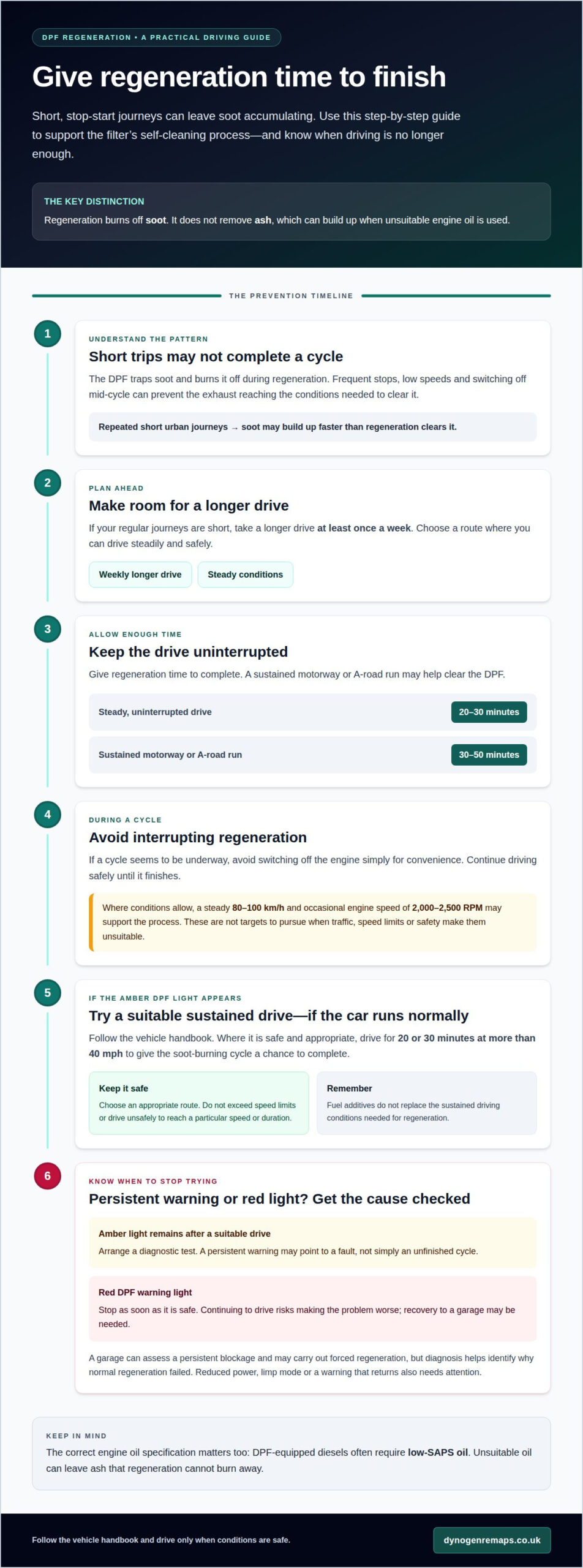
A diesel particulate filter traps soot in the exhaust and burns it off during regeneration. As exhaust temperatures rise, soot is converted, allowing the filter to clear rather than stay loaded with particles. Regular short trips may not provide the conditions for a complete cycle. For example, repeated school-run journeys can leave soot accumulating between longer drives.
Interrupted regeneration in stop-start traffic
Stop-start traffic can keep the exhaust from reaching the temperature needed for full regeneration. Frequent stops, low speeds and switching off the engine during a cycle may interrupt the process before enough soot has been burnt away. If this pattern continues, soot can build up faster than regeneration clears it. If you mainly make short town journeys, plan occasional longer trips rather than expecting each brief journey to clean the filter. Incorporating extended motorway journeys into your schedule—whether heading out on a road trip or travelling down to weekend fixtures arranged via fotballturer.no—provides a convenient way to achieve the steady conditions needed for filter maintenance.
Regeneration drive duration and conditions
Allow 20-30 minutes of uninterrupted driving at a steady speed where possible, so regeneration has time to complete. A sustained motorway or A-road run of 30 to 50 minutes can also help clear the DPF. For prevention, take a longer drive at least once a week if regular journeys are short—for instance, when heading out on a scenic driving break or a mountain getaway like a fjelltur med overnatting Trøndelag. Keep to safe road conditions and follow the vehicle handbook if it gives model-specific instructions.
Where conditions allow, a steady speed of 80-100 km/h and occasional engine speed of 2,000-2,500 RPM may support the process. These are driving conditions to aim for, not targets to pursue where traffic, speed limits or road safety make them unsuitable. If a regeneration cycle seems to be underway, avoid stopping the engine simply for convenience; continue driving safely until the cycle finishes.
Fuel-system additives are sometimes marketed to support soot burning, but they don’t replace the sustained driving conditions needed for regeneration. Use an additive only when its instructions are compatible with your vehicle handbook. For example, an additive won’t resolve repeated interruptions caused by a stop-start commute; a longer, uninterrupted journey remains the practical driving measure.
A garage can assess a persistent blockage and may carry out forced regeneration while the vehicle is stationary. This shouldn’t be the first option, as it doesn’t address why normal regeneration failed. If a warning remains after a suitable drive, a diagnostic assessment can identify whether a fault is preventing regeneration before further cleaning is considered.
Having Issues with a Blocked DPF?
A DPF warning light can mean soot needs clearing, but its colour and any change in performance matter. Responding appropriately helps distinguish a regeneration prompt from a more serious problem.
Signs and consequences of DPF blockage
A blocked DPF restricts exhaust flow and can reduce engine efficiency, power and fuel economy. In severe cases, the vehicle may enter limp mode or need repairs. For example, a modern diesel that feels unusually sluggish and uses more fuel needs attention, especially if a warning light also appears.
One symptom alone doesn’t confirm a blocked filter. Reduced power can have other causes, so note when it happens and whether the dashboard warning stays illuminated. If the warning remains after a suitable drive, arrange a diagnostic test rather than repeatedly attempting regeneration without knowing the cause.
Note specific changes: reduced acceleration when joining a dual carriageway, increased fuel consumption on a familiar route, or a DPF warning that returns after clearing. These details help a mechanic assess the problem. If performance worsens or the vehicle enters limp mode, don’t treat the warning as a routine prompt.
Responding to the DPF warning light
An amber DPF warning light may indicate that the filter needs conditions for regeneration. If the vehicle otherwise runs normally, drive for 20 or 30 minutes at more than 40mph, where safe and consistent with the vehicle handbook. This sustained drive may allow the soot-burning cycle to complete.
Don’t exceed speed limits or drive unsafely to reach a particular speed or duration. Choose an appropriate route and follow the manufacturer’s instructions for your model. If the amber warning remains after a motorway drive, arrange a diagnostic test; a persistent light may point to a fault, not simply an unfinished cycle.
A red DPF warning light calls for a different response: stop as soon as it’s safe. Continuing to drive with a red warning risks making the problem worse. Depending on the cause and filter condition, the vehicle may need recovery to a garage for forced regeneration or DPF replacement.
Repeatedly restarting regeneration attempts isn’t a reliable fix. A technician can use diagnostic testing to assess the DPF and identify faults that may prevent regeneration from starting or finishing. For instance, a warning that persists alongside reduced power needs investigation, not another unassessed motorway run.
Keep a clear record of the warning’s colour, when it appeared and any changes in performance. If the amber light clears but returns, or stays on after a sustained drive, share those details during diagnosis. This account can help distinguish a temporary regeneration issue from an ongoing blockage.
Correct engine oil and SAPS specifications
The oil used in a DPF-equipped diesel can affect how quickly ash accumulates inside the filter. Many such vehicles require low-SAPS engine oil, so matching the oil to the vehicle’s specified requirement is an important part of reducing blockage risk.
SAPS refers to sulphated ash, phosphorus and sulphur. These components matter because unsuitable oil can leave ash in the exhaust system. Unlike soot, ash cannot be burnt away during regeneration. Over time, deposits may build up inside the DPF, restricting its capacity and increasing the likelihood of blockage.
Check the oil specification for your exact vehicle and engine in its handbook before buying oil or arranging a service. The right choice isn’t simply a particular brand or viscosity: the specification must match the engine’s requirements. For example, a diesel that requires mid-SAPS oil should not be given full-SAPS oil instead.
That mismatch can add ash to the exhaust system, where regeneration cannot remove it. Regeneration may clear soot, but it won’t burn off accumulated ash. This is why driving conditions alone can’t prevent every DPF problem. Correct oil helps avoid an additional source of deposits, but it cannot remove ash that has already collected.
Use the vehicle handbook or manufacturer’s oil specification when choosing oil for a service or top-up. If a garage changes the oil, make the DPF requirement clear and ensure the selected specification suits the engine. A bottle labelled for diesel engines isn’t enough by itself; the required SAPS category must also match.
Low-SAPS oil is common for DPF-equipped diesels, but don’t assume every vehicle uses the same specification. The correct category depends on the engine’s design and manufacturer’s requirements. For instance, if a vehicle specifies mid-SAPS, using full-SAPS oil risks adding ash that regeneration can’t clear. Follow the exact specification rather than choosing based on fuel type alone.
Oil choice also matters if a DPF warning returns despite regular longer drives. A filter can still accumulate non-combustible ash even when soot regeneration has been supported. Reviewing the oil used at recent services can help establish whether the specified SAPS category has been followed. It won’t diagnose every cause, but it’s a relevant maintenance detail to include when the vehicle is assessed.
For prevention, treat engine oil specification as part of DPF care, not a minor servicing preference. Confirm the requirement before each oil change, and use the same specification when topping up. Correct oil limits avoidable ash deposits, while suitable driving gives regeneration the opportunity to deal with soot. Both support the filter’s long-term function.
Ongoing fuel quality and injector maintenance
Fuel quality, driving style and operating conditions all influence how effectively a DPF cleans itself. Choose diesel that meets the specification in your vehicle handbook, and don’t treat every fuel product as interchangeable. For example, a fuel-system additive cannot replace correct servicing or resolve a mechanical fault. Consistent fuel choices and attention to engine behaviour provide a sound basis for DPF care.
Fuel injectors deliver diesel into the engine for combustion. If an injector is worn, contaminated or faulty, its spray pattern may be affected, disrupting combustion and potentially increasing soot production. That extra soot adds to what the filter must capture. Changes such as rough idling, uneven acceleration or unusual exhaust smoke are reasons to arrange an assessment, rather than assuming the DPF itself is the only problem.
Follow the maintenance schedule in the handbook for your exact vehicle, including any specified fuel-system inspections. An injector issue may not trigger a DPF warning straight away, so pay attention to persistent changes in how the engine starts, idles or responds to the accelerator. For instance, recurring hesitation under acceleration deserves investigation, particularly if it appears alongside a DPF warning or reduced performance.
- Use the specified fuel: follow the vehicle handbook rather than choosing fuel solely by price or marketing claims.
- Keep servicing current: follow the manufacturer’s schedule for fuel-system checks and routine maintenance.
- Record changes: note rough running, hesitation or smoke, and when each symptom occurs.
These observations can help distinguish a fuel-system concern from a driving-pattern issue. A blocked filter can have several contributing causes, so replacing an injector or adding a cleaning product without diagnosis may not address the underlying fault. If engine behaviour changes after refuelling, note when it happened and tell the technician; this can help guide checks of fuel delivery and combustion.
Use fuel additives carefully. Use one only if its instructions suit the vehicle and its manufacturer’s requirements. Don’t assume an additive will clean a DPF, correct a faulty injector or complete regeneration. For example, a product added to the tank won’t repair an injector delivering fuel incorrectly. Ongoing symptoms call for assessment of the fuel system and engine, not repeated additive use.
Good injector maintenance supports reliable combustion, while suitable fuel helps the DPF’s cleaning process work as intended. Neither replaces attention to warning lights or persistent engine problems. If a diesel continues to run unevenly, loses responsiveness or shows repeated DPF warnings, give the technician a clear account of the symptoms, recent servicing and fuel used. These details support a more focused diagnosis.
Causes of DPF blockage
A DPF can become blocked when soot accumulates faster than the vehicle can clear it. Frequent short trips are one contributor, but low fuel, sensor faults and EGR problems can also disrupt regeneration. Finding the underlying cause matters: changing driving habits won’t correct a faulty component, while replacing parts won’t solve a pattern of repeated short journeys.
Short urban trips and stop-start traffic can keep the exhaust from reaching the temperature needed for full regeneration. If most journeys are brief runs between home, school and local shops, the filter may not get enough opportunity to burn off collected soot. A longer, uninterrupted drive can help when driving conditions are the issue, but recurring warnings call for a wider assessment.
Fuel level can also affect a vehicle’s ability to regenerate. Some cars may not start regeneration when the tank is low, so repeatedly driving near empty can reduce opportunities for the filter to clean itself. If a warning appears while fuel is low, follow the vehicle handbook’s instructions and keep enough fuel in the tank for normal operation. Don’t assume refuelling alone will clear an established blockage.
Faults in the DPF differential pressure sensor, EGR valve or exhaust temperature sensor can prevent regeneration from starting or completing. The pressure sensor monitors conditions across the filter; a faulty reading may interfere with the system’s response. An EGR valve problem can affect engine operation, while a temperature sensor fault can prevent the system from recognising suitable regeneration conditions.
These faults can resemble a blockage caused by driving habits. For example, an amber DPF warning that remains after a suitable drive may point to a sensor or EGR issue, rather than soot accumulation caused only by short trips. Diagnostic testing helps identify the actual fault before further regeneration is attempted or components are replaced. Repeating the same drive without addressing an underlying sensor fault is unlikely to resolve the cause.
Fuel quality, driving style and operating conditions influence how effectively a DPF cleans itself. Follow the vehicle manufacturer’s fuel and maintenance requirements, and note changes such as reduced power or a warning that repeatedly returns. When describing the issue, include whether journeys are mostly short, whether the tank was low and whether the warning followed a longer drive. These details help distinguish likely causes.
Start by separating the pattern from the symptom: consider whether the vehicle mainly makes short trips, is often driven with little fuel, or shows a recurring warning despite longer journeys. The first pattern suggests limited opportunities for regeneration; the others may warrant assessment for system faults. If the warning persists or performance falls, seek a diagnostic assessment rather than relying on repeated regeneration attempts. Identifying the cause is central to preventing the blockage from returning.
Dynogen Remapping Solutions
Dynogen Remapping Solutions offers a DPF Solution for drivers whose warning persists or whose filter problems continue despite suitable driving habits. It provides a way to address DPF-related concerns when regeneration alone hasn’t resolved the issue. If an EGR system fault is also involved, an EGR Solution may be relevant to the vehicle’s needs.
Driving habits and the correct engine oil specification can help reduce blockage risk, but they won’t resolve every underlying fault. If a warning keeps returning, performance drops or the filter needs more than routine regeneration, contact Dynogen Remapping Solutions to discuss your vehicle’s DPF concerns.
Take the next step towards confident DPF care
Knowing how to prevent DPF blockage gives you a practical starting point, but recurring warnings need attention, not guesswork. Keep a note of when symptoms appear and how the vehicle behaves; this context can help identify what needs addressing next. The right response depends on the cause and condition of the vehicle.
Dynogen Remapping Solutions offers a DPF Solution for DPF-related concerns, alongside Stage 1 Performance Remap, Economy Remap and AdBlue Solution services. If you’re unsure what a persistent warning or performance change means for your vehicle, discuss the issue with the team and decide on a suitable next step.
Contact Dynogen Remapping Solutions to talk through your DPF concerns and move forward with greater confidence.
Frequently Asked Questions
Can I drive my car if the DPF is full?
Not always. Whether continued driving is appropriate depends on the warning and the vehicle’s behaviour. An amber DPF light may allow you to follow handbook guidance for a regeneration drive, provided the car runs normally. If the light is red, stop as soon as it’s safe. Reduced power or limp mode signals a more serious issue; don’t keep driving just to see whether it clears. Arrange an assessment or recovery as needed.
Can you clear a blocked DPF by driving?
A drive may help clear soot when the filter can still regenerate, but it won’t remove every type of deposit. Regeneration burns soot; ash from engine oil remains in the filter. If the warning stays on after an appropriate drive, or returns soon afterwards, more driving may not address the cause. A diagnostic test can help distinguish accumulated soot from ash build-up or a fault affecting the regeneration system.
Do all diesel cars have DPF problems?
No. Having a DPF doesn’t mean a diesel car will develop a blockage. Diesel cars built from 2009 onwards have a DPF, and some older models have one too. The filter is designed to regenerate, while blockage risk depends on factors such as journey patterns, maintenance and system faults. A car used regularly for suitable longer journeys may avoid the repeated incomplete regeneration associated with frequent short trips.
Is it OK to drive a diesel short distances?
Yes, a diesel can be used for short journeys, but relying on them exclusively can make DPF regeneration harder to complete. For example, repeated brief trips around town may stop the exhaust reaching the conditions needed to burn soot. Balance local use with longer drives when practical. If your routine rarely allows that, pay close attention to dashboard warnings and changes in engine performance rather than ignoring recurring symptoms.
Is it OK to drive with a DPF light on?
It depends on the warning’s colour and the car’s condition. With an amber light and normal performance, follow the handbook’s instructions; a suitable steady drive may allow regeneration. If the light remains after a motorway drive, arrange a diagnostic test. A red DPF light is different: stop as soon as it’s safe. Continuing despite a red warning or limp mode can make the situation worse.
What causes a diesel particulate filter (DPF) to become blocked?
Blockage occurs when soot or non-combustible ash accumulates and restricts the filter. Frequent short journeys can limit regeneration, while unsuitable engine oil can leave ash behind. A low fuel level may prevent some cars from regenerating, and faults with the differential pressure sensor, EGR valve or temperature sensor can disrupt the process. A recurring warning after longer journeys may point to a system fault, not just a driving-pattern issue.
How can I prevent DPF blockage through regular driving and regeneration?
To prevent DPF blockage, give the car regular opportunities to complete regeneration and avoid switching off during a cycle when it’s safe and practical. A longer, uninterrupted drive can help if your routine consists mainly of short trips. Use the engine oil specification required for your vehicle, and don’t ignore recurring warnings. If a warning persists despite an appropriate drive, arrange diagnosis instead of repeatedly trying to clear it yourself.
How often should I drive at motorway speed to help keep a DPF clear?
If your usual journeys are short, aim for a longer drive at least once a week where practical. It doesn’t have to be on a motorway; a suitable A-road can provide sustained driving too. Allow enough uninterrupted time for regeneration, and follow your vehicle handbook’s advice. Don’t make an unnecessary trip just to reach a particular speed; road conditions, speed limits and the car’s instructions take priority.