

What if the most sophisticated engine BMW ever produced was actually designed to be held back by its own software? For owners considering a b58 engine remap, the transition from the traditional N55 architecture to the modern Bosch MG1 systems represents a significant leap in both tuning potential and technical complexity. You likely already appreciate that this straight-six is a benchmark for reliability, yet the persistent worry regarding ECU locks on post-2020 models and the fear of compromising engine longevity often stifle the desire for more power.
We promise to demystify these concerns by showing you how to safely unlock the massive performance potential of this platform in 2026. You will discover why the B58 remains the industry standard for custom calibration whilst learning the precise differences between Stage 1 and Stage 2 hardware requirements. This article provides a comprehensive look at realistic BHP and torque gains, the evolution of sophisticated torque management, and the technical reasons why a professional, bespoke approach is the only way to achieve perfection in vehicle performance without sacrifice.
Key Takeaways
- Understand the structural superiority of the B58’s closed-deck block and why its modular architecture has earned a reputation as the “New 2JZ” amongst the UK tuning community.
- Gain clarity on the sophisticated shift toward torque-model ECU logic and the specific methods used to overcome modern Bosch MG1 anti-tuning protections in 2026.
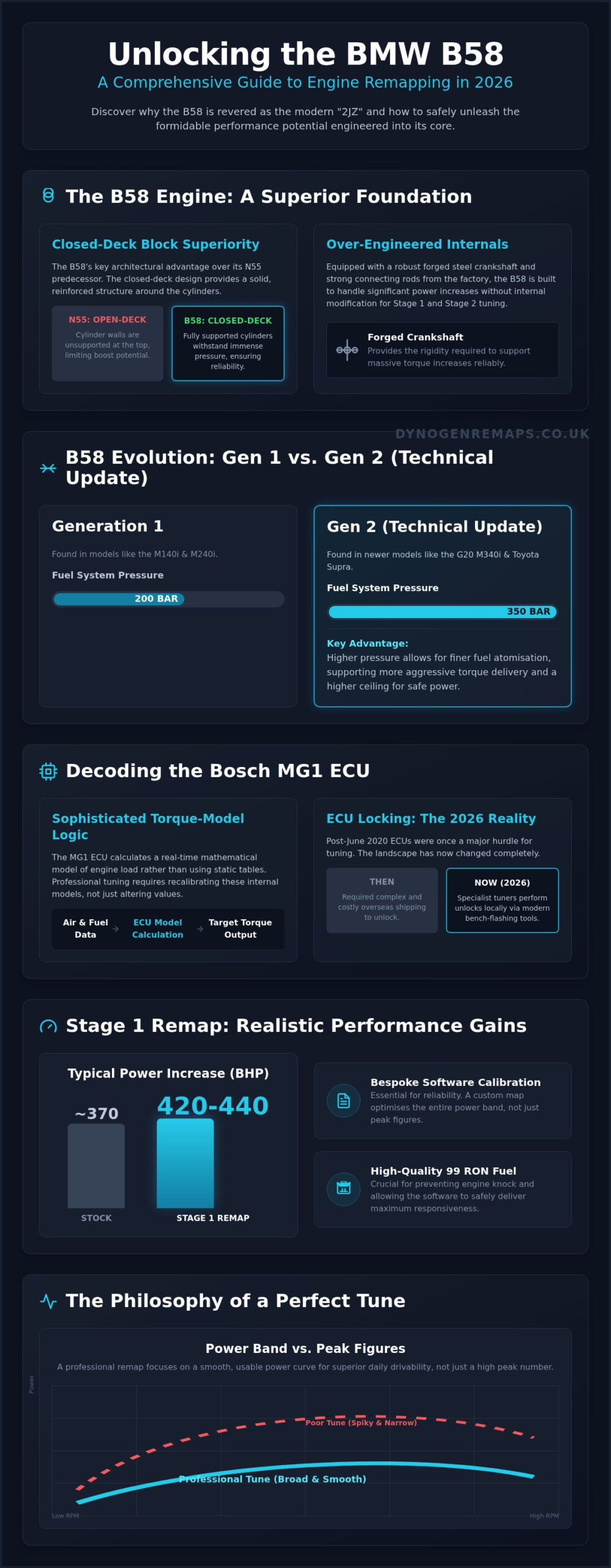
- Explore the realistic performance gains of a professional b58 engine remap, focusing on how to achieve a reliable 420-440 BHP without compromising daily drivability.
- Learn why high-quality 99 RON fuel and custom software calibration are essential for preserving engine health whilst extracting maximum responsiveness.
- Recognise the importance of prioritising the entire power band rather than just peak figures to ensure your vehicle remains smooth and efficient on the road.
The B58 Engine: Why it is the Modern Benchmark for Performance Tuning
The B58 engine represents the pinnacle of BMW’s modular engineering, serving as the formidable successor to the N55 whilst introducing a closed-deck block for vastly superior structural strength. This mechanical foundation has cemented its status amongst the UK tuning community as the “New 2JZ”, a respectful nod to its immense capacity for reliable power. Whether it is found under the bonnet of the agile M140i, the refined M340i, or the iconic Toyota Supra, the B58 offers a level of durability that was previously reserved for dedicated racing powerplants.
Despite this hardware excellence, factory calibrations are often restricted to satisfy stringent global emissions compliance and fleet averages. This leaves a significant amount of unrealised potential within the software. Executing a professional b58 engine remap isn’t just about chasing headline figures; it’s about reclaiming the performance that BMW’s engineers baked into the hardware but were forced to hide behind digital limiters for the mass market.
Closed-Deck Design and Structural Integrity
The shift from the N55’s open-deck architecture to the B58’s closed-deck design is the primary reason this engine handles high boost so effectively. By supporting the cylinder walls at the top of the block, the B58 can withstand significantly higher cylinder pressures without risking bore distortion or head gasket failure. This robustness is further reinforced by a forged steel crankshaft, which provides the necessary rigidity to support the massive torque increases seen during a Stage 1 calibration. Because the internal components are so over-engineered, we can achieve substantial power gains whilst maintaining factory levels of reliability without needing to open the engine.
The B58 Technical Update (TU) vs. Generation 1
Understanding the evolution of the B58 is vital for any successful tuning strategy. The Technical Update (TU) or Gen 2 engines, found in newer models like the G20 M340i, introduced a revised fueling system capable of 350 bar pressure, a marked increase over the 200 bar system found in Gen 1 units. This higher pressure allows for finer fuel atomisation and a higher ceiling for safe power delivery.
Additionally, the TU engine features an integrated exhaust manifold within the cylinder head. Whilst this design aids in faster engine warm-up and emissions control, it changes how we manage heat soak during a b58 engine remap. Gen 2 engines often respond with even more aggressive torque delivery from software alone, provided the tuner understands the nuances of the revised cooling and fueling architecture.
Decoding the ECU: Bosch MG1 Architecture and 2026 Software Trends
The Bosch MG1 ECU architecture marks a departure from the traditional look-up tables found in older BMW models, moving instead towards a sophisticated torque-model based logic. This system doesn’t just read static values; it calculates a mathematical representation of engine load in real-time. A successful b58 engine remap requires a deep understanding of how this software interprets data from the air-to-liquid intercooler. Because this intercooler is integrated directly into the intake manifold, it provides exceptionally consistent intake air temperatures, allowing the ECU to maintain high performance levels without the heat-soak issues that plagued earlier designs.
Torque Monitoring and Safety Limits
Modern Bosch ECUs operate by constantly comparing “Actual Torque” with “Target Torque.” If these figures diverge significantly, the software will intervene to protect the drivetrain. Low-quality tuning solutions often attempt to “trick” sensors by reporting lower boost levels than what is truly present, which is a dangerous practice that can lead to catastrophic failure. At Dynogen, we focus on recalibrating the internal models so the ECU understands and manages the new power levels correctly. This ensures that all factory safety overrides, often referred to as Component Protection, remain fully active to guard the engine against lean conditions or over-boost scenarios.
The 2026 Perspective on ECU Locking
As of Summer 2026, the landscape for post-June 2020 Bosch ECUs has evolved significantly. Whilst these units were once famously restricted, requiring complex overseas shipping for unlocking, modern bench-flashing tools now allow specialist tuners to perform these unlocks locally. This shift has made a professional custom-calibrated B58 remap more accessible than ever for owners of newer models.
Choosing a bench-based remap over a “piggyback” tuning box is essential for anyone serious about performance. Piggyback systems merely intercept signals and can cause erratic power delivery by bypassing the ECU’s inherent safety models. By contrast, a custom software calibration provides a smooth, factory-like experience with significantly higher precision. This level of control allows us to refine the power delivery whilst ensuring the vehicle remains fully compliant with modern emissions standards, providing peace of mind alongside increased performance.
Stage 1 vs. Stage 2: Mapping the B58 Power Curve
Choosing between Stage 1 and Stage 2 is often the most critical decision an owner faces when planning a b58 engine remap. For the vast majority of UK enthusiasts, a Stage 1 calibration represents the “sweet spot” of the platform, delivering a transformative increase in performance whilst retaining every ounce of factory reliability. Typically, we see stock vehicles jump from their factory ratings to a robust 420-440 BHP and approximately 580-600 Nm of torque. This level of output provides a significant surge in mid-range punch without requiring a single physical modification to the vehicle’s hardware.
While these headline figures are impressive, the real value lies in the refinement of the power delivery. For those seeking a broader understanding of this process, our Ultimate Guide to Stage 1 Performance Remapping offers deep insights into how these software changes affect modern drivability across various platforms. By focusing on the shape of the torque curve rather than just peak numbers, we ensure the car remains as civilised in the city as it is aggressive on the open road.
Stage 1: Efficiency Meets Performance
A Stage 1 remap is designed to work within the thermal and mechanical tolerances of the stock components. Although hardware changes aren’t mandatory, we often recommend a high-quality performance air filter to improve the engine’s breathing efficiency. Beyond the engine, our software optimises the shifting behaviour of the ZF8HP automatic gearbox, ensuring that the increased torque is handled smoothly across all eight gears. Drivers will immediately notice a sharper throttle response and a noticeable reduction in turbo lag, making the car feel significantly lighter and more responsive in daily traffic.
Stage 2 and Beyond: The Need for Hardware
Stepping up to Stage 2 requires addressing the primary bottleneck of the B58: the factory downpipe. By installing a high-flow downpipe, we reduce backpressure at the turbocharger’s exit, allowing the turbine to spool faster and shed heat more effectively. This hardware change is essential for supporting the increased boost levels required to push beyond 450 BHP reliably. At this stage, spark plug gap and heat range also become critical factors; we typically recommend colder plugs to prevent pre-ignition under high load.
For those chasing Stage 3 territory, the focus shifts toward hybrid turbochargers and the limitations of the high-pressure fuel pump (HPFP). Whilst Gen 2 (TU) engines have a higher fueling ceiling, early Gen 1 engines often require a pump upgrade to maintain safe air-fuel ratios when targeting figures north of 500 BHP. Each step beyond Stage 1 demands a more meticulous approach to hardware selection to ensure the engine remains protected at its new performance limits.
Reliability and Maintenance: Preserving the B58 whilst Chasing Power
The most frequent concern we encounter regarding a b58 engine remap is whether the increased output will lead to a premature mechanical failure. It is a valid question, but the reality is that the B58 is significantly over-engineered for its factory power levels. When a calibration is performed by a specialist who understands the Bosch MG1 safety limits, the engine remains well within its mechanical tolerances. Properly calibrated software can actually improve thermal efficiency in certain cruise scenarios by optimising fuel atomisation and ignition timing, which reduces the overall heat load on the internal components.
Running a tuned B58 on anything less than 99 RON fuel, such as Shell V-Power or Tesco Momentum, is a risk not worth taking. High-octane fuel provides the necessary knock resistance required when running increased boost pressures. For a deeper dive into the common misconceptions surrounding software modifications, our Safe Engine Tuning UK: Expert Myth-Busting guide provides essential reassurance for those concerned about long-term durability.
Preventative Maintenance for Tuned Engines
Adopting a proactive maintenance schedule is the hallmark of a responsible owner. Whilst BMW may suggest long-life service intervals, we recommend reducing oil change intervals to every 5,000 to 6,000 miles for any remapped vehicle. Using high-quality synthetic oils that meet BMW LL-01 or LL-04 standards is non-negotiable for protecting the turbocharger bearings and Vanos system. Owners should also regularly monitor the B58 oil filter housing for brittleness and check for minor coolant loss, as these are known quirks of the platform that can be exacerbated by the higher thermal demands of a performance map.
Drivetrain Considerations
The method by which your vehicle delivers power to the road dictates how you should manage the increased torque. The xDrive system is exceptionally capable of handling the 600 Nm+ seen in a Stage 1 b58 engine remap, though it does place additional load on the transfer case. RWD models, whilst simpler, require premium tyre compounds to manage the significant increase in low-end torque without constant electronic intervention.
Servicing the ZF8 gearbox fluid and filter becomes paramount when you increase the engine’s output. Although often described as “sealed for life” by dealerships, we advise a gearbox service every 50,000 miles to ensure the clutches can handle the revised torque-model logic smoothly. If you want to ensure your vehicle is maintained to the highest standard, you can book your custom B58 calibration with our specialist team today.
The Dynogen Standard: Bespoke Software for the B58 Platform
The Dynogen philosophy is built upon the belief that a b58 engine remap should be as refined as it is powerful, specifically calibrated for the unique demands of the UK road environment. With over 15 years of industry experience, we’ve navigated the transition from early N-series tuning to the current Bosch MG1 architecture with meticulous precision. Our approach prioritises “Area Under the Curve” rather than just chasing peak BHP figures. This ensures that the power is accessible throughout the rev range, providing a relentless surge of acceleration whether you’re overtaking on a motorway or exiting a tight corner on a country lane. Every software adjustment we make preserves full diagnostic functionality, ensuring your vehicle remains fully MOT compliant whilst benefiting from enhanced performance.
Beyond the Numbers: The Driving Experience
Our bespoke software calibrations aim to deliver a driving experience that feels factory-enhanced rather than aftermarket. By linearising the throttle response, we eliminate the “on-off” feel often associated with aggressive tuning, creating a more naturally aspirated sensation that gives the driver total control. For those looking for further customisation, we offer integrated features such as Cold Start Delete to protect your neighbours’ peace or a Pop & Bang / Crackle Map to add character to your drive. These refinements are part of the broader advantages discussed in our guide to the Top 5 ECU Remapping Benefits, which highlights how bespoke software transforms the relationship between driver and machine.
Choosing a Specialist over a Generalist
The risks of opting for a “flash and dash” generic map from an inexperienced tuner are significant, particularly with a platform as complex as the B58. Inexpensive, generic files often ignore the engine’s sophisticated torque-management systems, leading to erratic power delivery or long-term component strain. At Dynogen, we perform a comprehensive vehicle health check before any software is installed, ensuring your engine, drivetrain, and cooling systems are in peak condition to handle the upgrade. We position ourselves as a superior, personalised alternative to standard dealership options, offering elite skill with a dedicated focus on customer satisfaction. If you’re ready to experience the full potential of your BMW, enquire about your B58 Remap today with Dynogen Remapping Solutions.
Realise the Peak of BMW Engineering
The B58 has redefined what a modern straight-six can achieve, moving beyond the mechanical foundations of its predecessors into a new era of software-driven excellence. By understanding the nuances of the Bosch MG1 architecture and respecting the engine’s over-engineered structural integrity, owners can enjoy significant power gains without sacrificing the reliability that makes this platform so revered. A professionally executed b58 engine remap is the final piece of the puzzle, aligning the engine’s digital logic with its physical capability to deliver a truly transformative driving experience.
With over 15 years of expert vehicle tuning experience and national UK coverage, Dynogen Remapping Solutions provides the bespoke software required to navigate these complex systems safely. Our commitment to precision ensures that your vehicle remains efficient, responsive, and exhilarating on every journey. Unlock your B58’s true potential with a custom Dynogen remap and experience the standard of performance your vehicle was designed to deliver. Your journey toward perfection in vehicle performance starts with a single, expert calibration.
Frequently Asked Questions
How much extra BHP can I realistically expect from a B58 Stage 1 remap?
You can realistically expect a performance increase of 80 to 100 BHP over the factory figures with a Stage 1 calibration. Whilst a stock B58 typically produces around 340 BHP, a professional b58 engine remap elevates this to a robust 420 to 440 BHP range. Torque also sees a significant jump, often reaching 580 to 600 Nm. These gains are achieved safely within the engine’s mechanical limits without needing any hardware modifications.
Is the B58 engine reliable after a remap?
The B58 engine remains exceptionally reliable after a remap, provided the software respects the Bosch ECU’s internal safety models. Because the block features a closed-deck design and a forged crankshaft, it’s structurally capable of handling much higher loads than the factory allows. Longevity is preserved by maintaining factory component protection strategies, ensuring the engine can manage heat and cylinder pressure effectively during spirited driving on UK roads.
Will a B58 remap void my BMW manufacturer warranty?
Modifying the engine software will likely void the powertrain section of your BMW manufacturer warranty. Dealership diagnostic tools can often detect changes to the ECU’s flash counter or torque logs, even if the software is returned to stock before a visit. It’s vital to consider this trade-off between increased performance and warranty coverage. Many owners wait until the initial three-year warranty period has expired before pursuing a professional b58 engine remap.
Do I need to upgrade my fuel pump for a Stage 1 B58 tune?
You don’t need to upgrade your high-pressure fuel pump (HPFP) for a standard Stage 1 tune. The factory fueling system on both Gen 1 and Gen 2 (TU) engines is more than capable of supporting the fuel volume required for 440 BHP. HPFP upgrades only become a necessity when you move towards Stage 2+ or Stage 3 levels, particularly when using ethanol blends or chasing figures beyond the 500 BHP mark.
Can a B58 remap be detected by a dealership during a service?
Dealerships can detect a remap through sophisticated diagnostic systems that monitor “FASTA” data and flash counters. Even if a tuning box is removed or the ECU is flashed back to original settings, the hidden logs of peak torque and boost pressure remain accessible to BMW’s central servers. Whilst a simple oil service might not trigger a deep scan, any significant powertrain warranty claim will result in a thorough digital investigation.
What is the best fuel to use for a remapped B58 engine in the UK?
High-octane 99 RON fuel is the only recommended choice for a remapped B58 engine in the UK. Premium fuels like Shell V-Power or Tesco Momentum 99 provide the superior knock resistance required to run increased ignition timing and boost safely. Using lower-quality 95 RON petrol can lead to the ECU pulling timing to protect the engine, which significantly reduces the performance benefits you’ve gained from the software calibration.
Is it necessary to remap the gearbox (TCU) alongside the B58 engine (ECU)?
Remapping the TCU isn’t strictly mandatory for Stage 1, but it’s highly recommended to fully unlock the engine’s potential. The ZF8 automatic gearbox has internal torque limiters that can occasionally “throttle” the engine’s output if they aren’t raised to match the new ECU targets. A TCU flash also improves shift speeds and optimises shift points, ensuring the drivetrain works in perfect harmony with the increased power delivered by the engine.
Can my 2021 or newer B58 engine be remapped via the OBD port?
Most 2021 or newer B58 engines equipped with the Bosch MG1 ECU cannot be remapped directly via the OBD port. These later units feature a “bench lock” that requires the ECU to be accessed directly by a specialist using professional hardware. As of 2026, many of these post-2020 ECUs can now be unlocked locally by expert tuners, avoiding the need for expensive and time-consuming overseas shipping that was previously standard.