

Could your vehicle’s factory software be the primary reason you’re visiting the petrol station more often than necessary? With diesel prices hovering around 183.4p per litre and petrol at 161.6p, many drivers are urgently asking: is an economy remap worth it? You’ve likely experienced the frustration of a sluggish throttle response in factory ‘eco’ modes, which often prioritise rigid emissions targets over real-world efficiency. It’s natural to feel some uncertainty about engine longevity when considering a software modification, especially with the increased complexity of modern ECU security and anti-tampering measures.
Custom-calibrated software provides the precision needed to unlock hidden efficiency by refining fuel injection timing and boost pressure for more effective torque delivery. We understand the desire for a vehicle that respects your monthly budget without sacrificing reliability or the driving experience. This technical guide identifies the reality behind economy remapping; we’ll move beyond generic claims to show how these adjustments result in genuine financial gains. You will discover a practical framework to calculate your own break-even point and see why professional calibration is a safe choice for your engine. We’ll examine the data behind potential 15% fuel savings and provide the clarity you need to make an informed decision.
Key Takeaways
- Understand how recalibrating your ECU prioritises thermal efficiency and low-end torque to ensure you stay in higher gears for longer.
- Use our technical framework to calculate your break-even point and determine with certainty if an economy remap is worth it for your annual mileage.
- Identify why high-mileage commuters and commercial fleet operators stand to gain the most from software-based fuel saving.
- Learn why custom-calibrated software is essential for maintaining the health of your DPF and turbocharger whilst improving MPG.
- Discover how 15 years of industry experience translates into a more responsive driving experience that doesn’t compromise on mechanical reliability.
What is an Economy Remap and How Does it Differ from Performance Tuning?
An economy remap is a sophisticated software-based recalibration of your vehicle’s Engine Control Unit (ECU) that prioritises thermal efficiency and torque delivery. Whilst standard Chip tuning often focuses on raw speed, an economy-specific calibration targets the ‘sweet spot’ of the rev range. This process ensures that fuel is burnt more completely during the combustion stroke, allowing for leaner operation without compromising engine safety. Many drivers asking is an economy remap worth it find the answer lies in how these adjustments reduce the mechanical effort required to maintain cruising speeds.
Manufacturers typically adopt a ‘one-size-fits-all’ global software strategy. They must ensure a vehicle performs reliably in extreme climates with varying fuel qualities, which often results in a conservative factory map. By refining fuel rail pressure and injection timing through a dedicated ‘Blue’ or ‘Eco’ map philosophy, we remove these generic compromises. This level of per-vehicle software adjustment allows the engine to operate with much greater precision than the factory programme allows.
The ECU: The Brain Behind Your Vehicle’s Efficiency
The ECU acts as the central processor, managing the delicate balance between the air-to-fuel ratio and ignition timing. In an economy calibration, the turbocharger’s boost pressure is often adjusted to provide more low-end grunt. This change allows the driver to shift up earlier and remain in higher gears for longer. Factory settings are frequently restricted to account for poor maintenance or low-grade lubricants in other markets, but our custom software focuses on the high standards of maintenance seen in the UK.
Economy vs. Stage 1 Performance Maps
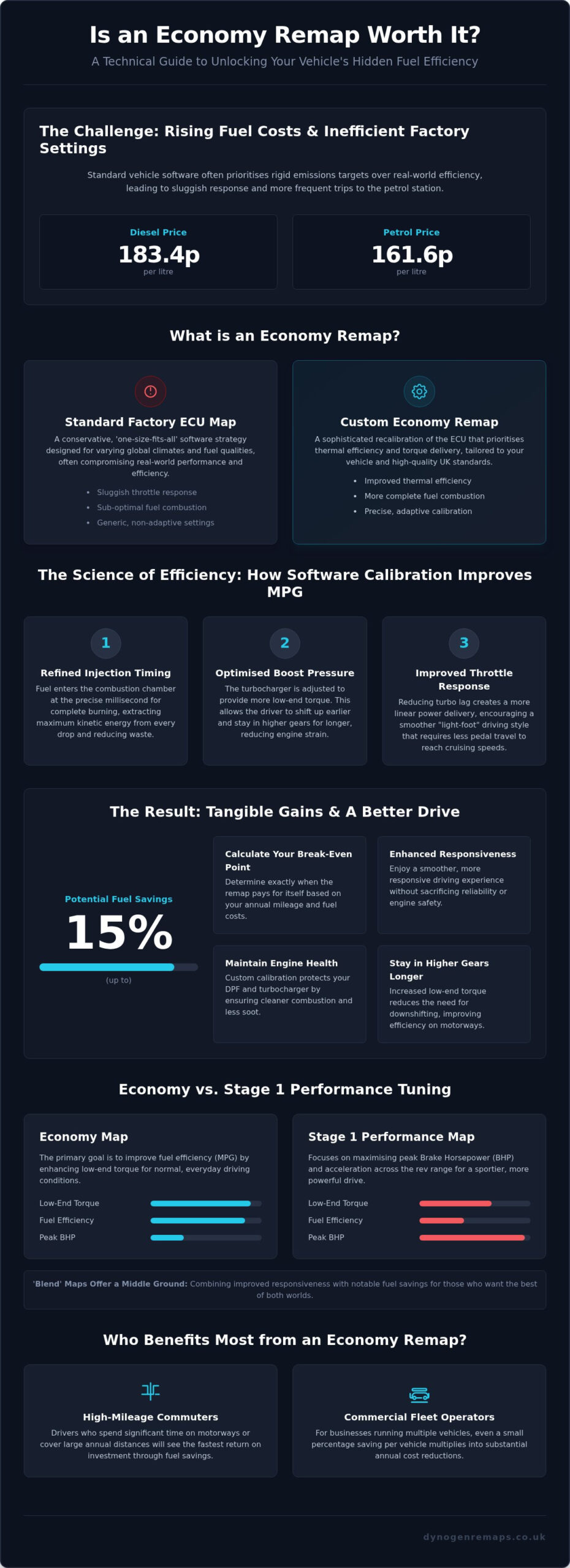
The primary difference between these calibrations is found in the power delivery curve. A Stage 1 map focuses on maximising peak Brake Horsepower (BHP) for acceleration. In contrast, an economy map enhances low-end torque to improve efficiency under normal driving conditions. For those who can’t decide, a ‘Blend’ map offers a middle ground, combining improved responsiveness with notable fuel savings. You can explore these differences further in The Ultimate Guide to Stage 1 Performance Remapping in 2026. Understanding these technical nuances is the first step in deciding if is an economy remap worth it for your specific driving habits.
The Science of Efficiency: How Software Calibration Improves MPG
Understanding the mechanical “why” is vital for any driver asking is an economy remap worth it. Software calibration improves MPG by manipulating several key engine parameters simultaneously. One of the most impactful changes involves the optimisation of injection timing. By ensuring fuel enters the combustion chamber at the precise millisecond where it can be burnt most completely, we extract maximum kinetic energy from every drop. This cleaner combustion reduces waste heat and soot production, which protects your engine’s internal components. Academic research on ECU remapping supports these findings, highlighting how recalibrating these variables can lead to measurable efficiency gains across various driving cycles.
We also prioritise the reduction of turbo lag to create a more linear power delivery. When an engine responds instantly to small inputs, the driver naturally adopts a more efficient style, often referred to as “light-foot” driving. Reducing the required throttle percentage means you can reach cruising speeds with significantly less pedal travel. This smoother transition between gears reduces the need for aggressive downshifting during overtakes, which is a key factor when evaluating if is an economy remap worth it for daily motorway use. The result is a vehicle that feels lighter and more capable without demanding more fuel.
The Relationship Between Torque and Fuel Consumption
Brake Specific Fuel Consumption (BSFC) is a technical metric used to evaluate how efficiently an engine converts fuel into power. In simple terms, it’s the ratio of fuel consumed to the work produced. By shifting the torque curve lower in the RPM range, we allow the engine to operate in its most efficient zone more often. Optimising torque directly reduces the engine load required to maintain a steady 70mph by allowing the vehicle to remain in its highest gear without straining the drivetrain. This reduction in parasitic loss is exactly how software-based tuning delivers tangible results at the pump.
Diesel vs. Petrol: Where are the Biggest Gains?
Turbo-diesel engines generally see the most impressive results from this process. Because diesel engines operate with excess air and rely heavily on turbocharger pressure, there is more scope for refinement. It’s common to see improvements of 10-15% in modern Euro 6 units. Petrol engines see smaller MPG gains, but the increase in low-end responsiveness makes the vehicle feel significantly more refined. For those operating heavy-duty vehicles, our guide to Diesel Economy Tuning UK provides a deeper dive into these specific mechanical advantages.
Our specialist Economy Remap ensures your vehicle operates at its absolute peak efficiency, providing a superior alternative to standard factory software.
Calculating the ROI: Is an Economy Remap Financially Worth It?
Determining if is an economy remap worth it requires a logical look at the numbers. The initial investment in a professional service represents a commitment to technical precision. Generic ‘tuning boxes’ often promise similar results for a lower price, but they typically work by spoofing sensor data, which can lead to over-fuelling and mechanical strain. Direct software adjustment through a custom-calibrated remap optimises the engine’s internal efficiency, ensuring that the financial outlay translates into a genuine, long-term asset for your vehicle.
Our break-even formula considers three primary variables: your annual mileage, your current average MPG, and the price of fuel per litre. For a typical commercial van covering 20,000 miles per year, a modest 10% improvement in fuel economy results in hundreds of pounds saved annually. These figures often mean the service pays for itself within the first six to nine months of driving. Beyond the direct cash saving, smoother power delivery reduces ‘gear hunting’ in automatic gearboxes, which lowers wear on the transmission and drivetrain.
The Break-Even Point for Private vs. Commercial Drivers
Fleet managers and high-mileage van drivers see the fastest return on investment because their vehicles operate almost constantly. Private owners also find significant value in specific scenarios. A motorhome owner planning a 3,000-mile European tour will notice the difference in both fuel costs and the ease with which the vehicle handles steep gradients. You can see a detailed breakdown of these results in our Ford Transit Economy Remap Case Study, which highlights the tangible benefits for commercial operations.
Beyond the Pump: Longevity and Resale Value
Professional economy mapping reduces soot and carbon buildup within the engine by refining the combustion process. This cleaner operation is essential for the long-term health of your Diesel Particulate Filter (DPF) and Exhaust Gas Recirculation (EGR) valve. Maintaining these components prevents costly repairs and ensures your vehicle remains compliant with MOT emissions standards. When you consider these reduced maintenance overheads alongside the fuel savings, the question of whether is an economy remap worth it becomes much clearer for the cost-conscious driver.
Who Benefits Most? Identifying the Best Use Cases for Economy Tuning
Identifying the specific vehicle application is the final step in answering is an economy remap worth it. For high-mileage commuters, the cumulative effect of a 5 to 8 MPG improvement is substantial. A vehicle that typically returns 50 MPG can often be transformed into a 55+ MPG motorway cruiser, significantly reducing the monthly fuel bill for those covering 15,000 miles or more annually. Commercial fleet operators managing five or ten vans see an even more dramatic shift; when these savings are multiplied across multiple units, the annual reduction in overheads becomes a vital part of the business’s profitability. For those looking to expand their fleet with heavy-duty vehicles, the Simple Lend Marketplace offers a reliable platform for sourcing used Class 8 dump trucks.
Remapping provides a distinct advantage when pulling a caravan or heavy trailer. By recalibrating the ECU to deliver increased torque lower in the rev range, the engine handles heavy loads with significantly less mechanical strain. This allows the vehicle to maintain cruising speeds on steep inclines without the need for aggressive downshifting, which keeps the engine in its most efficient operating window. You can find more information on these specific benefits in our Remapping for Towing: Torque and Pulling Guide.
The Professional Van Driver’s Perspective
Couriers and delivery drivers find that Van Remapping for Better MPG is a standard industry practice for maintaining a competitive edge. Balancing the weight of a fully loaded van with software-optimised power delivery ensures the engine doesn’t have to work as hard during urban stop-start traffic. Real-world feedback often highlights how the vehicle feels more responsive and less ‘laboured’ when moving away from lights or navigating tight city streets. This improved drivability reduces driver fatigue whilst simultaneously protecting the bottom line.
To discover the specific efficiency gains available for your make and model, contact our specialist team today for a custom calibration quote.
Choosing a Professional Solution: Why Custom Calibration Matters
Selecting the right provider is as critical as the software itself when determining is an economy remap worth it for your vehicle. Many generic tuning franchises rely on ‘canned’ or ‘slave’ files; these are non-specific maps applied to every vehicle of a certain model regardless of its unique mechanical history or mileage. These generic calibrations don’t account for specific engine wear and often push components beyond their safe tolerances, which can lead to premature DPF blockage or turbocharger failure. Our approach involves 15 years of technical expertise and a steadfast commitment to per-vehicle software adjustment that respects the specific health of your engine.
A reputable tuning centre must perform a full diagnostic sweep before any software is written to ensure the sensors, injectors, and turbo are functioning correctly. Remapping a faulty engine only amplifies existing problems, so a professional diagnostic process is non-negotiable for a safe result. Superior calibration services also include comprehensive insurance and a dedicated aftercare service to provide peace of mind. When these standards are met, the question of is an economy remap worth it is answered by the immediate improvement in both your bank balance and your vehicle’s behaviour. You gain a more responsive machine that costs significantly less to run.
Avoiding the ‘Black Box’ Trap
Hardware tuning boxes represent an inferior alternative to a proper ECU remap. These devices typically work by ‘tricking’ the ECU into seeing lower fuel rail pressures, which forces the system to over-fuel to compensate. This crude method lacks the sophistication of direct software adjustment and often bypasses factory safety limits, significantly increasing the risk of engine damage over time. Professional remapping maintains all original safety protocols whilst optimising the air-to-fuel ratio for leaner combustion. We always conduct a meticulous pre-map health check to confirm your vehicle is fit for the calibration process before we begin.
Next Steps for Your Vehicle
Preparing your vehicle for an economy remap involves ensuring it is up to date with its servicing and that tyres are at the correct pressures. During your appointment, we follow a logical and methodical process: a full diagnostic check, a read of the original ECU software, and the installation of your custom-calibrated map. This is followed by a test drive to ensure the power delivery is smooth and the efficiency gains are immediate. To begin your journey toward better fuel economy, Contact Dynogen today for a custom economy remapping consultation and discover how our expertise can transform your driving experience.
Maximising Your Vehicle’s Potential for Long-Term Efficiency
Recalibrating your engine’s software is a strategic investment in mechanical precision and financial sustainability. By prioritising torque delivery and thermal efficiency, you move beyond the compromises of factory settings to achieve a more responsive and cost-effective driving experience. For the high-mileage commuter or commercial operator, the data indicates that the return on investment is both rapid and substantial. When considering if is an economy remap worth it, the answer lies in the combination of immediate fuel savings and the long-term preservation of critical components like the DPF and EGR systems.
Our team combines over 15 years of expert tuning experience with custom-calibrated software tailored to your specific vehicle’s requirements. This specialist approach ensures that your efficiency gains never come at the expense of reliability. It’s time to take control of your fuel expenditure with a solution rooted in technical excellence and pride in workmanship. Request a Professional Economy Remapping Quote from Dynogen and start optimising your vehicle’s performance today.
Frequently Asked Questions
Will an economy remap void my car’s warranty or insurance?
A remap may void the manufacturer’s warranty on powertrain components if they detect the software modification. Most modern dealerships use diagnostic tools that identify non-factory calibrations. Regarding insurance, you must declare any modification to your provider. Failure to disclose the software change could result in a cancelled policy or a rejected claim. We recommend checking your specific policy terms before proceeding with any ECU modification. This ensures you remain protected.
How much fuel will I actually save with an economy remap?
A professional calibration typically allows drivers to see fuel economy improvements of up to 15%. The exact figure depends heavily on your driving style and the type of journeys you complete. Motorway cruisers and heavy-duty vans often see the most significant gains. When evaluating is an economy remap worth it, consider your annual mileage alongside these potential percentages. This helps you determine your specific break-even point and long-term financial reward.
Can an economy remap damage my DPF or EGR system?
Our custom-calibrated software protects these systems by ensuring a cleaner combustion process with less soot production. Problems only arise from generic ‘canned’ maps that over-fuel the engine. Professional software maintains safe thermal limits and prevents the excessive carbon buildup that leads to DPF blockage. We include specialist technical solutions for these components to ensure your vehicle remains reliable and efficient for thousands of miles. This focus on reliability is a core part of our service.
Is there a difference between a ‘fuel save’ remap and a ‘blend’ remap?
A ‘fuel save’ or pure economy map prioritises thermal efficiency and low-end torque above all else. It’s designed specifically for those whose primary goal is reducing pence-per-mile costs. A ‘blend’ map offers a sophisticated middle ground, providing a noticeable increase in Brake Horsepower whilst still delivering around half the fuel savings of a full economy map. This choice depends on whether you value maximum savings or a more spirited drive. Both options enhance the driving experience.
Do I need to tell my insurance company about an economy remap?
You must inform your insurance company about an economy remap because it is classified as a vehicle modification. In the UK, failing to declare changes to the factory ECU software can invalidate your entire policy. Whilst some providers don’t increase premiums for efficiency-based tuning, they still require the modification to be noted on your file. Honesty ensures you remain fully covered and compliant with your legal obligations. It’s a simple step that provides essential protection.
Will my car still pass an MOT after an economy remap?
Your vehicle will still pass its MOT provided the remap doesn’t cause the engine to exceed legal emissions or smoke opacity limits. Professional software optimisation focuses on cleaner combustion, which often results in better emissions results than a standard factory map. We don’t offer MOT testing ourselves, but we ensure our calibrations are designed to keep your vehicle within the required UK environmental standards. This methodical approach maintains the legality of your vehicle on the road.
How long does the remapping process take to complete?
The professional remapping process typically takes between one and three hours to complete. This duration allows our technicians to perform a full pre-installation diagnostic check, read the original factory software, and apply the custom-calibrated economy file. We also conduct a post-installation test drive to verify that the power delivery is smooth and the efficiency gains are active. This careful approach ensures the highest standard of workmanship. It reflects our commitment to technical excellence.
Is an economy remap worth it for a petrol engine?
An economy remap provides smaller MPG gains for petrol engines compared to turbo-diesels, but it still offers tangible benefits. You might see a 5% to 8% improvement in efficiency alongside a much sharper throttle response. For many petrol drivers, asking is an economy remap worth it leads to a focus on improved drivability and smoother power delivery. It transforms a sluggish engine into a more responsive machine. The technical refinement makes every journey more enjoyable.