
The most affordable way to fix a blocked filter is often the most expensive investment you can make in your vehicle’s long-term health. If you have spent the last few weeks dreading the sudden onset of limp mode or watching your fuel economy plummet during failed regeneration cycles, you are likely weighing up the cost of DPF cleaning vs software solution. It is incredibly frustrating to feel like you are constantly fighting your own car just to stay on the road; it is even worse when main dealers suggest that a repair bill exceeding £3,000 for a replacement unit is your only exit strategy.
We believe your vehicle should deliver smooth, reliable power without the constant threat of a dashboard warning light. This guide provides a definitive technical and financial comparison between temporary mechanical maintenance and permanent software-based resolutions. You will discover how custom calibration can finally end the cycle of soot accumulation, improve your engine’s responsiveness, and restore the driving excellence your diesel was designed to provide. We are moving beyond surface-level fixes to examine the professional reality of diesel particulate filter management.
Key Takeaways
- Distinguish between combustible soot and permanent ash to understand why mechanical cleaning often serves as a short-term patch rather than a final fix.
- Evaluate the total cost of DPF cleaning vs software solution by factoring in recurring workshop fees, diagnostic labour, and the impact on long-term fuel economy.
- Discover how custom-calibrated software modifications address the root cause of limp mode issues by refining the engine’s management of emissions components.
- Learn why eliminating failed regeneration cycles is essential for protecting your engine’s internal components from the risks of diesel oil dilution.
- Identify the importance of choosing a specialist with 15 years of expertise to ensure your vehicle receives a bespoke solution rather than a generic, unreliable file.
Understanding the DPF Dilemma: Why Cleaning Often Isn’t Enough
A diesel particulate filter (DPF) is far more than a simple exhaust component; it’s a sophisticated ceramic trap designed to capture harmful particulate matter before it exits the tailpipe. To understand the underlying diesel particulate filter mechanics, you must view the unit as a finite storage vessel. Whilst it’s highly efficient at capturing carbon, its capacity is eventually exhausted by the accumulation of non-combustible material. When drivers evaluate the cost of DPF cleaning vs software solution, they often overlook the fact that a physical filter has a definitive lifespan that no amount of chemical rinsing can fully reset.
Modern engine management systems rely on pressure sensors to monitor the health of this filter. When the unit reaches a specific saturation point, the ECU triggers a regeneration cycle to incinerate the trapped soot. However, as the vehicle ages and mileage increases, these cycles become more frequent and less effective. This creates a cycle of mechanical stress that eventually leads to the dreaded dashboard warning light and a significant loss of vehicle performance. Understanding why these built-in cleaning cycles fail is the first step toward finding a permanent resolution.
Soot vs Ash: The Mechanical Reality
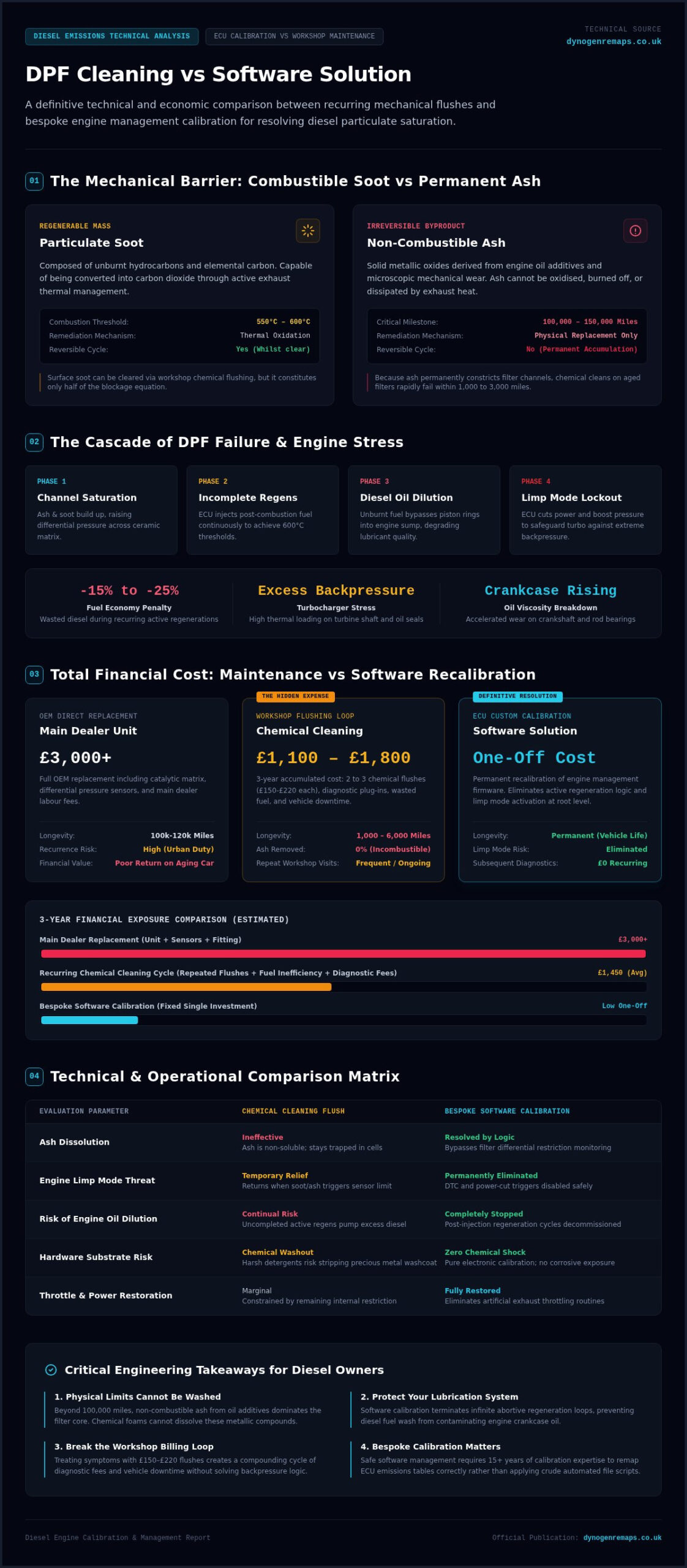
The critical distinction between a temporary blockage and a terminal failure lies in the chemistry of the obstruction. Soot is essentially unburnt fuel and carbon that can be oxidised into carbon dioxide during high-temperature regeneration cycles, typically requiring exhaust temperatures between 550°C and 600°C. Ash, however, is a permanent byproduct of engine oil additives and metallic wear. It’s physically impossible to burn ash away. Research indicates that by the time a vehicle reaches 100,000 to 150,000 miles, the filter channels are often permanently restricted by these metallic oxides. At this stage, the cost of DPF cleaning vs software solution becomes a question of longevity; cleaning might remove the soot, but the ash remains, ensuring the blockage returns within a few thousand miles.
Common Symptoms of a Failing DPF System
Recognising the early warning signs of a failing system can save you from a complete breakdown on the motorway. A system that has reached its physical limit typically manifests through several distinct behaviours:
- Frequent attempts at active regeneration, often noticed by a high idle speed and a distinct hot smell from the exhaust.
- A sharp decline in fuel economy as the ECU pumps extra diesel into the cylinders to raise exhaust temperatures.
- Sluggish throttle response and a feeling that the engine is “choked” due to excessive backpressure.
- The sudden activation of limp mode, which restricts the engine to low power to protect the turbocharger from damage.
This psychological “limp mode trap” creates a sense of urgency that often leads owners to accept the first expensive quote they receive from a main dealer. By understanding that the hardware has reached its physical limit, you can move away from temporary patches and consider a more sophisticated software-based approach that addresses the root cause of the management logic.
The True Cost of Professional DPF Cleaning Services
Professional cleaning is often presented as the primary alternative to a full unit replacement. Whilst entry-level chemical flushes typically range from £120 to £220 in the UK, these are often just the beginning of a larger financial drain. When you factor in diagnostic labour and the inevitable repeat visits, the cost of DPF cleaning vs software solution begins to shift in favour of a permanent recalibration. It’s vital to recognise that a workshop invoice only tells half the story; the true expense lies in the downtime and the recurring nature of mechanical blockages.
Chemical Cleaning: A Temporary Reprieve?
On-vehicle chemical cleaning involves injecting specialised foam directly into the filter housing to emulsify surface soot. Whilst this can clear minor obstructions and restore some flow, it rarely addresses the solidified ash content that accumulates over time. There’s also a significant risk that aggressive chemicals can degrade the precious metal washcoat on the ceramic substrate, leading to premature hardware failure. For high-mileage vehicles, this “quick fix” often lasts only a few weeks before the pressure sensors trigger another dashboard error.
Thermal and Hydro Cleaning: Deep Fixes
More intensive methods like ultrasonic cavitation or hydrodynamic flushing require the physical removal of the exhaust component. This “bake and blow” process often incurs significant labour costs, particularly on modern vehicles where the filter is integrated into a complex, cramped engine bay. Professional off-vehicle cleaning services generally cost between £180 and £350, yet even a filter restored to 95% flow capacity will fail if the underlying engine sensors or EGR valves remain faulty. According to official guidance on diesel particulate filters, regular maintenance is vital, but mechanical cleaning cannot rectify software logic errors or sensor inaccuracies.
Beyond the workshop invoice, hidden expenses mount quickly. Forced regenerations consume significant amounts of diesel and risk oil dilution, which can lead to catastrophic turbocharger failure. If you find yourself paying for multiple “deep cleans” within a single year, you aren’t fixing the problem; you’re simply managing a symptom. For a more reliable alternative that ends this cycle and restores your vehicle’s performance, exploring a specialist DPF solution can provide the permanence that mechanical cleaning lacks. Choosing a one-off software recalibration often proves more cost-effective than a series of temporary mechanical interventions.
DPF Software Solutions: A Permanent Fix for Reliability Issues
Whilst mechanical cleaning addresses the physical symptoms of a blocked filter, a professional software recalibration targets the electronic management logic that governs the entire emissions system. When evaluating the cost of DPF cleaning vs software solution, you must consider the value of a “fit and forget” approach. Many drivers find themselves trapped in a cycle of temporary repairs because they are treating a symptom rather than the root cause. A bespoke software solution ensures that your vehicle no longer suffers from the management errors that lead to unexpected power loss and dashboard warnings.
This technical approach is particularly effective when integrated with Diesel economy tuning UK. By optimising how the engine processes fuel and manages exhaust gases, we can eliminate the inefficient regeneration cycles that traditionally waste litres of diesel. It’s a sophisticated method that draws on over 15 years of tuning expertise to provide a level of reliability that simple workshop cleaning cannot match.
The ECU Remapping Process for DPF Issues
Our process begins with a meticulous read of your vehicle’s original factory software. This allows us to identify the specific parameters and fault triggers that are causing the system to fail. Rather than using generic, off-the-shelf files, we perform a custom recalibration of the Engine Control Unit (ECU). We modify the software to stop the initiation of active regeneration cycles, which are often the primary cause of oil dilution and engine stress. This ensures all other engine safety parameters remain within strict mechanical limits whilst providing a permanent resolution to software-induced limp mode.
Software vs Hardware: The Reliability Argument
The primary weakness of the hardware-only approach is the reliance on delicate sensors. Even the cleanest filter will trigger a fault code if a differential pressure sensor or exhaust temperature probe fails. According to the RAC guide to DPF maintenance, these sensor issues are a leading cause of vehicle breakdowns. Software calibration removes this vulnerability entirely. By refining the ECU logic, we can also Increase engine torque and power, transforming a sluggish, restricted diesel into a responsive and efficient machine.
Choosing a professional software solution means investing in the long-term health of your engine. It eliminates the anxiety of the cost of DPF cleaning vs software solution by providing a one-time fix that protects your turbocharger and prevents the diesel-into-oil contamination that often follows failed regenerations. It is the definitive choice for the driver who values technical excellence and uninterrupted vehicle availability.
Financial Comparison: ROI and Long-Term Vehicle Maintenance
Evaluating the cost of DPF cleaning vs software solution requires a shift from looking at immediate invoices to calculating the total cost of ownership. Many owners focus on the lower entry price of a chemical flush without considering the high probability of the fault returning. For those who rely on their vehicle for daily transport or business, the financial impact of repeated workshop visits and the associated downtime often outweighs the initial saving. A professional software recalibration is a strategic investment that eliminates these recurring expenses and protects the engine from the collateral damage caused by failed regeneration cycles.
Calculating the 3-Year Maintenance Path
Urban environments are notoriously harsh on diesel particulate filters. For a driver covering short city trips, the filter may require professional intervention every 12 to 18 months to clear ash and soot accumulation. If you factor in the labour for diagnostics and the cleaning service itself, the cumulative expense mounts rapidly. Conversely, a Stage 1 remap with integrated DPF software represents a singular investment in vehicle health. Whilst three professional cleans can easily exceed £750 over three years, a one-off software calibration provides a permanent resolution at a fraction of that total cost.
Fuel Savings and Efficiency Gains
Every time your vehicle attempts an active regeneration, the ECU initiates a post-injection phase to raise exhaust temperatures. This process consumes a measurable amount of diesel that never contributes to propulsion. By recalibrating the engine logic, you eliminate this fuel wastage immediately. This is particularly valuable for commercial operators seeking Van remapping for better MPG, where every percentage point of efficiency affects the bottom line. Eliminating these cycles reduces engine wear and prevents the oil dilution issues that often lead to expensive turbocharger repairs.
The hidden cost of DPF failure is the loss of vehicle availability. A car or van stuck in limp mode is a liability, especially for those who rely on their vehicle for work. When you compare the cost of DPF cleaning vs software solution, you must include the price of missed appointments and temporary vehicle hire. A vehicle with a history of recurring emissions faults is also significantly harder to sell. A fault-free dashboard and a smooth-running engine preserve the residual value of your asset; you won’t be forced to accept a lower price due to persistent warning lights.
There is an environmental trade-off to consider between peak filtration efficiency and overall engine efficiency. Whilst a functional filter reduces particulates, a clogged system forces the engine to work harder and burn more fuel. A software solution prioritises engine health and thermal efficiency, which often results in a cleaner-running engine with lower overall carbon output per mile. Ready to end the cycle of recurring workshop bills? Consult our specialists to discover how a bespoke software recalibration can transform your vehicle’s reliability and fuel economy.
Navigating the Choice: Why Professional Software Calibration Wins
Deciding between the cost of DPF cleaning vs software solution depends heavily on your specific driving patterns and long-term vehicle goals. For urban drivers who frequently navigate stop-start traffic, the exhaust temperatures required for passive regeneration are rarely achieved. In these conditions, even a professionally cleaned filter will inevitably saturate with soot again within a few thousand miles. A software solution provides the only definitive way to break this cycle, ensuring that city driving no longer results in an unexpected trip to the workshop in limp mode.
The UK market is currently saturated with “mobile tuners” offering bargain-basement prices for generic DPF files. We have witnessed the significant damage these poor-quality maps can cause, ranging from erratic idling to permanent ECU architecture corruption. A cheap, generic remap often ignores critical safety limiters or leaves the engine management system in a state of perpetual conflict. True mechanical reliability requires a specialist who understands the deep technical nuances of your vehicle’s specific control unit.
The Dynogen Standard of Excellence
Our commitment to technical excellence is built upon over 15 years of specialist tuning experience. We utilise dealer-grade diagnostic equipment and custom-calibrated software to ensure every modification is bespoke to the individual vehicle. We focus on the pursuit of perfection in engine performance, re-engineering the software logic to restore the smooth, responsive driving experience you expect. This professional stance ensures that long-term engine health is never sacrificed for a quick fix, providing a level of certainty that generic files simply cannot offer.
Next Steps for Your Diesel Vehicle
Taking the first step towards a reliable, fault-free vehicle begins with a professional diagnostic consultation. Identifying the root cause of your blockages allows us to provide a tailored recommendation based on your vehicle’s age and mileage. Many of our clients choose to combine their DPF recalibration with the various ECU remapping benefits, such as enhanced throttle response and a more linear power delivery. This holistic approach transforms the vehicle from a source of anxiety into a high-performing asset.
If your vehicle has exceeded the 100,000-mile threshold, the cost of DPF cleaning vs software solution overwhelmingly favours a permanent software recalibration. At this stage, the accumulation of incombustible ash makes mechanical cleaning a temporary patch at best. Contact our team today for a bespoke technical component software quote. We provide the expert support and specialized knowledge required to end the DPF warning light cycle and restore your vehicle’s true potential.
Restoring Your Vehicle’s Operational Excellence
Choosing the right path for your diesel engine requires a move away from short-term fixes and toward technically superior solutions. We’ve established that whilst mechanical cleaning handles combustible soot, it cannot address the permanent ash accumulation that eventually renders hardware ineffective. When you weigh up the cost of DPF cleaning vs software solution, the financial and practical advantages of custom calibration become undeniable. You’re investing in a vehicle that no longer suffers from unexpected limp mode, oil dilution, or the frustration of recurring dashboard warnings.
Our team draws on 15 years of technical excellence to provide custom-written software calibration that respects your engine’s mechanical limits whilst unlocking its true potential. With national UK coverage, we ensure that every driver can access the same level of professional expertise traditionally reserved for elite performance tuning. It’s time to end the cycle of temporary repairs and reclaim the smooth, efficient driving experience your vehicle was designed to deliver. Take the definitive step toward permanent reliability today and Request a Professional DPF Software Solution Quote. Your vehicle’s peak performance is only a calibration away.
Frequently Asked Questions
Is a DPF software solution legal for road use in the UK?
It’s a legal requirement for vehicles on public roads to keep their original emissions gear working. Whilst software solutions offer great reliability for off-road or track use, road-going owners should know that tampering can lead to heavy fines. We always advise checking current legislation before making a choice to ensure your vehicle remains compliant with UK road laws.
Will a software fix stop my car from going into limp mode permanently?
It’s a permanent fix for the software-induced power restrictions that plague modern diesels. By adjusting how the ECU monitors the filter, we can stop the limp mode cycle that mechanical cleaning often misses. This approach ensures your car stays responsive without the threat of sudden dashboard warnings or restricted performance during your journey.
Does DPF cleaning actually remove ash or just soot?
It’s vital to know that cleaning mostly handles soot, not the permanent ash that builds up over 100,000 miles. Ash is a metallic byproduct from oil and engine wear that no chemical flush can truly dissolve. When you compare the cost of DPF cleaning vs software solution, remember that software logic works regardless of ash levels in the filter substrate.
How much does a DPF software solution cost compared to a new filter?
It’s a much more affordable route than buying an OEM replacement filter, which often costs between £1,000 and £3,500. Software calibration provides a one-time fix at a fraction of that price. This makes it a smart choice for older vehicles where a new unit just isn’t financially viable due to the car’s current market value.
Can I still pass an MOT after a DPF software modification?
It’s an automatic failure if an MOT tester sees signs of tampering or removal. While software changes aren’t always visible, smoke tests and new particle counters can catch disabled systems. You should always ensure your vehicle meets the required legal standards for its intended use to avoid the risk of failing the annual inspection.
Will a software-based DPF fix improve my car’s fuel economy?
It’s common to see better MPG once the inefficient regeneration cycles are stopped. These cycles pump extra diesel into the exhaust just to burn soot, wasting fuel every few hundred miles. It’s a primary reason many drivers evaluate the cost of DPF cleaning vs software solution when seeking to lower their monthly running costs.
How long does the software remapping process take to complete?
It’s usually a process that takes between one and three hours at our facility. We start with a full health check before applying a custom-written map to your ECU. It’s a much faster alternative to waiting days for a filter to be removed, cleaned, and refitted by a workshop, getting you back on the road sooner.
Is it better to clean the DPF before getting a software solution?
It’s rarely necessary unless the filter is so blocked that backpressure might damage the turbocharger. We’ll assess your vehicle’s health first to see if a pre-clean is required for safety. Most of the time, the software recalibration is enough to end the cycle of blockages without needing extra mechanical work or workshop time.