
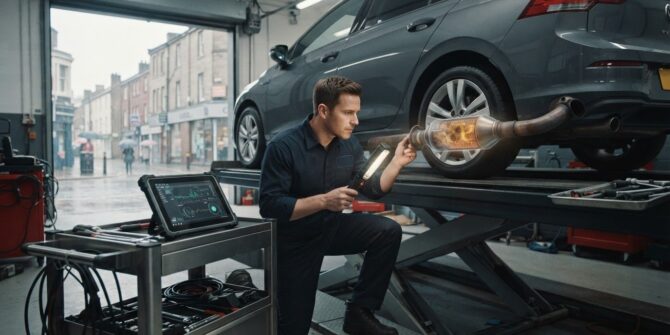
Could the cheapest DPF fix leave the warning light waiting to return? A forced regeneration can burn off soot, but it won’t resolve every cause of a blockage. That’s why a quote, or a search for “DPF remap cost UK”, only tells part of the story.
It’s understandable to want a clear price and a lasting fix, especially if your vehicle is in limp mode. Forced regeneration and a DPF software solution are different interventions: one aims to clear soot from the filter, while the other involves diagnosis and software coding for relevant faults. Neither should be recommended without considering the vehicle’s fault codes and diagnostic checks.
This guide explains what can affect the cost and work involved in forced DPF regeneration, how it differs from a software solution, and why the underlying cause matters if you want to reduce the chance of the fault returning. It also covers how vehicle condition and intended use can shape the next step, so you can assess the diagnosis as well as the quote.
Key Takeaways
- Forced regeneration targets soot in the DPF. It won’t resolve every fault or remove accumulated ash.
- Vehicle configuration, ECU access and diagnostic findings can all affect the work involved and the quote.
- Compare forced regeneration with a DPF software solution by matching each option to the diagnosed fault, not just the warning light.
- When considering DPF remap cost UK, look beyond the headline figure and understand what diagnosis and work the quote covers.
- Dynogen’s DPF Solution is tailored to the vehicle and includes diagnostic labour and software coding for relevant faults.
Forced DPF Regeneration Cost UK: What the Service Does, and Does Not Include
A forced DPF regeneration is a controlled process intended to burn soot collected in a diesel particulate filter. As soot builds up, exhaust flow can become restricted. Regeneration raises the temperature in the exhaust system so suitable soot can burn away. It isn’t a universal repair: the cause of the blockage, the filter’s condition and the vehicle’s diagnostic results all affect whether the process is appropriate.
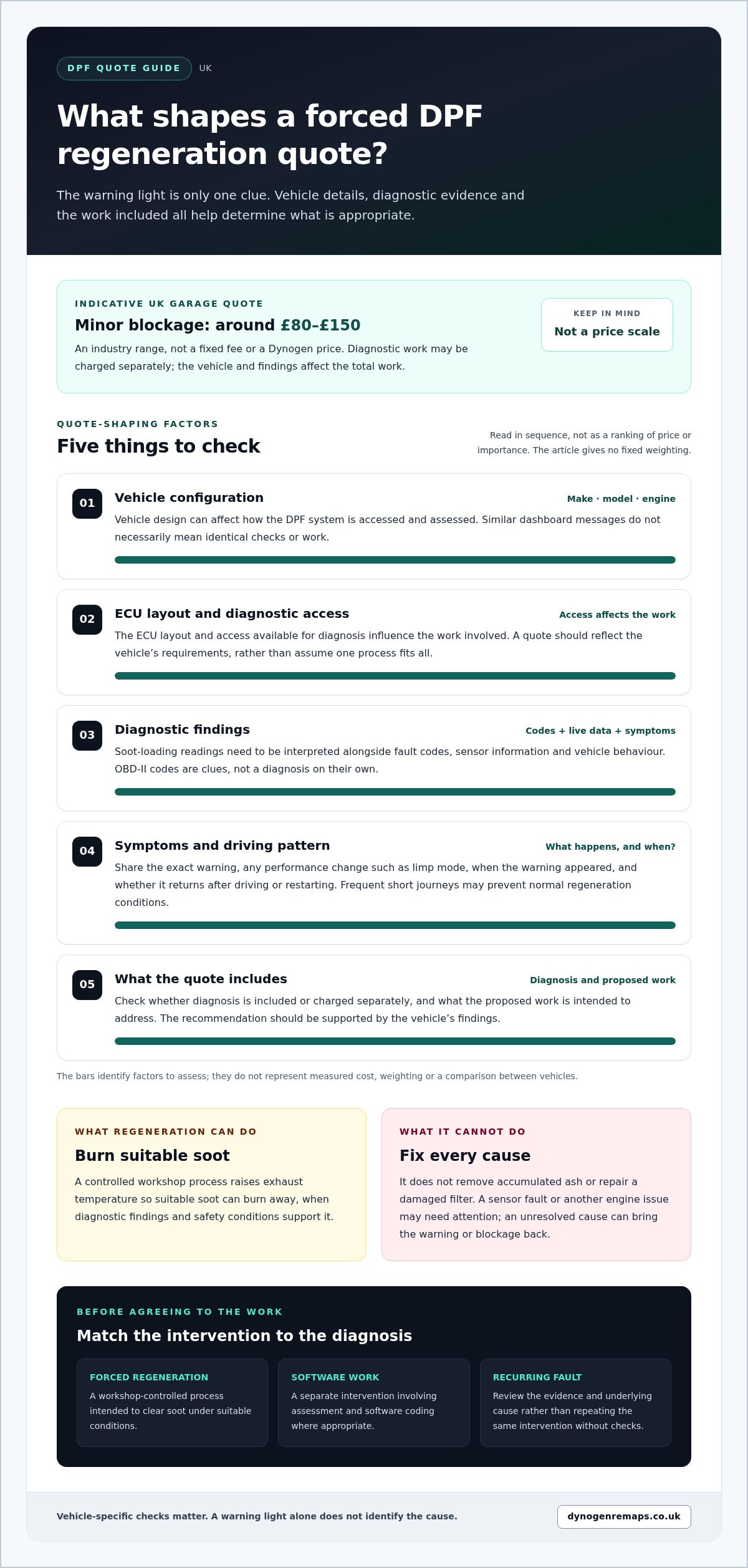
For a minor blockage, garage-forced regeneration is commonly quoted at around £80 to £150 in the UK. Treat this as an indicative industry range, not a fixed fee or a Dynogen price. Diagnostic work may be charged separately, and the total work depends on the vehicle and what the checks reveal.
What is a forced DPF regeneration?
Regeneration can happen in three ways. Passive regeneration occurs naturally when exhaust temperatures are high enough during driving. Active regeneration is initiated automatically by the vehicle’s engine management system when conditions call for it. A forced regeneration is initiated under workshop control, rather than relying on the vehicle to complete an automatic cycle during normal use. The Diesel particulate filter traps soot in the exhaust, which is why regeneration is part of its normal operation.
A workshop-led process isn’t simply a longer drive or a software reset. Vehicle-specific procedures and safety conditions matter, so technicians need to follow the correct process for that vehicle. Diagnostic findings help establish whether forced regeneration is suitable. A warning light alone doesn’t show the full cause or condition of the system.
Does DPF remapping mean the same thing?
No. Forced regeneration is a process for clearing soot under suitable conditions. ECU software work is a separate intervention involving assessment and changes to vehicle software where appropriate. The phrase DPF remap cost UK can therefore refer to different work from a forced-regeneration quote. Compare what each estimate covers rather than assuming the terms describe the same service.
Dynogen’s DPF Solution is a tailored technical service, not a one-size-fits-all remap. The work can involve diagnostic labour and software coding for relevant dashboard faults or limp mode issues. Vehicle requirements and ECU complexity influence the work involved, so the diagnosis should guide the proposed solution.
For a road-going vehicle, removing or bypassing the DPF isn’t a lawful alternative to diagnosing a fault. A suitable next step starts with understanding the fault and the work being proposed. That distinction helps you interpret a quote and avoid paying for an intervention that doesn’t match the diagnosed problem.
What Changes a Forced DPF Regeneration Quote?
A forced regeneration quote depends on more than the presence of a DPF warning. The vehicle’s make, model and engine can affect how the system is accessed and assessed, while ECU layout and diagnostic access influence the work involved. Two vehicles showing similar dashboard messages may need different checks before a suitable next step can be identified.
The scope also depends on the diagnosis. A soot-loading reading may support considering regeneration, but it needs to be interpreted alongside fault codes, sensor information and the vehicle’s symptoms. For example, a faulty pressure or temperature sensor could affect the readings or prevent the system from operating as intended. A quote should reflect the investigation and work relevant to the vehicle, rather than assume every DPF warning calls for the same procedure.
Which vehicle and diagnostic details matter?
Useful information helps build a clearer picture before work is proposed. Share the vehicle registration or its make, model and engine details, along with the exact dashboard warning and any change in performance, such as limp mode. Note when the warning appeared and whether it returns after driving or restarting the vehicle.
OBD-II fault codes are valuable clues, not a diagnosis on their own. A code needs to be interpreted alongside live data and the vehicle’s behaviour. Code-reading alone doesn’t prove that forced regeneration is the right remedy. A sensor fault, excessive soot loading or another engine condition may call for a different response. Ask what the recommended work is intended to address and what checks support that recommendation.
Why can a DPF fault return after regeneration?
Regeneration can burn soot under suitable conditions, but it doesn’t automatically correct the cause of soot build-up or a fault being reported by the system. Frequent short journeys may prevent the exhaust reaching the conditions needed for normal regeneration. A faulty pressure or temperature sensor can also distort the information used by the engine management system. Other areas a technician may investigate include EGR operation and whether the engine oil meets the vehicle’s requirements.
Regeneration may clear accumulated soot, but an unresolved cause can bring the blockage or warning back. That is why diagnostic findings matter both before the work and when assessing a recurring fault. If a warning returns, repeating the same intervention without reviewing the evidence may not address the cause.
For a useful quote, understand whether it covers diagnosis as well as the proposed work, and what the findings indicate about the filter and related systems. Dynogen assesses DPF faults and tailors its technical solution to the vehicle, using diagnostic labour and software coding where relevant. If persistent dashboard faults or limp mode are part of the picture, explore Dynogen’s DPF solutions as a diagnostic-led next step.
Forced Regeneration vs DPF Software Solution: Which Fits the Diagnosis?
These interventions address different aspects of a DPF problem, so neither is automatically the right choice. Forced regeneration is intended to burn soot when the filter and vehicle are suitable for the process. A DPF software solution involves diagnostic and ECU software work, and doesn’t physically clean the filter. The right recommendation depends on what the checks show, not simply on a warning light or an attractive headline price.
When might forced regeneration be considered?
A technician may consider forced regeneration when diagnostic findings indicate soot accumulation and the vehicle’s condition allows the process to be carried out safely. The checks need to make sense as a whole: fault codes, relevant live data, reported symptoms and the status of related systems all inform the decision. The procedure also needs to follow the vehicle’s requirements.
If a fault is preventing regeneration from starting or completing, that issue needs separate attention. For instance, a sensor fault may affect the data used to assess the filter, while an engine-management problem may be contributing to repeated soot accumulation. Limp mode can have several causes, so it doesn’t by itself prove that forced regeneration is appropriate. Regeneration also won’t remove ash or repair a damaged filter.
What should drivers know about DPF software solutions?
Software diagnosis or correction and removal of emissions hardware are not the same thing. ECU software work may be relevant when diagnostic findings point to a software-related issue. It cannot physically clear soot or restore a damaged filter. A recommendation should explain the fault being addressed and how the proposed work relates to the vehicle’s symptoms and diagnosis.
Dynogen’s DPF Solution is a technical service tailored to the vehicle, informed by diagnostics and supported by software coding where relevant. This distinction matters if you’re researching DPF remap cost UK: the phrase can describe different work, and a quote should make its scope clear. A software intervention isn’t a universal substitute for investigating a blocked filter, sensor fault or other underlying problem.
There’s also a legal boundary. A DPF fitted as standard must not be removed or tampered with on a vehicle used on public roads. UK MOT inspection guidance treats a missing or visibly tampered-with DPF as a major defect, which means the vehicle will fail its MOT. Advice to bypass emissions controls is not a lawful road-use solution. Keep the filter and emissions system compliant, and judge any proposed software work against that requirement.
In practice, match the intervention to the evidence: regeneration may suit a soot-loading issue when conditions are appropriate; software work may be relevant when diagnosis identifies a software-related fault; other findings can call for a different repair. Dynogen assesses DPF faults and tailors its technical work to the vehicle. Explore Dynogen’s DPF solutions to understand this diagnostic-led approach.
How to Assess a DPF Quote Before Choosing the Work
- Identify the symptoms. Note the exact dashboard warning, any loss of power or limp mode, and when the issue occurs. Include recent driving patterns and whether the warning has appeared before.
- Review the diagnosis. Look for an explanation of the relevant fault codes and other findings, such as sensor readings or soot-loading information. Codes are clues to interpret, not proof that one particular intervention is right.
- Understand the scope. Check what the quote includes or separates: diagnostic work, software work and any other stated work. A clear scope should explain what the proposed intervention is intended to address and its limitations.
- Assess the next steps. Understand what happens if the warning remains or returns, and whether further investigation or repair may be needed. This helps you compare recommendations by their relevance, not just their headline cost.
What should a clear DPF recommendation explain?
The recommendation should show how the recorded faults relate to your symptoms and why the proposed work follows from those findings. It should distinguish diagnosis from software coding or other work, rather than leaving you to infer what a single total covers. It should also explain what the intervention can address, what it cannot guarantee, and what further checks may be appropriate if the warning persists.
That clarity matters when considering DPF remap cost UK: the term can refer to different work, so compare like with like. A recommendation that explains its scope gives you a more useful basis for judging whether the proposed work fits the diagnosed issue.
How should recurring faults shape the decision?
A returning warning is a reason to review the fault history and underlying cause, not simply to repeat an intervention or suppress a symptom. Tell the technician whether the vehicle mainly makes short journeys, how often the warning appears and what work has already been carried out. Those details can help contextualise diagnostic findings and identify areas that warrant further attention.
The right DPF intervention depends on the diagnosed cause. Dynogen takes a diagnostic-led approach, assessing the vehicle and tailoring its DPF Solution, with diagnostic labour and software coding for relevant faults. Clear findings help explain both the recommended work and any limitations. To discuss a vehicle-specific DPF issue, explore Dynogen’s DPF solutions.
Dynogen DPF Solutions: A Diagnostic-Led Next Step
A persistent DPF warning or limp mode can be frustrating, particularly if the fault returns after earlier work. Dynogen Remapping Solutions approaches DPF issues as vehicle-specific technical problems. Diagnostic findings help establish what may be contributing to the fault and whether software work is relevant. Its DPF Solution is supported by diagnostic labour and software coding for relevant faults, rather than a universal remap applied to every vehicle.
That distinction matters when comparing a DPF remap cost UK quote. ECU complexity and the vehicle’s requirements influence the work involved, so fees vary according to the individual case. Understanding the findings and proposed scope gives you a clearer basis for considering the next step than a headline figure alone.
What Dynogen brings to a DPF fault assessment
With over 15 years of vehicle tuning experience, Dynogen uses advanced software and equipment to assess relevant vehicle faults. Persistent dashboard messages and limp mode can have different causes, so reported symptoms and diagnostic information need to be considered together. This helps connect the issue identified with any proposed technical work.
Where findings indicate that software coding is relevant, Dynogen tailors its DPF Solution to the vehicle and its requirements. Software work doesn’t automatically replace mechanical investigation, filter cleaning or regeneration; the appropriate work depends on the fault. A considered assessment makes the scope easier to understand, including what the proposed solution addresses and what may require separate attention.
What to have ready when enquiring
A few vehicle details can help frame the discussion and make the symptoms clearer. Share what you know, even if you don’t have every diagnostic detail to hand:
- Vehicle make, model and engine details
- The exact dashboard warning or message, plus any loss of power or limp mode
- Relevant fault codes or diagnostic findings, if available
- Previous DPF work and whether the warning returned afterwards
- Typical vehicle use, such as frequent short journeys or longer drives
Be specific about when the warning appears, whether it clears temporarily and what has already been attempted. That history can help put the current symptoms in context. A fault that recurs after previous work may need its cause reassessed rather than an identical intervention repeated.
Share your vehicle details and symptoms with Dynogen to discuss a suitable DPF solution. Discuss your DPF solution with Dynogen.
Take the Next Step With a Clearer Picture
Before deciding on DPF work, keep a useful record: note what you want the vehicle to do, how it’s used day to day and what you need clarified about the proposed work. Keeping that context alongside any diagnostic information can make future discussions about recurring symptoms more focused.
A search for DPF remap cost UK can help you understand the options, but your next decision should be grounded in your vehicle’s needs and the work being proposed. If you’re weighing up what to do, a vehicle-specific discussion can help turn a confusing warning into a more considered plan.
Take the next step with Dynogen and share what your vehicle is experiencing. A clear starting point can help you move forward with greater confidence.
Frequently Asked Questions
How much does a forced DPF regeneration cost in the UK?
There isn’t one price that applies to every vehicle. The DPF remap cost UK search term can also refer to ECU software work rather than forced regeneration, so first establish which service is being quoted. Check whether the estimate separates diagnostic work from the proposed intervention and explains any additional fault that may need attention. Dynogen’s DPF service fees vary with ECU complexity and vehicle-specific requirements.
Is forced DPF regeneration the same as a DPF remap?
No. Forced regeneration is a process intended to burn soot, whereas a DPF software solution involves work relating to the vehicle’s ECU. They aren’t interchangeable, and choosing between them depends on the findings, vehicle condition and intended use. For example, a software change can’t physically clear a filter. Software work must also not be treated as permission to remove or bypass emissions equipment on a road vehicle.
Can a forced DPF regeneration fix every DPF warning?
No. A warning can relate to different faults, so the dashboard message alone can’t establish the correct repair. If the warning appears alongside loss of power, note when it started and whether other engine warnings appeared at the same time. A sensor or engine fault may need investigation before regeneration is suitable. Keep a record of when the warning returns, as this can help interpret the vehicle’s fault history.
Will a DPF software solution affect my MOT?
It depends on the vehicle’s condition and what the software work changes. In the UK, a vehicle can fail its MOT if a DPF fitted as standard is missing or shows signs of tampering. A software solution shouldn’t be used to bypass emissions requirements. Distinguish diagnostic or software work from deleting or disabling emissions equipment, and refer to current official MOT guidance for the applicable test requirements.
Why does my DPF warning return after regeneration?
The warning may return if the cause of the soot build-up or system fault remains, or if soot accumulates again during use. Keep a simple log of the date, mileage, journey pattern and any changes in performance when the warning reappears. This can help identify whether the issue follows repeated short trips or continues despite different use. Share that history alongside earlier diagnostic results before assuming another regeneration is the answer.
What information should I provide for a DPF quote?
Provide the vehicle’s make, model and engine details, then describe the warning message and any change in performance. Add fault codes if you have them, along with previous DPF work and whether the same symptoms returned. It’s useful to say how the vehicle is normally driven, too. These details help Dynogen frame the diagnostic discussion around your vehicle rather than rely on a generic description of a DPF fault.
Is a forced DPF regeneration safe for every vehicle?
No. Whether it’s appropriate depends on the vehicle’s condition, diagnostic findings and the correct vehicle-specific procedure. Don’t assume a warning light automatically means a forced regeneration should be carried out. If you’re unsure what has been diagnosed, ask for a plain explanation of the findings, the proposed process and any concerns that would change the plan. A clear understanding helps you make a considered decision without relying on blanket safety assurances.