
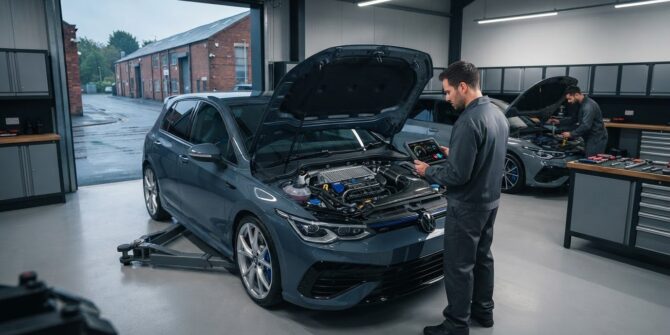
What if the part your car needs before a Stage 2 remap isn’t on the usual upgrade list? If you’ve researched stage 1 remap requirements, you’ll know that tuning advice depends on the vehicle. Stage 2 preparation is even more specific: the right supporting hardware depends on the engine, existing modifications and the car’s condition.
It’s reasonable to want a clear parts list before committing, but there’s no universal specification for every vehicle. A healthy engine and compatible components matter as much as the hardware itself. Road use, emissions compliance and insurance also need consideration.
This checklist explains what Stage 2 commonly involves, how to assess whether your car is ready, and what to resolve before choosing a tuning route. It covers upgrades such as an intercooler, intake and exhaust, alongside checks that help you assess reliability and drivability. It also explains how Stage 1 differs, so you can weigh the preparation involved against what you want from your vehicle.
Key Takeaways
- Stage labels are tuning conventions, not fixed parts lists. A Stage 2 calibration should match the vehicle and its supporting modifications.
- Use stage 1 remap requirements as a comparison point, then consider whether your vehicle’s hardware and performance goals call for further preparation.
- Intake, intercooler and exhaust upgrades are common examples, but the appropriate combination depends on the car.
- Record existing modifications and address warning lights or known mechanical issues before considering performance calibration.
- Consider road use, emissions compliance and insurance alongside the vehicle’s condition before deciding which tuning route suits you.
Stage 2 remap requirements: what changes beyond Stage 1?
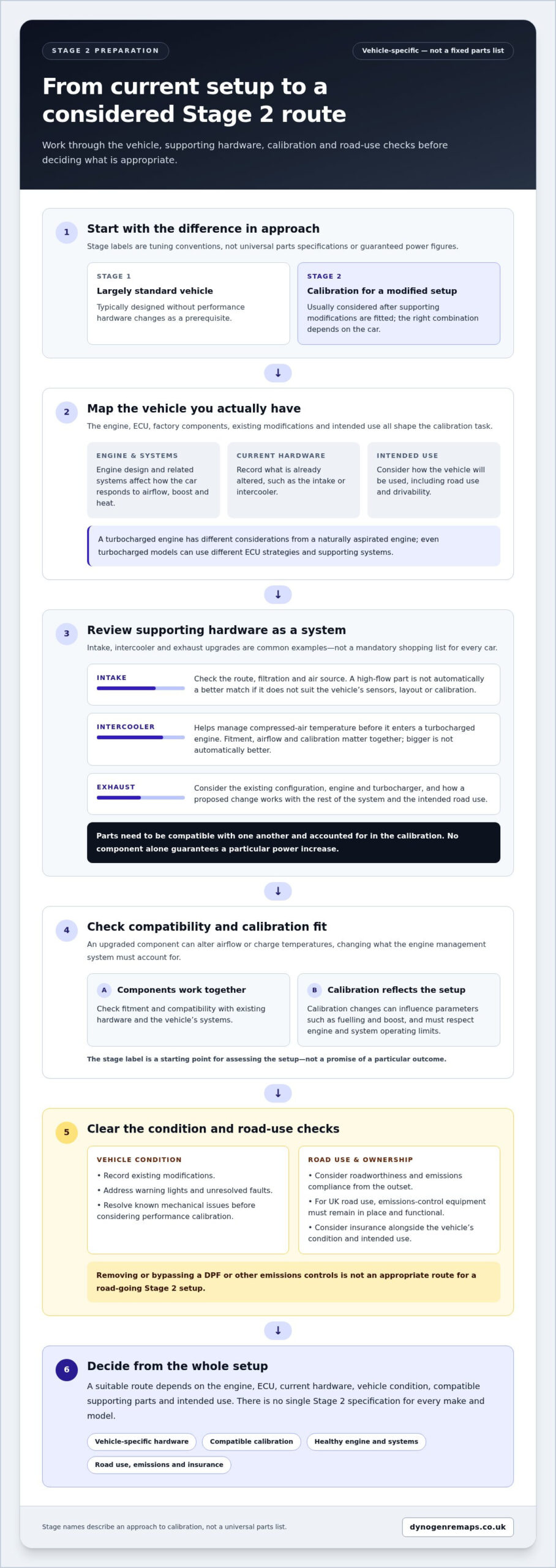
Stage labels are tuning conventions, not universal parts specifications. There’s no single checklist that defines every Stage 2 setup across all makes and models. The term generally describes an ECU calibration developed to work with supporting performance modifications already fitted to the vehicle. The appropriate combination depends on how that particular engine and its systems respond to the changes.
A remap stage describes an approach to calibration, not a guaranteed power figure. Two cars with the same stage label can have different hardware, operating limits and results. Treat the label as a starting point for assessing the setup, not a promise of a particular outcome.
What does Stage 2 mean for a modified car?
An ECU controls how the engine operates. Calibration changes can influence parameters such as fuelling and boost, and need to work with the hardware fitted to the vehicle. An upgraded component may alter airflow or charge temperatures, changing the conditions the engine management system must account for. General engine tuning involves adjusting engine operation, but a suitable calibration must also reflect the car’s actual configuration.
A Stage 1 calibration is typically designed for a largely standard vehicle, without performance hardware changes being a prerequisite. Stage 2, by contrast, is usually considered after supporting modifications have been installed. An intake, intercooler or exhaust upgrade may be relevant, but the same combination isn’t mandatory for every car. The engine, factory components and intended calibration all influence what is appropriate.
Why are Stage 2 requirements vehicle-specific?
Engine design affects how a vehicle responds to increased airflow, boost or heat. Turbocharged engines, for example, have different considerations from naturally aspirated engines. Even two turbocharged models may use different ECU strategies and supporting systems. Existing modifications matter too: a vehicle with an altered intake and intercooler presents a different calibration task from one with standard hardware.
Compatibility needs careful evaluation. Components must work together, and calibration must respect the operating limits of the engine and related systems. A generic parts list can’t establish whether a combination suits a specific car. Nor can a stage label confirm that the vehicle is healthy enough for further tuning. Address warning lights, unresolved faults and known mechanical issues before considering performance calibration.
Dynogen Remapping Solutions specialises in ECU remapping and performance tuning, including Stage 1 remaps for largely standard setups. That provides a useful point of comparison when weighing a modified route. The Stage 1 performance remapping guide explains that approach in more detail. For either route, start with the engine, ECU, current hardware and intended use rather than assuming a stage name dictates the answer.
Which hardware is commonly considered for a Stage 2 remap?
Intake, intercooler and exhaust upgrades are often discussed as supporting hardware for Stage 2, but they aren’t a fixed shopping list. The engine, factory layout, existing modifications and intended calibration all affect what may be suitable. A component that supports one setup could be unnecessary or poorly matched to another.
Stage 2 hardware should be selected for the vehicle and its calibration. Parts need to work as a system, not simply fit in the engine bay. Consider compatibility, installation and how the ECU will be calibrated to suit the finished setup. When sourcing hardware or maintenance items for German marques, dedicated specialists such as Bayern Automotive can help ensure components match vehicle tolerances. Drivers comparing this with stage 1 remap requirements should remember that Stage 1 is generally associated with a largely standard vehicle, while Stage 2 commonly involves supporting modifications.
Intake and intercooler: assess airflow and charge temperatures
An intake upgrade may change how air reaches the engine. Its design matters: the route, filtration and air source can affect airflow characteristics and the temperature of the air being drawn in. A part described as “high-flow” isn’t automatically a better match if it doesn’t suit the vehicle’s sensors, layout or calibration.
An intercooler helps manage the temperature of compressed air from a turbocharger before it enters the engine. Under load, effective charge-air temperature management can support consistent operation, but the appropriate specification depends on the vehicle and its wider setup. Bigger isn’t automatically better. Fitment, airflow and calibration all need to be considered together, and no component alone guarantees a particular power increase.
Exhaust changes: balance flow with road-use compliance
Exhaust changes are also vehicle-dependent. Consider the existing exhaust configuration, the engine and turbocharger, and how proposed parts interact with the rest of the system. A change intended to improve flow must still suit the car’s intended road use and be considered alongside the calibration, not as an isolated upgrade.
For UK road use, emissions-control equipment must remain in place and functional. Removing or bypassing devices such as a DPF or other emissions controls isn’t an appropriate route for a road-going Stage 2 setup. Consider roadworthiness and emissions compliance from the outset, rather than after parts have been fitted.
A practical review looks beyond a parts list: check that each component suits the vehicle, works with existing hardware and can be accounted for in the calibration. Professional practice matters too. The Institute of the Motor Industry provides information on automotive industry standards, a useful reference point when considering the care expected in vehicle work.
If you’re weighing a less-modified route first, Dynogen’s Stage 1 performance remapping is designed for comparison with a largely standard setup. Make the decision based on the car’s actual configuration, not the label attached to a tuning stage.
Stage 1 or Stage 2: which route fits your vehicle and goals?
The right route isn’t simply the one with the higher advertised figure. Start with the car’s condition, existing hardware and what you want to change about the drive. A largely standard vehicle used for everyday journeys may call for a different approach from a modified car being prepared for a more involved performance setup.
| Consideration | Stage 1 | Stage 2 |
|---|---|---|
| Typical hardware | Generally calibrated for a largely standard vehicle. | Usually matched to supporting performance modifications. |
| Preparation | Assess vehicle health and suitability before calibration. | Assess vehicle health, existing parts, compatibility and calibration as a complete setup. |
| Useful question | Would calibration on the current setup meet your priorities? | Do your goals justify the extra hardware and preparation? |
These are broad distinctions, not universal specifications. Stage labels don’t guarantee a particular power or torque gain, and figures advertised for different vehicles or setups aren’t necessarily directly comparable. Engine design, condition, fuel and calibration all affect outcomes.
When a Stage 1 remap may be the more proportionate option
A Stage 1 remap may suit drivers whose vehicle is largely standard, well maintained and capable of meeting their everyday needs with revised calibration. The appeal might be sharper response or a change in how the car delivers performance, without first investing in supporting hardware. That doesn’t make Stage 1 right for every car: suitability still depends on the vehicle and the driver’s priorities.
If you’re weighing a change against the unmodified driving experience, this Stage 1 versus standard driving comparison can help you clarify what you want from the car. Consider the journeys you make and the behaviour you’d like to improve, rather than choosing a route based on a headline figure alone.
When to investigate Stage 2 requirements further
Stage 2 may be worth investigating if your goals involve a modified setup and you’re prepared to account for extra parts, compatibility checks and calibration considerations. It’s not just a software choice: hardware, vehicle condition and intended use need to be considered together. Address known faults or an unhealthy vehicle before pursuing more performance.
Reliability belongs in the decision, not just the target output. Dynogen’s Stage 1 remapping offers a useful comparison with a largely standard setup. Its experience in ECU remapping and performance tuning can help put the different approaches in context, while safe engine remapping and reliability considerations provide further guidance on balancing performance aims with care for the vehicle.
Stage 2 remap checklist: what should you assess before proceeding?
A useful readiness check brings the vehicle’s identity, modifications, mechanical condition, intended use and road obligations into one clear picture. Work through these steps before deciding whether a Stage 2 setup is appropriate. Keep notes and supporting records: accurate information makes it easier to assess whether the hardware and calibration are a sensible match.
- Identify the vehicle. Record the make, model, year, engine variant and, where available, ECU details. Similar models can have different engine or control-system specifications, so precise identification is more useful than relying on a model name alone.
- Document modifications. List installed parts that may affect engine operation, such as intake, intercooler, turbocharger or exhaust changes. Include part details and any previous calibration work you know about. An incomplete history can make it harder to understand the vehicle’s current setup.
- Diagnose faults and review maintenance. Note warning lights, stored diagnostic trouble codes, unusual noises or known mechanical issues. Resolve faults and overdue maintenance before performance calibration. Tuning shouldn’t be treated as a way to address an underlying problem.
- Define your goals and use. Consider whether you prioritise everyday response, a modified performance setup or another outcome. Regular road use, load-carrying and the way you drive all help clarify what a suitable calibration needs to deliver.
- Review compliance and insurance. Consider roadworthiness, emissions requirements and your insurer’s conditions before making changes. Requirements can depend on the vehicle and policy, so check current guidance and speak to your insurer about the specific modification.
Check vehicle health and document existing modifications
Baseline condition matters because a calibration changes how the engine operates, and the starting point affects how confidently the setup can be assessed. Service records, previous repair information and a clear modification history help distinguish the car’s standard equipment from later changes. This checklist isn’t a diagnosis or a guarantee of suitability. It helps identify what needs assessment before a tuning decision.
In short, confirm the vehicle, catalogue its hardware, investigate faults and define its intended use before considering calibration. This sequence makes gaps in the car’s history or condition easier to spot.
Review road use, insurance and emissions obligations
In the UK, tell your insurer about vehicle modifications, including ECU remapping, and check how they affect your policy. For road use, a remapped vehicle must continue to meet the emissions standards applicable to it. Emissions-control equipment must not be removed or tampered with for road use. Check current GOV.UK guidance and your insurer’s terms, as this information isn’t individual legal or insurance advice.
Once you’ve gathered the details, you can make a more informed comparison between a modified setup and a largely standard route. If the latter better matches your car and priorities, explore Dynogen’s Stage 1 performance remapping for a standard vehicle.
Planning your next step: make an informed remapping decision
A considered tuning decision starts with the car, not the stage label. Bring together four essentials: the vehicle’s identity, current hardware, mechanical condition and how you use it. Then compare your goals with the preparation involved. This helps distinguish a calibration suited to a largely standard setup from a route that depends on additional modifications.
Understanding the stage 1 remap requirements can provide a useful baseline: Stage 1 is generally intended for a largely standard vehicle, while Stage 2 is commonly associated with supporting hardware. Neither label replaces an assessment of the individual car or guarantees a particular result.
Prepare a clear vehicle and modification summary
Before discussing a tuning route, organise the details that describe the car as it stands. A concise record makes it easier to explain what has changed, what needs attention and what you want from the drive. Include:
- Make, model, year, engine variant and ECU details, if known.
- Existing modifications, including relevant intake, turbocharger, intercooler or exhaust changes, and any previous remapping.
- Warning lights, diagnostic faults, unusual behaviour and maintenance that is due or overdue.
- Your main performance priorities and typical vehicle use, such as everyday commuting or carrying regular loads.
- Available service, repair and modification records that help clarify the car’s history.
Be open about anything you’re unsure of. An incomplete modification history is still useful to flag, and unresolved faults should be addressed before performance calibration is considered.
Choose a route that matches the car, not just the stage label
A stage name alone can’t establish readiness. The same label may describe different hardware and calibration choices across vehicles, so a sound decision considers compatibility, condition and intended use together. Dynogen’s Stage 1 remapping offers a comparison with a largely standard setup. With over 15 years in vehicle tuning, the team’s experience in ECU remapping can help put the distinction between a standard-based route and a modified setup into context.
Use your vehicle summary to weigh the practical trade-offs: whether your current setup matches your priorities, what further preparation a modified route may involve, and whether the car’s condition supports the decision. Keep road use, emissions compliance and insurer requirements in view as part of your planning.
For an overview of Dynogen’s approach to remapping, Explore Dynogen’s remapping services. Before taking your next step, organise your vehicle details, modification history, maintenance records and a short note describing what you want to improve. A clear starting point makes for a more informed decision.
Make your next tuning decision with confidence
Before choosing a route, turn your research into a clear picture of what your car needs and what you want from it. The stage 1 remap requirements you’ve explored can help you compare a largely standard setup with a more extensively modified one, but the right decision comes from matching the approach to your vehicle, its condition and your priorities.
Take time to organise the details and consider the trade-offs. A higher tuning stage isn’t automatically the better choice; the right route is one that makes sense for your car and intended use. Dynogen provides specialist ECU remapping for cars and vans, drawing on more than 15 years in vehicle tuning to offer an experienced perspective on Stage 1 and standard vehicle setups.
Ready to explore a remapping route that fits your vehicle? Explore Dynogen’s remapping services and take the next step with a clearer understanding of your goals. A considered decision is the foundation for a more rewarding drive.
Frequently Asked Questions
What parts are needed for a Stage 2 remap?
There isn’t one parts list that applies to every Stage 2 setup. An upgraded intake, intercooler or exhaust may be considered, but the right combination depends on the vehicle, its current specification and the intended calibration. Before buying parts, establish exactly which engine and ECU the car has, then assess whether each proposed component is compatible with the rest of the setup and suitable for the car’s intended use.
Can you get a Stage 2 remap without hardware modifications?
Usually, Stage 2 refers to calibration intended for a vehicle with supporting performance hardware already fitted. Without those modifications, the car may not match what a tuner means by a Stage 2 setup, even if the software could technically be altered. Stage labels aren’t standardised, so focus on the vehicle’s actual configuration and what the calibration is designed to accommodate, rather than choosing a stage based on its name alone.
Is a Stage 2 remap legal in the UK?
ECU remapping is legal in the UK, but the car must remain compliant with relevant road-use requirements. Removing or tampering with emissions-control equipment, such as a DPF or GPF, for road use is illegal. A remap must not take the vehicle outside the emissions standards applicable to it. Check current GOV.UK guidance for your vehicle and circumstances, as this general information isn’t legal advice.
Does a Stage 2 remap require an upgraded intercooler?
No, an upgraded intercooler isn’t a universal requirement for every Stage 2 vehicle. Its suitability depends on factors such as the engine, turbocharging system, existing hardware and how the car will be used. An intercooler manages the temperature of compressed intake air, but fitting one doesn’t automatically make a setup appropriate. Assess the component and calibration together for the specific vehicle.
Will a Stage 2 remap affect my insurance?
It can. You’re legally required to tell your insurer about vehicle modifications, including ECU remapping. If you don’t disclose a change, your policy could be invalidated. Insurers set their own terms, so contact yours before making modifications and describe the planned changes accurately. Ask how they want modifications recorded and keep their response with your policy documents for reference.
How is a Stage 2 remap different from a Stage 1 remap?
Stage 1 is generally a software calibration for a largely standard vehicle, while Stage 2 is commonly associated with calibration matched to supporting hardware modifications. These labels are tuning conventions, not fixed specifications, so the distinction can vary between vehicles and tuners. Compare the required setup and calibration approach for your exact car rather than assuming a stage name guarantees a particular power or torque result.
Should I fix warning lights before a Stage 2 remap?
Yes. Diagnose and resolve warning lights or known mechanical faults before performance calibration. A warning may relate to a sensor, boost control or another system that affects how the engine runs. Tuning without understanding the cause can obscure the issue or complicate assessment. Scan for diagnostic codes, keep a record of repairs and maintenance, and make sure the car is operating properly before revisiting its stage 1 remap requirements or considering Stage 2.