
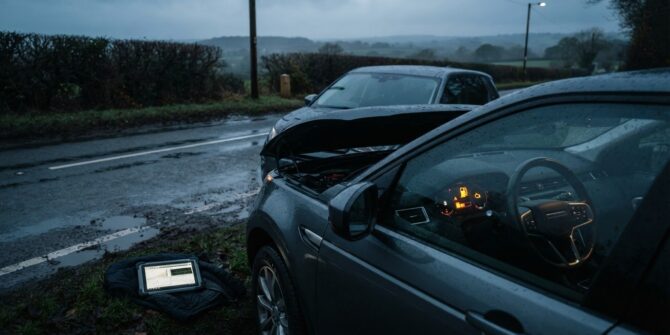
Could a warning that looks like a simple top-up prompt leave your vehicle unable to restart? The consequences of ignoring AdBlue warning messages depend on what the system is reporting. A low-fluid alert and an AdBlue system fault need different responses. Many vehicles issue escalating warnings and a remaining-range countdown; if it reaches zero, the vehicle may not restart until the issue is resolved. The exact behaviour varies by make and model.
An AdBlue warning won’t usually damage the engine immediately, but leaving it unresolved can disrupt your plans and allow an emissions-system fault to persist. If the message indicates low fluid, check your handbook and refill with AdBlue that meets ISO 22241. If the warning remains after topping up, or identifies a system fault, a refill alone may not solve the problem. This guide explains how to distinguish the warnings, what to check on your dashboard and in your handbook, and when specialist support may help. Dynogen Remapping Solutions brings over 15 years of vehicle tuning experience to AdBlue-related issues and the next steps for your vehicle.
Key Takeaways
- Read the exact dashboard message and consult your vehicle handbook. The warning’s meaning and urgency can vary by model.
- The consequences of ignoring AdBlue warning messages may include escalating alerts and a restart restriction, but the sequence isn’t identical for every vehicle.
- For a low-fluid alert, follow your vehicle’s refill instructions, then note whether the warning clears or remains.
- A persistent alert may point to a system issue rather than low fluid. Specialist support can help establish what the warning relates to.
- Dynogen Remapping Solutions’ AdBlue Solution provides software-based support for AdBlue-related issues.
What does an AdBlue warning mean, and why should you not ignore it?
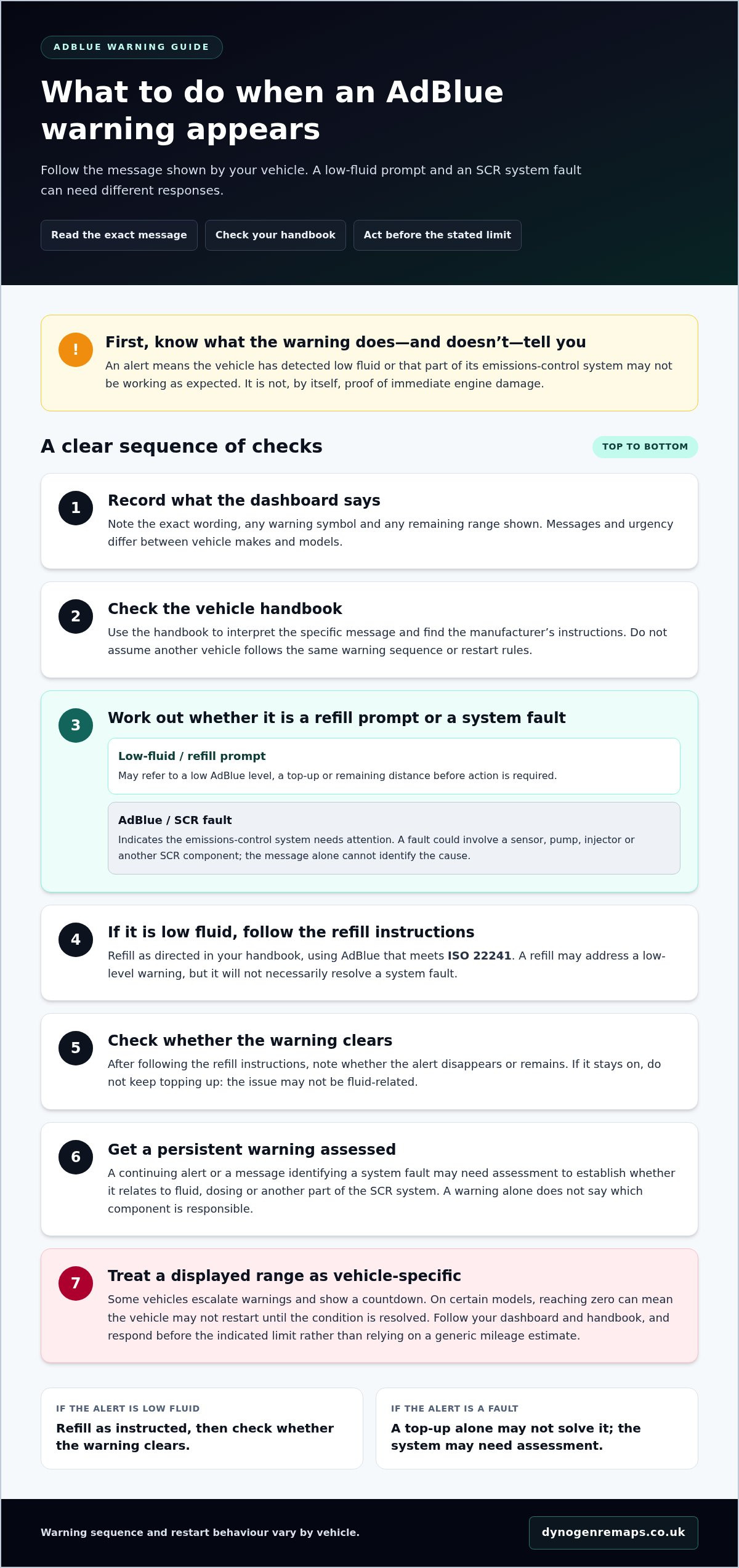
An AdBlue warning means the vehicle has detected low fluid or that part of its emissions-control system may not be working as expected. It’s a prompt to identify what the vehicle is reporting, not proof that the engine has already suffered mechanical damage. The wording, dashboard symbol and urgency vary by make and model, so use the owner’s handbook to interpret the exact message.
Treat the alert as a staged signal. A low-level message may give you time to refill, while a system-fault message can indicate an issue that topping up won’t fix. Some vehicles show a remaining range or explain what may happen if the warning is left unresolved; others use different wording. Don’t assume another vehicle’s warning sequence applies to yours.
A refill prompt suggests the AdBlue supply may be low; an SCR fault message indicates that the system needs attention. The distinction matters because the right response depends on the cause.
Low AdBlue level or SCR fault: how can you tell?
A refill prompt commonly refers to a low AdBlue level, a need to top up or a remaining distance before action is required. A fault message may name the AdBlue or SCR system, or say the emissions system needs attention. These are examples, not universal phrases: check your handbook for the meaning of the message displayed.
A fault could involve a sensor, pump, injector or another part of the SCR system. Adding fluid may address a low-level warning, but it won’t necessarily resolve a fault. If the alert remains after you follow the refill instructions, don’t keep topping up. The system needs assessment to establish whether the issue is fluid-related or concerns a component.
Why does AdBlue matter to the emissions system?
AdBlue works with Selective Catalytic Reduction (SCR), an emissions-control system fitted to many diesel vehicles, from everyday cars to heavy-duty commercial vehicles. For fleet operators who manage work vehicles configured by specialists such as Tim Halpin Equipment Corp, keeping emissions controls in good order is just as critical as having reliable truck equipment. The fluid is injected into the exhaust, where it helps the SCR catalyst convert nitrogen oxides, or NOx, into less harmful nitrogen and water. A warning can therefore relate to the fluid level or to the system that delivers and uses it.
For a straightforward overview, see Diesel exhaust fluid (AdBlue). In practical terms, the dashboard alert helps you identify when the vehicle needs a refill or when its emissions-control system may need attention. Read the message carefully and follow the model-specific guidance. Don’t dismiss a warning, but don’t assume it means immediate engine damage either.
What happens if you ignore an AdBlue warning and the countdown reaches zero?
If an AdBlue tank is running low, some vehicles move from an initial refill message to a remaining-range countdown. As the displayed distance falls, the warning may become more urgent. On certain models, reaching zero can trigger a restart restriction: the engine may continue running until you switch it off, but may not start again while the condition remains unresolved.
This is a common pattern, not a guaranteed sequence. The consequences of ignoring AdBlue warning messages depend on the vehicle, the cause of the alert and how its system is programmed. A system fault can also produce warnings or restrictions, so don’t assume a countdown proves that the tank is simply empty.
From the first message to a possible restart restriction
Use the displayed range as vehicle-specific guidance, not a universal allowance. One vehicle may provide a clear distance countdown; another may use different wording or behave differently. Remaining range and restart rules are specific to the vehicle, so follow its dashboard messages and handbook rather than a generic mileage estimate.
Check the handbook to find out whether the alert describes a refill or a fault, and what the manufacturer instructs you to do. Don’t plan a long journey on the assumption that every model gives the same warning period or that the countdown will behave predictably in all driving conditions.
- Record the exact dashboard message and any displayed range.
- Check the handbook for the vehicle’s stated action and restart behaviour.
- Respond before the indicated limit rather than relying on an assumed mileage buffer.
Could ignoring a fault affect the SCR system?
A no-start restriction and physical damage are different concerns. A restart lockout is a possible vehicle response when its AdBlue condition reaches the limit; it doesn’t, by itself, prove that components have been damaged. A separate SCR fault may involve a sensor, pump or injector, and the warning alone can’t identify which part is responsible.
Dosing problems or crystallised deposits may be considered during a technical investigation, but they aren’t an inevitable result of ignoring a warning. Whether a component is affected depends on the fault and the vehicle. Avoid guessing or repeatedly topping up in response to a fault message. An assessment can help establish whether the issue relates to low fluid, dosing or another system fault.
For a persistent AdBlue-related issue, Dynogen Remapping Solutions provides an AdBlue Solution alongside its vehicle-tuning expertise. Its technical services include software-based solutions and diagnostic work for AdBlue-related concerns. The priority is to understand the issue rather than assume every countdown or fault message has the same cause.
Does ignoring an AdBlue warning always damage the car? Myths and realities
No. An AdBlue warning doesn’t automatically mean the engine, catalyst or pump has been damaged, and alerts can have different causes. The consequences of ignoring AdBlue warning messages depend on what the vehicle has detected and how its system responds. A low-fluid prompt may be resolved by refilling correctly; an SCR fault may need assessment. Neither message alone proves that a component has failed.
That’s not a reason to dismiss the alert. A vehicle may impose a restart restriction if a warning is left unresolved, and a persistent fault can remain even when the fluid tank is full. Take the message seriously without assuming the worst: identify what it says, follow the handbook and act on any stated urgency.
Myth: adding AdBlue will always clear the dashboard warning
A suitable refill may clear a low-level alert once the vehicle registers the added fluid. The process for checking or acknowledging a refill can differ between models, so follow your handbook rather than relying on a universal reset sequence.
If the message names a system fault, topping up may make no difference. A sensor or dosing-component issue, for example, could still need investigation. Switching the warning off or clearing a fault message doesn’t establish that the underlying cause has been fixed. If the alert returns or remains after you follow the refill guidance, note its exact wording and arrange an assessment.
Use these checks to distinguish a refill prompt from an unresolved fault:
- Compare the message with the handbook’s description of low fluid and system faults.
- Use the specified AdBlue and follow the vehicle’s refill instructions.
- Check whether the warning clears as the handbook describes, and note if it persists or returns.
Myth: a warning light always means the car is unsafe to drive
A warning light alone doesn’t tell you whether a particular journey is safe or permitted. Urgency depends on the exact wording, any remaining-range or restart information, and the vehicle’s instructions. A message may give guidance for reaching a place where you can address the issue, but that isn’t permission to ignore the alert indefinitely.
Don’t rely on blanket advice such as “you can drive another set distance”. There’s no universal safe mileage for every vehicle or fault. Read the dashboard message, consult the handbook and respond within the limits it describes. Treat a system fault or restart restriction differently from a straightforward low-fluid prompt.
Clearing an alert without identifying its cause can create false reassurance: the warning may return, or the vehicle may still apply its own restrictions. A careful assessment focuses on the vehicle-specific issue and an appropriate response, rather than simply hiding the message. This helps avoid unnecessary alarm while ensuring a genuine issue isn’t left unresolved.
What should you do when the AdBlue warning appears?
Start with the vehicle’s own instructions, not a generic mileage estimate. The dashboard wording can distinguish a low-fluid prompt from a system fault, and may state how urgently you need to act. The consequences of ignoring AdBlue warning messages can include a restart restriction, so don’t leave an alert unresolved or assume every warning can be fixed with a top-up.
Work through these steps in order:
- Note the exact message. Record its wording, any warning lights and any range or restart information shown on the dashboard. A photo can help you refer back to it accurately.
- Check the handbook. Look up what the alert means for your make and model. Follow any explicit instruction to stop, visit a workshop or address the issue before restarting.
- Identify the alert type. If it indicates a low AdBlue level, follow the vehicle’s refill guidance. If it reports a system fault, or remains after a refill, arrange an assessment rather than repeatedly adding fluid.
- Keep a record. Note when and how much you refilled, if applicable, and whether the alert changed. This information can help clarify what the vehicle has detected.
When is a refill a reasonable first step?
A refill is a reasonable first response when the message specifically indicates that the AdBlue level is low. Consult the handbook for the correct filling point, fluid specification and quantity, and use AdBlue that meets ISO 22241. Don’t guess at the tank location or amount. The vehicle may need specific steps to recognise the added fluid, so follow its instructions rather than relying on a universal reset method.
When should a persistent warning be diagnosed?
Arrange an assessment if the message names an AdBlue or SCR system fault, returns after a refill, or includes a countdown or restart restriction. Record the wording, warning lights and any recent refill details. A persistent alert needs investigation; repeated top-ups or attempts to bypass the warning won’t establish whether the issue is fluid-related or a component fault.
Take any explicit stop, workshop or restart instruction seriously. If the vehicle says it may not restart, don’t assume that clearing the dashboard message will remove the restriction. Vehicle-specific diagnostic work can help identify the underlying issue and guide the next step.
Dynogen Remapping Solutions brings over 15 years of vehicle-tuning experience and software expertise to AdBlue-related issues. If your alert persists or identifies a system fault, explore Dynogen’s AdBlue Solution for support with the issue, not simply the warning light.
How can specialist AdBlue diagnostics help resolve a persistent warning?
A persistent AdBlue warning needs more than a guess or another top-up. An assessment can help establish whether the issue relates to fluid level, delivery or another part of the SCR system. That distinction matters: the right response depends on what the vehicle is reporting, and the consequences of ignoring AdBlue warning messages may include a vehicle-specific restart restriction.
Diagnosis is a process, not simply a matter of clearing the dashboard. The warning wording, when it appears and what happened after a refill can all help build a clearer picture. Share these details and any symptoms with the specialist assessing the vehicle, and follow any instructions shown by the car whilst the issue is being investigated.
What can vehicle diagnostics help establish?
Diagnostic equipment can retrieve stored fault information from the vehicle’s control systems. A specialist can consider that information alongside the dashboard message and your account, helping distinguish a low-fluid condition from a possible sensor, pump, injector or other SCR-related issue. For example, an alert that remains after a refill may call for a different line of investigation from a straightforward low-level prompt.
Fault codes are useful evidence, but they aren’t a complete diagnosis on their own. A code can indicate the system or condition that needs further investigation without proving which component has failed or what response is appropriate. A scan also can’t be assumed to identify or resolve every issue in one step. A sound assessment interprets the available information in the context of the particular vehicle.
- Provide the exact warning message and note when it appears.
- Describe any symptoms or changes in vehicle behaviour.
- Record when you last refilled and what happened to the warning afterwards.
Choosing a solution that addresses the underlying issue
The response should follow the identified cause, not simply the desire to make a warning disappear. A fluid-related issue may need a different next step from a component or control-system fault. Clearing a message without understanding why it appeared can leave the original issue unresolved, so assessment should guide any repair or software work.
Dynogen Remapping Solutions brings over 15 years of vehicle-tuning experience, with a specialist team using advanced software and equipment. Its AdBlue Solution provides software-based support for AdBlue-related issues, alongside diagnostic work. Software expertise doesn’t mean that a particular update, reset or outcome will suit every vehicle. Any proposed intervention must account for the vehicle and applicable emissions requirements; disabling or suppressing an emissions warning isn’t a universal fix.
If the alert persists or diagnostics point to an SCR-related concern, Discuss a persistent AdBlue warning with Dynogen as a next step towards a vehicle-specific assessment.
Take the next step with confidence
An unresolved AdBlue alert is easier to manage when you treat it as information to act on, rather than a message to silence. The consequences of ignoring AdBlue warning messages aren’t identical for every vehicle, so let the vehicle’s own message guide your response. That helps you make a considered decision instead of relying on guesswork or a generic reset.
If the warning persists, use the details you’ve gathered, including the exact message and any changes after refilling, to support an assessment. The aim is to understand the underlying issue and identify an appropriate next step, not simply remove the alert from view. A clear assessment can help replace uncertainty with a practical way forward.
Discuss a persistent AdBlue warning with Dynogen and take the next step towards understanding what your vehicle needs. Share the dashboard message and what you’ve already tried so the issue can be considered in context.
Frequently Asked Questions
How long can you drive with an AdBlue warning on?
There’s no universal distance: use the range or urgency shown by your vehicle, if provided. A low-level alert may give a remaining-distance estimate, but that figure and the warning sequence vary by model. Check your handbook and avoid planning a journey around another driver’s experience or a generic online estimate. If the display gives a limit or instruction, respond within it rather than waiting for the warning to escalate.
Will adding AdBlue clear the warning light?
It may clear a low-level warning if the vehicle recognises the refill, but it won’t necessarily clear a fault message. Follow the handbook’s instructions for the correct fluid and filling procedure, then allow for any model-specific recognition steps. If the alert remains or returns, don’t keep adding fluid in the hope that it will disappear. The consequences of ignoring AdBlue warning messages depend on whether the cause is low fluid or a system issue.
Can an AdBlue warning stop a car from starting?
Yes, some vehicles may prevent the engine from restarting if an AdBlue-related countdown reaches its limit or the system applies a restart restriction. This doesn’t happen in the same way on every model. Check the dashboard and handbook for the specific warning and instructions. If a restriction is displayed, don’t switch the vehicle off assuming it will start again; follow the vehicle’s guidance and address the stated issue.
Is it safe to drive with an AdBlue system fault?
It depends on the fault message and the instructions for your vehicle, so a blanket assurance isn’t appropriate. Check whether the display directs you to stop, seek assistance or visit a workshop, and follow that guidance. If it gives no clear direction, arrange prompt assessment rather than treating the vehicle as fault-free. Note any changes in performance or additional dashboard alerts, as these may help explain what the system has detected.
Does every diesel car need AdBlue?
No. AdBlue is used by diesel vehicles fitted with a compatible Selective Catalytic Reduction emissions system, not every diesel car. To check yours, consult the handbook or look for vehicle-specific AdBlue filling instructions; the filler may be separate from the diesel tank. Don’t pour AdBlue into the fuel tank. If you’re unsure which filler you’re looking at, pause and verify its purpose before adding fluid.
Can cold weather affect AdBlue or trigger a warning?
Cold weather can affect AdBlue, but it shouldn’t automatically be assumed to be the cause of a dashboard warning. The vehicle’s handbook explains how to handle the fluid and interpret alerts in cold conditions. Check that the fluid is the specified type and stored as directed, and note whether the message changes as conditions change. If the warning persists, appears alongside a fault message or includes a countdown, seek an assessment.
What should you do if the AdBlue countdown reaches zero?
Follow the vehicle’s instructions immediately; some models may prevent a restart once the countdown reaches zero. If the message indicates an empty tank, refill as directed in the handbook, then follow any stated steps to let the system recognise the fluid. If it reports a fault, or the vehicle still won’t restart after the instructed action, don’t try to bypass the restriction. Record the display message and arrange vehicle-specific diagnosis.