

A DPF warning light is a clue, not a verdict. If you’re noticing DPF regeneration failure symptoms, it’s understandable to worry that the filter is blocked or that continued driving could make matters worse. Warning lights, reduced power and rising fuel use can also point to faults elsewhere in the engine or emissions system, so symptoms alone can’t confirm the cause.
This guide explains the signs that warrant investigation, why regeneration may not complete and how to decide what to do next. A regeneration attempt isn’t always the right response: short journeys, sensor faults or other engine problems may be involved. Your vehicle handbook and a proper assessment are more useful than generic drive-cycle advice.
You’ll also find practical details to record before diagnosis, including the exact warning, journey pattern and any changes in how the vehicle runs. This information can help identify the issue and guide the next step.
Key Takeaways
- DPF regeneration failure symptoms can indicate an incomplete cleaning cycle, but they don’t prove the filter is damaged.
- Short journeys and interrupted operating conditions can make it harder for regeneration to complete. Sensor or engine faults can also disrupt the process.
- Warning lights, reduced power, limp mode and repeat messages are useful clues, but none confirms the cause on its own.
- Check your vehicle handbook, note the warnings and your journey pattern, and arrange diagnostics if the problem persists.
- Dynogen provides DPF technical solutions. Software-related work cannot repair a physically damaged filter.
DPF regeneration failure symptoms: what does failure actually mean?
A diesel particulate filter (DPF) traps soot in the exhaust. Regeneration burns off accumulated soot so the filter can continue to do its job. A failed regeneration means the cleaning cycle hasn’t completed as intended. It does not, by itself, prove the filter is physically damaged, permanently blocked or at the end of its service life.
A cycle may be interrupted or unable to start because the vehicle hasn’t reached the operating conditions its system requires. Another fault may also be affecting the process. Soot may remain in the filter, but that is different from a cracked, melted or otherwise physically damaged component. This overview of the diesel particulate filter (DPF) and regeneration explains the filter’s role and the basic cleaning process.
Drivers searching for DPF regeneration failure symptoms may notice a warning light, a dashboard message or a change in engine performance. Treat these as clues, not a diagnosis. They can indicate that regeneration hasn’t completed, but they don’t identify the root cause or confirm that the filter itself has failed.
- Incomplete regeneration: the cleaning cycle hasn’t finished, so soot may remain.
- A fault affecting regeneration: a sensor, engine or exhaust issue may be preventing the process from working as intended.
- Physical filter damage: this is a separate condition that needs assessment. A warning alone can’t confirm it.
How passive and active DPF regeneration differ
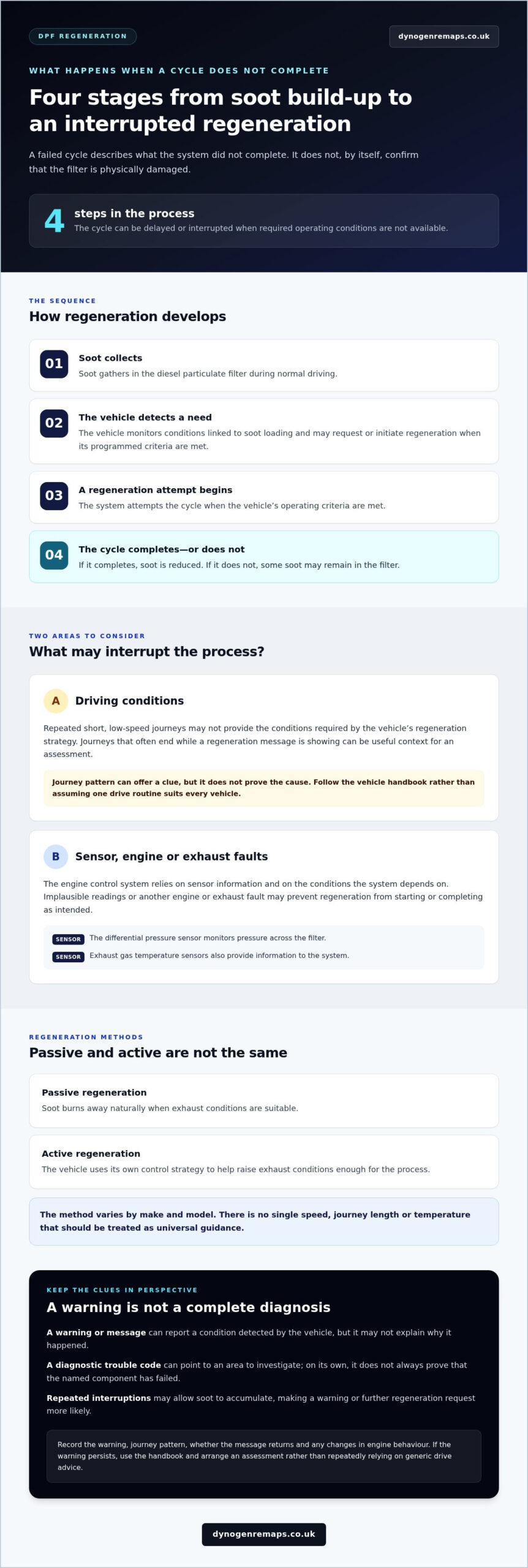
Passive regeneration happens when exhaust conditions are suitable for soot to burn away naturally. Active regeneration is managed by the vehicle, which uses its own control strategy to help raise exhaust conditions enough for the process. The method varies by make and model, so there’s no single speed, journey length or temperature that drivers should treat as universal guidance.
Why a regeneration warning is not a complete diagnosis
A dashboard message reports a condition detected by the vehicle. It doesn’t necessarily explain why it happened. Sensor readings, engine faults or problems elsewhere in the exhaust system can affect regeneration. Check the handbook for the exact meaning of the warning and any vehicle-specific instructions. If the message returns or performance changes, use those details to guide an assessment instead of relying on generic drive-cycle advice.
An unsuccessful cycle describes what the system did not complete, not necessarily which part has failed. Keeping those questions separate helps prevent a warning from being mistaken for a confirmed DPF replacement diagnosis.
How failed DPF regeneration develops and what can interrupt it
Soot collects in the DPF as the engine runs. The vehicle monitors conditions linked to soot loading and may request or initiate regeneration when its programmed criteria are met. If the conditions needed for the cycle aren’t available, regeneration may be delayed or interrupted. Repeated interruptions can allow soot to accumulate, making a warning or further regeneration request more likely. The process is broadly:
- Soot collects in the filter during normal driving.
- The vehicle detects that regeneration is needed.
- It attempts regeneration when its operating criteria are met.
- If the cycle completes, soot is reduced. If it doesn’t, some soot may remain in the filter.
This helps explain why DPF regeneration failure symptoms can be associated with both driving patterns and mechanical faults. A pattern can offer useful diagnostic context, but it doesn’t prove the cause on its own.
Driving patterns that may make regeneration harder
Repeated short, low-speed journeys may not give the exhaust system the conditions required by the vehicle’s regeneration strategy. For example, a car used mainly for brief stop-start trips may have fewer opportunities to complete a cycle than one regularly driven on longer journeys. If journeys often end while a regeneration message is showing, make a note of that for the assessment. It doesn’t mean every driver should take a long drive. Follow the handbook’s guidance for your vehicle.
Faults that can disrupt the regeneration process
Driving conditions aren’t the only factor. The engine control system relies on sensor information, including readings from the differential pressure sensor, which monitors pressure across the filter, and exhaust gas temperature sensors. If a sensor gives implausible readings, or an engine or exhaust fault changes the conditions the system depends on, regeneration may not start or complete as intended.
A diagnostic trouble code can point to an area for investigation, but it needs to be interpreted alongside the vehicle’s symptoms, live readings and service information. A code alone doesn’t always prove that the named component has failed. Note the journey pattern around the warning, whether the message appears repeatedly and any changes in engine behaviour. This helps distinguish a possible interruption linked to use from an issue that needs technical investigation.
If the warning persists, don’t keep repeating generic drive advice. Use the handbook and arrange an assessment. Dynogen provides DPF system support and technical solutions for DPF systems. Software-related work is not a repair for a physically damaged filter.
Which DPF regeneration failure symptoms matter most?
Some signs fit an incomplete regeneration, but they can also arise from faults elsewhere. Look at the pattern: which warning appeared, whether it returned and what changed in how the vehicle runs. No single dashboard warning or driving symptom confirms DPF failure. The handbook explains what your vehicle’s alerts mean, while diagnosis is needed to establish the cause.
| What you notice | What it may indicate | Why it isn’t conclusive |
|---|---|---|
| DPF warning light or message | The system has detected a DPF-related condition or requested attention. | The precise meaning and required response vary by vehicle. |
| Engine management warning | An engine or emissions-system issue may be affecting regeneration. | The warning can relate to faults beyond the DPF. |
| Reduced power | The vehicle may be limiting performance in response to a detected problem. | Engine, fuel or exhaust faults can also reduce power. |
| Limp mode | A detected fault has led the vehicle to restrict performance. | It signals a need to follow the handbook and seek assessment, not confirmed filter failure. |
| Repeated failed-regeneration messages | The cycle may not be completing or the condition prompting it may remain. | Further checks are needed to identify why it’s recurring. |
| Higher fuel use or unusual running | These changes may accompany a regeneration issue or another engine fault. | Neither is specific enough to diagnose a DPF problem alone. |
| Smoke or unusual exhaust smell | A change in exhaust behaviour may warrant attention. | These signs have several possible causes and don’t confirm filter damage. |
Warning lights, reduced power and limp mode
Warning combinations, wording and severity differ between manufacturers, so don’t assume a DPF light and an engine management light mean the same thing. Check the handbook for the exact alert and its instructions. If power is significantly limited or the vehicle enters limp mode, arrange prompt assessment rather than relying on general advice about driving to trigger regeneration.
Symptoms that can point to another underlying fault
Sensor readings, engine-management problems and faults elsewhere in the exhaust can resemble DPF trouble or interfere with regeneration. A rising oil level or unusual engine running also needs professional assessment, not guesswork or a fix based on one symptom. Note when changes began, which warnings appeared and whether they recur. This helps a technician interpret the symptoms alongside diagnostic results.
Use DPF regeneration failure symptoms as a reason to investigate, not as a diagnosis. The combination of alerts, performance changes and diagnostic findings is more useful than any one sign in isolation.
What to do when DPF regeneration keeps failing
Repeated warnings call for a calm, methodical response. Don’t assume another regeneration attempt will solve the problem. If a sensor, engine or exhaust fault is preventing the cycle from completing, repeating the same advice won’t identify or resolve the cause. Focus on finding out why regeneration is failing rather than trying the same steps again.
- Check the handbook. Look up the exact dashboard message and follow the instructions for your make and model. Don’t apply a generic drive cycle if it conflicts with the vehicle’s guidance.
- Record the warning. Note its wording, any other warning lights, when it appeared and whether it returned after a journey.
- Describe your driving pattern. Record recent journeys, including frequent short trips, stop-start driving and whether journeys were interrupted after a regeneration message appeared.
- Arrange diagnostics. If the warning recurs, performance changes or the handbook’s instructions don’t resolve the alert, arrange a professional assessment to investigate the cause.
What information to record before diagnosis
Useful details can make an assessment more focused. Photograph dashboard messages or warning lights when safe to do so, and have the vehicle’s make, model and registration details to hand. Note changes in engine behaviour, such as reduced power or unusual running, and when they began. Include any recent servicing, repairs or work on the engine or exhaust system. Describe what happened rather than trying to diagnose it yourself.
When to stop driving and seek prompt help
Follow urgent warnings in the handbook, and stop somewhere safe if the vehicle feels unsafe to drive. Limp mode, severe power loss or recurring warnings warrant prompt assessment. Whether it’s appropriate to continue driving depends on the specific alert and the vehicle’s condition, so there’s no universal instruction to carry on. If the handbook advises stopping, don’t try to complete a regeneration journey instead.
Avoid repeatedly forcing regeneration without finding out why previous cycles didn’t complete. A forced process may not be suitable if the vehicle has an underlying fault, and repeated attempts can delay diagnosis. Let the warning, vehicle condition and diagnostic findings guide the next step rather than assuming soot is the only issue.
If you’re seeing persistent DPF regeneration failure symptoms, gather these details and arrange an assessment through Dynogen’s DPF service. A cause-led approach establishes what the system is reporting before a technical solution is considered.
How Dynogen approaches persistent DPF regeneration problems
Recurring warnings deserve a considered, technically informed response. A DPF warning or incomplete regeneration doesn’t automatically mean the filter needs replacing, nor does it show that a software-related adjustment is the right answer. The underlying issue needs to be assessed first. It may relate to control or sensor information, engine operation, the exhaust system or the physical condition of the filter.
Dynogen Remapping Solutions provides technical solutions for DPF and EGR systems, drawing on more than 15 years of vehicle-tuning experience. Its DPF service includes diagnostic work and software coding for relevant issues. The appropriate approach depends on the findings: software-related work cannot clean, repair or replace a physically damaged DPF, and it isn’t a guaranteed way to restore regeneration or clear every warning.
Where specialist DPF expertise can fit
After the cause has been investigated, a specialist DPF service may be appropriate for the diagnosed issue. A fault in another component or a damaged filter may need a different remedy. Keeping that distinction clear helps avoid treating a dashboard message as a diagnosis or applying software-related work where a physical repair is needed. For commercial fleets and heavy-duty diesel vehicles, dedicated facilities such as IQ Truck Center provide hands-on diagnostics and emissions system maintenance to resolve underlying mechanical issues. Emissions equipment should remain part of the vehicle’s functioning system; removing or bypassing it isn’t the solution described here.
A clear next step for drivers with recurring symptoms
Before exploring a service, bring together the details that explain the fault’s history. A concise record makes it easier to discuss what has happened without relying on memory or assumptions. Include:
- The exact warning message and any dashboard photographs.
- When the alert appeared, whether it returned and what the vehicle was doing at the time.
- Recent journey patterns, changes in engine behaviour and any recent servicing or repairs.
- Any diagnostic trouble codes or findings already recorded, alongside the symptoms they appeared with.
These details don’t replace assessment, but they help put the symptoms in context. DPF regeneration failure symptoms describe signs that warrant investigation, not proof that a particular component has failed. The right technical route depends on the findings for that vehicle, so avoid assuming every recurring message has the same cause or answer.
Dynogen’s DPF service provides technical support for persistent DPF concerns. The focus is on the assessed issue, distinguishing the physical condition of the filter from software-related considerations while keeping emissions equipment in view.
Explore Dynogen’s DPF solutions to learn more about the technical support available for persistent DPF concerns.
Take a measured next step
Persistent DPF regeneration failure symptoms can leave you weighing up whether to drive, try another regeneration or seek help. Don’t make that decision based on one warning alone. Use the vehicle’s handbook and the information you’ve gathered to decide on a sensible next step. The aim is to understand what the vehicle is reporting, not to guess which component has failed.
Software-related work is not a substitute for repairing a physically damaged filter, and emissions equipment should remain in place. A careful, vehicle-specific assessment keeps the focus on the underlying issue and helps you make an informed decision about what happens next.
Dynogen Remapping Solutions provides DPF and EGR technical services. To discuss a DPF-focused solution, contact Dynogen Remapping Solutions.
A recurring warning can be concerning, but a considered response puts you in a stronger position to move forward.
Frequently Asked Questions
Is it safe to drive with a DPF regeneration warning?
It depends on the exact warning, your vehicle and how it’s behaving. Check the handbook and follow any urgent dashboard instructions. If the vehicle loses significant power, enters limp mode or feels unsafe, stop somewhere safe and arrange an assessment. Don’t assume that carrying on will complete regeneration. Record any changes to the alert or additional warnings, as they may help explain what the vehicle is detecting.
Can a DPF regenerate if I only make short journeys?
It may, but the vehicle needs to reach its own operating conditions for regeneration, and frequent short trips can make that less likely. Short journeys alone don’t prove the filter has failed. Check your handbook rather than trying an arbitrary motorway drive or fixed routine. If you arrange an assessment, describe how the vehicle is typically used, including journey length, stop-start traffic and whether trips are often interrupted.
How do I know if DPF regeneration has failed?
Recurring DPF warnings, repeated regeneration messages or ongoing performance changes can suggest that a cycle hasn’t completed, but they can’t confirm why. DPF regeneration failure symptoms are clues, not a diagnosis. A technician can compare fault codes with sensor readings and the vehicle’s behaviour. Photograph the dashboard alert and note whether it appears under particular conditions, such as after starting or during a journey.
What happens if a DPF regeneration keeps being interrupted?
Repeated interruptions may allow soot to continue building up, although the vehicle’s response and the consequences depend on its system and the underlying cause. For example, journeys ending soon after a regeneration message appears provide useful diagnostic information, but don’t prove that driving habits are the only issue. Avoid repeatedly trying generic regeneration advice. Record when interruptions happen and seek assessment if warnings persist or return.
Can a faulty sensor cause DPF regeneration problems?
Yes. A fault affecting the differential pressure sensor or an exhaust gas temperature sensor may disrupt readings used by the vehicle’s control system. However, a warning or fault code alone doesn’t prove that a sensor needs replacing. Diagnosis should compare relevant codes and sensor data with the symptoms and vehicle behaviour. This helps distinguish a sensor fault from another issue that may produce similar readings or affect regeneration.
Does a DPF warning light always mean the filter needs replacing?
No. A warning tells you the vehicle has detected a condition requiring attention, but it doesn’t confirm physical damage or mean replacement is necessary. Regeneration problems, sensor faults and other engine or exhaust issues can also be involved. Follow the handbook and establish what the diagnostic findings show. Don’t decide on replacement based on the warning light alone, without assessing the filter and related systems.