

A modification that improves your car’s performance or appearance can also affect how your insurer assesses it. The tricky part is knowing what counts and whether to ask before work begins or notify them afterwards. If you’re unsure about declaring modifications to insurance, don’t rely on assumptions. Tell your insurer about changes from the manufacturer’s standard specification and ask how they affect your policy.
It’s understandable to worry that disclosure could increase your premium or change your cover. But being clear with your insurer gives you the chance to understand its terms before you commit to a modification. This guide explains which changes may need to be declared, when to contact your insurer and what details to provide. It also covers how to keep a clear record of the work and the insurer’s response, using ECU remapping as a practical example. A specialist can explain the vehicle work involved, but only your insurer can confirm whether it accepts the change and what that means for your cover.
Key Takeaways
- Check your insurer’s definition of a modification against your vehicle’s original specification rather than relying on guesswork.
- When declaring modifications to insurance, review your policy and contact your insurer before planned work where possible.
- Give precise details, including what changed, when the work was or will be completed, and who carried it out.
- Ask the insurer to confirm its decision and any policy implications in writing, then keep that response with your paperwork.
- If you’re considering an ECU remap, ask the specialist for an accurate description of the work to share with your insurer.
What counts as a car modification for insurance purposes?
If you’re unsure whether a change counts, check with your insurer rather than guessing. Insurers may use different definitions and policy wording, so describe the specific work and ask how your policy treats it.
A car modification for insurance purposes is generally a change that takes the vehicle away from its original manufacturer’s specification, but the insurer’s policy wording determines what you need to disclose. This could include changes to performance, appearance, handling or equipment. For a broad overview of engine, suspension and body changes, see What counts as a car modification. Treat that as general information, then check your insurer’s requirements.
Examples to ask about include an ECU remap, altered suspension, non-standard wheels, bodywork changes and aftermarket audio equipment. Some changes may seem minor, but don’t assume they’re irrelevant. The practical question is whether the vehicle differs from the specification your insurer has recorded.
Factory-fitted equipment and changes made later aren’t always treated alike. An option installed by the manufacturer before delivery may form part of the vehicle’s specification, while an aftermarket upgrade could be viewed as a modification. Insurers may also ask about optional extras. If you’re uncertain, describe the item and ask for a clear answer.
Do ECU remaps count as modifications for insurance?
An ECU remap changes software settings that control how the engine operates, so tell your insurer and let it assess the change. Explain that the vehicle has been remapped and share an accurate description of the work. The insurer decides whether it will accept the modification and on what terms. A remapping provider can explain the technical work, but can’t confirm your cover. For background on the process, read this Stage 1 remapping guide.
Which other vehicle changes should you mention?
Ask your insurer about changes such as engine or performance upgrades, exhaust alterations, suspension changes, different wheels or tyres, body kits, spoilers, paint or trim changes, audio equipment and accessibility adaptations. This isn’t a universal list. Policy definitions vary, and the insurer decides what it needs to know.
A repair that restores a damaged part to its previous specification may be different from an upgrade, but check your policy before relying on that distinction. If a replacement part changes the vehicle’s specification, or you’re unsure whether the change needs to be disclosed, describe it to your insurer and ask whether it must be recorded.
When and how should you declare modifications to insurance?
For planned work, contact your insurer before it begins wherever possible. This gives the insurer a chance to assess the proposed change and explain its decision before you proceed. If a change happens unexpectedly, get in touch promptly. The process can vary by policy, so use the contact method and follow the timescales stated by your insurer.
Use this practical sequence when declaring modifications to insurance:
- Review your policy. Check its modification wording and how it asks you to report changes.
- Contact your insurer. Use the stated channel, such as its online account, phone line or email address. Explain whether the work is planned or already complete.
- Provide clear details. Give your vehicle registration, a precise description of the change and the work date or intended date.
- Confirm the outcome. Ask whether the insurer accepts the change and whether it affects your policy, terms or premium. Don’t treat silence or an informal assumption as confirmation.
- Retain the records. Save the insurer’s response and any updated policy documents with the paperwork for the work.
Insurer notification is separate from any DVLA requirement. GOV.UK explains the process for declaring structural modifications to a vehicle. Check whether that guidance applies to your change, and don’t assume that contacting the DVLA also informs your insurer.
What information will an insurer need?
Prepare the vehicle’s make, model and registration, then describe exactly what is being changed. Include when the work was or will be carried out, who will do it, and any available invoice, installation details or technical specification. Be specific rather than relying on broad terms such as “upgrade”. If a tuning provider carries out an ECU remap, ask for an accurate description of the work. Don’t assume the provider will notify your insurer on your behalf.
How should you record the insurer’s response?
Keep dated emails, policy documents, call notes and any revised schedule or endorsement. For a phone conversation, note the date, the name or reference of the person you spoke to if provided, and what they said. Ask for the insurer’s decision in writing. This gives you a clearer record of its position than an informal conversation or assumption.
If you’re arranging a remap, a specialist can provide details about the vehicle work for you to pass to your insurer. You can find out about ECU remapping, then confirm the policy implications directly with your insurer.
Could declaring modifications affect your car insurance cover?
It can, but the outcome depends on your insurer, its underwriting rules and your policy terms. Declaring a change doesn’t guarantee that the insurer will accept it, keep your policy unchanged or offer a particular outcome. It gives the insurer the information it needs to assess the vehicle and explain its decision.
Disclosure tells your insurer about a modification. It does not mean the insurer has approved it. Ask for a clear explanation of any decision and check what it means for your cover before relying on the policy. Don’t assume that an unchanged premium or a brief acknowledgement means the modification has been formally accepted.
What can an insurer decide after you declare a change?
After reviewing the details, an insurer may accept the modification, offer cover on revised terms or decide it can’t continue to insure the vehicle. It may also ask for more information before reaching a decision. These are possible responses, not a prediction of what will happen in your case. The available options and consequences depend on the insurer and policy.
If the response is unclear, ask the insurer to explain its reasoning, any changes to your policy and when they take effect. Request written confirmation, and read any revised policy schedule or endorsement carefully. If you’re considering work, getting the insurer’s position beforehand helps you make an informed decision about the next step.
What if you have already made a change without telling the insurer?
Contact your insurer promptly. Don’t wait until renewal or until you need to make a claim. Explain what changed, when it happened and any relevant details about the work. The insurer will assess the circumstances under the policy and applicable rules, so the result depends on its decision.
Keep a record of what you disclose and the insurer’s response. If you disagree with its decision, ask for the reasons and follow the insurer’s formal complaints process. You can also check the Financial Ombudsman Service for independent information about complaints and how it may consider a complaint about an insurer. Check its current guidance and whether it applies to your circumstances.
Being upfront gives the insurer the opportunity to assess the modification on the facts. It can’t guarantee a particular decision, but it’s more reliable than assuming the change won’t matter.
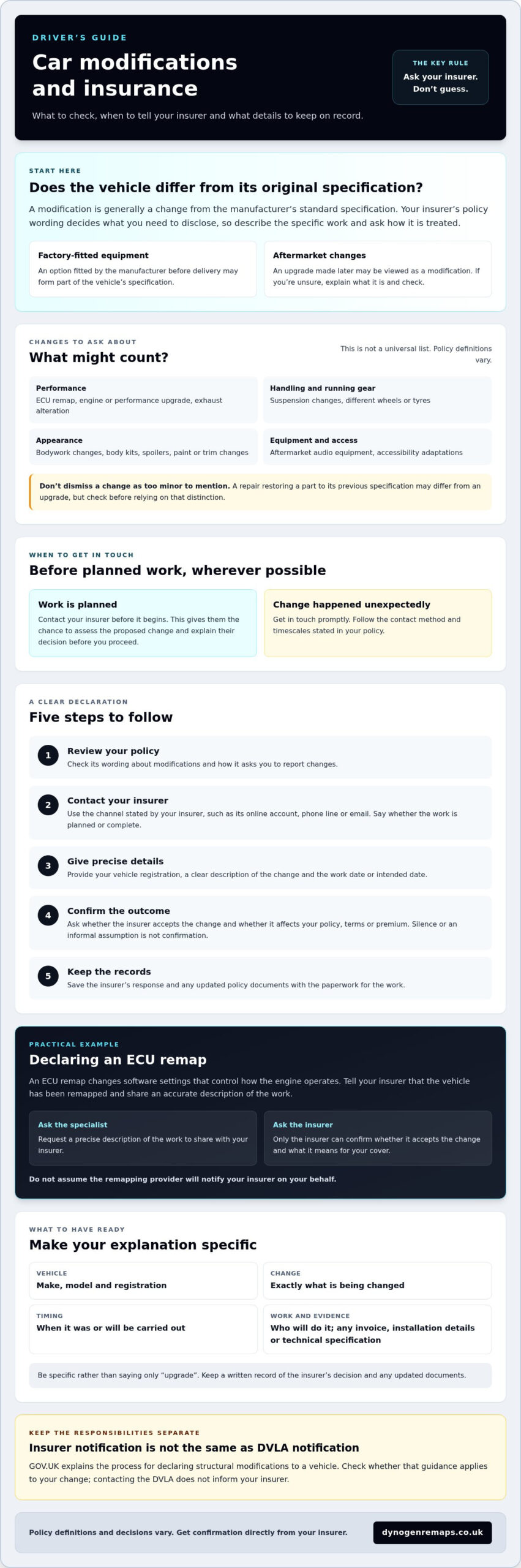
How to declare a modification: a practical checklist for drivers
A prepared declaration makes it easier for your insurer to assess proposed or completed work accurately. Use this checklist before contacting the insurer, then keep the response with your vehicle records. The insurer’s instructions and policy wording take priority, so check what it requires rather than assuming one process applies everywhere.
Before the work: prepare the declaration
For planned work, ask your insurer whether it needs to be notified before the modification is carried out. Read your policy documents first and use the insurer’s preferred contact method. Gather the details below so you can describe the change precisely, including any technical information the insurer requests.
- Vehicle details: make, model and registration.
- Modification: what will change, including relevant parts, software or specifications.
- Timing: the planned work date, or the date the change was completed.
- Installer details: who will carry out or has carried out the work.
- Supporting paperwork: quotes, invoices, installation information, photographs or technical documents, where available.
Be clear if a detail is not yet known. Ask what further information the insurer needs and whether it can assess the proposed work before you proceed.
After the work: confirm the policy record
If you initially described planned work, send any requested completion details once it’s done. If the finished work differs from what you declared, explain what changed. Save your message and the insurer’s written response, then check whether it will issue an updated policy schedule or another document recording the modification.
- Check any revised documents for accurate vehicle and modification details.
- If you haven’t received confirmation, follow up through the insurer’s stated channel and ask it to confirm its decision in writing.
- Keep a note of follow-up dates and any reference number provided.
- Repeat the declaration process if later work changes the vehicle specification again.
Don’t treat a sent message as confirmation that the change has been accepted. If the response is delayed or unclear, contact the insurer again and ask what you should do while you wait. Clear records help you track what you disclosed and the insurer’s reply.
Planning an ECU remap? Explore ECU remapping options, then share the relevant work details with your insurer for its assessment.
Declaring an ECU Remap: What to Tell Your Insurer
An ECU remap changes the software settings used by the engine management system, which can alter how the engine responds. Tell your insurer about the remap so it can assess the change under your policy. Describing it as an “ECU engine remap” is clearer than using a general term such as “tuning”.
For further technical context, read the Stage 1 remapping guide linked above. It can help you understand the work, but your insurer decides whether it accepts the change and what policy terms apply.
What remap details should you give the insurer?
Give a precise account of what was done rather than relying on a broad label or a generic performance figure. Useful details include:
- Confirmation that the ECU has been remapped.
- The date the work was completed, or the planned date if it hasn’t happened yet.
- The remapping provider’s details.
- A clear description or record of the calibration or work carried out, if available.
- Vehicle-specific technical information requested by your insurer.
If you don’t know the technical description, ask the specialist who carried out the work for an accurate record. A stated power gain on its own may not explain the full change, and a generic figure shouldn’t replace details specific to your vehicle and remap. Share what you can verify, then ask the insurer what else it needs.
What to check before arranging a remap
Where practicable, contact your insurer before booking the work. Explain what is planned and ask whether it can provide a decision in advance, what information it needs, and whether revised policy terms or documents would apply after completion. If you proceed, notify the insurer of the completed work as requested and keep its response with the remap paperwork.
Careful declaring modifications to insurance means giving your insurer accurate information and checking its answer, rather than assuming a particular remap will be accepted. A specialist remapping provider can explain the work performed, but it can’t approve the change on the insurer’s behalf.
If you’re considering a Stage 1 Performance Remap, discuss the vehicle work with a remapping specialist and confirm the insurance implications directly with your insurer before proceeding.
Make your next vehicle change with confidence
Clear, timely disclosure is the foundation of declaring modifications to insurance. Check your policy, tell your insurer about planned changes before work begins where possible, and provide accurate details so it can assess the modification. Keep its response and any updated policy documents with your vehicle paperwork.
An ECU remap is no exception. Ask the specialist for a precise description of the work, then confirm its implications directly with your insurer. Disclosure doesn’t guarantee acceptance or unchanged cover, so rely on the insurer’s written decision rather than assumptions.
Dynogen Remapping Solutions has over 15 years of experience and offers Stage 1 Performance Remaps. If you’re considering a remap, explore the work involved and prepare questions for your insurer. Explore Dynogen’s Stage 1 Performance Remap.
Frequently Asked Questions
Do I have to declare modifications to my car insurance?
Tell your insurer about changes to your vehicle and ask how they affect your policy. Insurers’ definitions and requirements can vary, so don’t assume a change is too small to matter or rely on another driver’s experience. Check your policy wording and use the contact method it specifies. Keep the insurer’s response with your policy documents, especially if it confirms how a particular modification is treated.
Is an ECU remap a modification for insurance?
An ECU remap changes the software controlling engine operation, so tell your insurer and let it assess the change. Don’t assume a remap is exempt because no physical part has been added. Provide accurate details about the vehicle and work, including the completion date and a clear description from the remapping specialist if available. Ask the insurer to confirm its decision and any policy implications in writing.
When should I tell my insurer about a modification?
If you’re planning work, contact your insurer beforehand where possible and ask whether it needs to know before the change is made. If the modification has already happened, get in touch promptly rather than waiting until renewal. Follow the insurer’s instructions about what information to provide and when. Keep any written confirmation, updated policy schedule or endorsement with your vehicle and insurance documents.
What happens if I do not declare a car modification?
The outcome depends on the policy, the change and the circumstances, so don’t assume one result applies to every case. An insurer may review the information when considering a policy issue or claim. If you’ve forgotten to disclose a change, contact the insurer as soon as possible, explain accurately what happened and ask for its decision. Keep a record of the conversation and any written follow-up.
Can an insurer refuse to cover a modified car?
An insurer may decide it can’t offer cover for a particular modification or may set different policy terms. Its decision depends on its underwriting rules and the specific vehicle and change. Ask your insurer before arranging the work where possible. If it won’t cover the modification, clarify whether it can suggest another option and request its decision in writing so you have a clear record.
Does declaring a modification always increase your insurance premium?
No, there’s no reliable universal answer. Your insurer assesses the specific change under its own rules and may respond in different ways, including changing policy terms or declining cover. Contact it with accurate vehicle and modification details to get a policy-specific answer. Online estimates and another driver’s experience can’t predict your outcome, so ask the insurer directly and keep a written record of its response.
Do I need to declare factory-fitted options or accessories?
Check with your insurer if you’re unsure. Policy wording may distinguish factory-fitted equipment from changes made after manufacture, but insurers can assess vehicle details differently. Ask whether a particular option, accessory or later installation needs to be recorded on your policy. Have the vehicle specification and any relevant purchase or installation paperwork ready, then keep the insurer’s answer with your policy documents for future reference.