
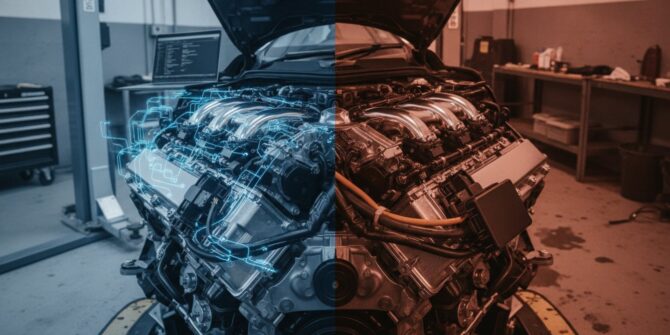
The “plug-and-play” convenience of a hardware module might seem like the safest route for your engine, but it’s often the most deceptive path to performance. You want more power, yet the fear of a “cheap” upgrade triggering limp mode or clogging your DPF is enough to stall any project. It’s understandably frustrating when price tags for a performance boost vary by hundreds of pounds without a clear explanation of what’s actually happening under your bonnet. You shouldn’t have to gamble with your vehicle’s longevity just to enjoy a more responsive drive.
This guide reveals the technical truth behind the remap vs tuning box debate, helping you identify which solution provides the safest, most substantial power gains for your specific vehicle in 2026. We’ll examine how these technologies interact with your engine control unit and why one choice offers a sophisticated, holistic upgrade whilst the other merely manipulates sensor data. By the end, you’ll have the confidence to secure maximum BHP and torque gains without compromising your MOT emissions status or your engine’s mechanical integrity.
Key Takeaways
- Understand why ECU remapping provides a holistic software overhaul whilst a tuning box merely intercepts sensor signals to “trick” the engine.
- Compare the technical mechanics of a remap vs tuning box to see why custom software calibration delivers more refined power than simple hardware manipulation.
- Discover why professional remapping ensures smoother throttle response and protects your DPF from the soot buildup often caused by generic tuning modules.
- Learn the truth about warranty and resale value, including why modern dealership diagnostics can often detect “removable” hardware boxes.
- Identify why a Stage 1 Performance Remap serves as the ultimate engineering solution for those seeking maximum BHP without compromising vehicle reliability.
Understanding the Fundamental Differences: Remap vs Tuning Box
Selecting between a remap vs tuning box represents the most critical decision you’ll make when pursuing enhanced vehicle performance. It’s the choice between a surgical software recalibration and a physical component that modifies sensor output. Understanding Engine tuning is essential because the two methods operate on entirely different mechanical philosophies. Whilst both aim for the same result, the way they interact with your vehicle’s Engine Control Unit (ECU) dictates the quality, safety, and longevity of the power gains. For most drivers, Stage 1 performance serves as the benchmark for this comparison, representing the first level of meaningful enhancement without requiring physical engine modifications.
What is a Stage 1 Remap?
A Stage 1 remap involves a direct overwrite of the factory software stored within the engine’s “brain”. Experts access the ECU to adjust parameters that manufacturers often restrict for marketing or global emissions reasons. Because this process modifies the source code, there’s no need for additional hardware in the engine bay. This approach is widely regarded as the gold standard for improving car drivability through remapping. It offers a level of precision that hardware simply cannot match. It’s a clean, invisible, and sophisticated upgrade that optimises how the engine breathes and burns fuel.
What is a Tuning Box?
A tuning box is an external “piggyback” device that physically plugs into the engine’s wiring loom. It doesn’t change the ECU software. Instead, it sits between the engine’s sensors and the ECU, intercepting signals related to fuel rail pressure or turbo boost. The box alters these signals to “trick” the ECU into demanding more performance than the factory settings would usually allow. For many UK car owners, the appeal lies in the straightforward installation. You simply connect the box to specific sensors under the bonnet. However, because the ECU is receiving false data, it remains unaware of the actual stresses being placed on the mechanical components. When evaluating a remap vs tuning box, this fundamental difference in how they communicate with the engine is what determines the ultimate refinement of your drive.
The Technical Mechanics: Software Calibration vs Sensor Manipulation
A fundamental understanding of how your engine processes information reveals the stark reality of the remap vs tuning box debate. A tuning box operates through deception; it intercepts the signal from the fuel rail pressure sensor and modifies it before it reaches the Engine Control Unit. By reporting a lower-than-actual pressure, the box forces the ECU to increase fuel delivery to compensate for the perceived deficit. This singular method of manipulation is crude compared to a professional remap. ECU remapping involves the simultaneous adjustment of hundreds of internal maps, including ignition timing, turbo boost pressure, and fuel injection duration, ensuring every variable remains in perfect harmony. This holistic approach is why remapping delivers a linear, factory-feel power curve that feels like a natural extension of the engine’s original design.
Closed-loop control is the ECU’s sophisticated ability to monitor real-time combustion data and adjust inputs to maintain safety and efficiency, a vital feedback loop that external hardware boxes inevitably disrupt by providing fraudulent sensor data. When this loop is broken, the engine’s primary computer can no longer accurately protect the mechanical components from heat or stress. For those prioritising longevity, choosing safe engine tuning in the UK ensures these critical feedback systems remain fully operational whilst delivering the performance you crave.
Why ECU Architecture Matters
Modern ECU architecture is built upon a complex web of torque limiters designed to protect the drivetrain. When a tuning box forces more fuel into the cylinders, the engine produces more torque than the ECU expects, often causing a conflict with these internal limiters. This discrepancy is the most common reason why “boxed” vehicles suddenly enter limp mode during heavy acceleration. A professional Stage 1 remap avoids this by recalibrating the torque limiters in line with the new performance parameters. You can explore this further in our ultimate guide to stage 1 performance remapping. By maintaining factory safety protocols, we ensure the engine operates within its mechanical tolerances whilst unlocking its true potential.
The Problem with Intercepting Signals
Signal interception introduces a microscopic but significant “lag” in data processing. At 4,000 RPM, your engine’s pistons are moving at incredible speeds, and even a millisecond of delay in sensor manipulation can lead to imprecise fuelling. This often results in over-fuelling, where excess diesel or petrol is injected but not fully combusted. Such inefficiency leads to increased exhaust gas temperatures and potential damage to internal components. Adhering to established Conversion and Tampering Regulations highlights the importance of maintaining emissions standards and engine safety. If you want a solution that respects your engine’s engineering, a custom Stage 1 Performance Remap is the only way to achieve precision-engineered results.
Performance, Reliability, and Safety: A Direct Comparison
Evaluating the real-world results of a remap vs tuning box reveals a stark contrast in performance quality and engine harmony. A professional remap typically achieves higher BHP and torque peaks that remain stable throughout the rev range, providing a consistent surge of power. In contrast, tuning boxes often produce unpredictable power spikes because they rely on manipulating a limited number of sensor inputs. This lack of data granularity frequently leads to a “jerky” driving experience, particularly during partial throttle applications where the box struggles to calibrate the intercepted signal in real-time. Custom software provides a much smoother transition, ensuring that the extra performance feels like a factory-fitted enhancement rather than an unstable add-on.
Power Delivery and Drivability
A primary goal for any enthusiast is to increase engine torque and power without sacrificing the vehicle’s original character. Remapping achieves this by optimising the turbocharger’s wastegate duty cycle and ignition timing, which significantly reduces turbo lag and sharpens throttle response. Tuning boxes generally only activate under specific load or RPM conditions, creating a “step” in power delivery that can be unsettling amongst corners or whilst overtaking. By recalibrating the entire map, we ensure the torque curve is broadened, providing effortless pull from lower down the rev range whilst maintaining a refined feel at cruising speeds.
Long-Term Reliability and Component Stress
Reliability hinges on how well the tuning solution manages thermal and mechanical stress. Professional remapping allows for precise control over Exhaust Gas Temperatures (EGT), preventing the excessive heat that often leads to turbocharger failure or cracked manifolds. An academic analysis of ECU remapping techniques confirms that direct software modification is superior for maintaining engine health compared to external hardware that bypasses safety limiters. Tuning boxes frequently cause premature wear on fuel injectors and high-pressure pumps by forcing them to operate at the absolute limit of their design. You can explore the wider benefits of ECU remapping to see how custom-calibrated software protects your engine by operating within safe, tested parameters. This approach also extends to fuel economy; whilst boxes can improve MPG by leaning out the mixture dangerously, a remap achieves efficiency through optimised combustion timing, making it the safer choice for both petrol and diesel engines.

Decision Factors: Warranty, Resale Value, and DPF Compatibility
The common belief that a tuning box is “invisible” once removed is a legacy myth that no longer holds weight in 2026. Modern Engine Control Units are sophisticated enough to log “shadow data” or “freeze frame” records when sensor values exceed factory parameters. Even if the physical hardware is disconnected before a service, a dealership technician can often identify that the fuel rail pressure or boost levels have previously operated outside of standard tolerances. This can lead to a “TD1” warranty flag, potentially voiding your powertrain cover. In the remap vs tuning box debate, transparency is always the better policy for long-term vehicle ownership. This caution also applies to other automotive tools; for instance, when using a device from MileageBlocker.com for off-road testing, users should be aware of how modern ECUs track and store operational data.
Resale value also hinges on the quality of the modifications performed. A vehicle that has been subjected to the crude sensor manipulation of a cheap hardware box may show signs of premature wear that savvy buyers will notice. Conversely, a professionally calibrated remap is often viewed as a high-value enhancement, provided it was carried out by a specialist with a some proven track record. It suggests a level of care and investment in the vehicle’s mechanical integrity that a plug-in module simply cannot match.
Tuning boxes typically increase fuel delivery without a corresponding adjustment to the air intake or injection timing. This imbalance creates a “rich” combustion cycle, which produces significantly more soot and particulate matter. Consequently, the Diesel Particulate Filter (DPF) must perform regenerations much more frequently, which places immense strain on the exhaust system and can eventually lead to a total blockage. A professional remap maintains the optimal air-to-fuel ratio, ensuring that combustion remains clean and efficient. Because we specialise in DPF and EGR software solutions, our calibrations are designed to keep these vital emissions systems healthy whilst still delivering a substantial performance boost.
Insurance and Legalities in the UK
UK insurers require the declaration of all engine modifications, regardless of whether they are software-based or physical hardware. Failing to disclose a performance upgrade can entirely void your policy in the event of a claim. Many specialist insurance providers actually prefer a custom remap because it represents a controlled, predictable change to the vehicle’s behaviour. During a formal inspection, an assessor can easily verify a remap via the ECU flash counter, whereas a tuning box leaves a trail of “out of range” error logs that are difficult to explain away. Before proceeding with any upgrade, owners should consider this checklist:
- Verify if your dealership uses ODIS or similar systems to detect ECU flash counters.
- Check if your insurer has a specific policy regarding software versus hardware modifications.
- Assess the current soot loading of your DPF to ensure it can handle increased performance.
- Confirm that your chosen tuner provides a backup of your original factory file for future restoration.
If you are looking for a precision-engineered solution that respects your vehicle’s safety limiters and emissions hardware, our Stage 1 Performance Remap offers the most reliable path to increased power.
Why a Professional Stage 1 Remap is the Superior Engineering Solution
When we weigh the technical merits of a remap vs tuning box, the conclusion amongst engineering specialists is unanimous. A professional Stage 1 remap represents the pinnacle of vehicle optimisation because it grants the tuner total control over the engine’s operational behaviour. Unlike a hardware interceptor that merely “tricks” the system, a remap adjusts the fundamental logic of the ECU. This allows for a level of refinement that hardware boxes simply cannot replicate. With over 15 years of industry experience, Dynogen Remapping Solutions ensures that every software adjustment is tailored to the specific mechanical health and tolerances of your vehicle.
A common misconception suggests that hardware boxes are superior for leased vehicles because they are removable. However, a professional remap is equally reversible. We maintain a secure database of original factory files, allowing us to restore your vehicle to its “stock” settings in minutes. This is particularly beneficial for resale or when returning a vehicle to a main dealer for scheduled maintenance. The process is clean, efficient, and leaves no physical trace in the engine bay, unlike the tell-tale cable ties and mounting brackets often associated with external modules.
The Custom-Calibration Advantage
No two engines are identical, even if they share the same production line. Wear patterns, fuel quality history, and component tolerances vary between vehicles. A “one-size-fits-all” tuning box ignores these nuances, whereas custom-calibrated software respects them. By utilising expert performance software, we can account for these variables, ensuring the power delivery is both potent and safe. This professional installation provides a peace of mind that a DIY hardware module cannot offer, as every parameter is monitored during the writing process to prevent anomalous behaviour.
Making the Right Choice for Your Vehicle
For the driver seeking a genuine transformation in responsiveness and power, the choice is clear. A remap is the superior engineering solution for performance and longevity. Tuning boxes should only be considered for a very narrow range of “no-write” ECUs where software access is currently impossible. Before committing your budget to any upgrade, we encourage you to consult with a seasoned specialist who can provide a diagnostic assessment of your engine’s current state. Contact Dynogen Remaps today for a custom Stage 1 quotation and discover the true potential of your vehicle. Our commitment to technical excellence ensures that your vehicle receives a bespoke solution that enhances every mile of your driving experience.
Secure Your Vehicle’s Performance Future
Choosing between a remap vs tuning box represents the final step in your journey toward a more responsive and capable vehicle. Whilst hardware boxes offer a temporary and often crude boost by manipulating sensors, a professional remap provides a sophisticated, software-driven transformation that respects your engine’s mechanical safety limiters. You now understand how custom calibration protects vital components like the DPF whilst delivering the smooth, linear power that makes every journey truly aspirational.
At Dynogen Remapping Solutions, we combine over 15 years of industry expertise with advanced diagnostic and remapping equipment to ensure your upgrade is flawless. We specialise in bespoke performance and efficiency software that unlocks your engine’s true potential without compromising its long-term health. It’s time to move beyond the limitations of generic hardware and experience the precision that comes from expert workmanship.
Get a custom Stage 1 Remap quote for your vehicle today and take the first step towards a superior driving experience. Your vehicle deserves the care of a seasoned specialist who prioritises results as much as you do.
Frequently Asked Questions
Is a tuning box safer than a remap because it can be removed?
Physical removability does not guarantee mechanical safety during vehicle operation. Tuning boxes operate by intercepting and falsifying sensor data, which can inadvertently bypass critical engine protection protocols stored in the ECU. A professional remap is inherently safer because it adjusts the engine’s “brain” directly whilst respecting all factory safety limiters. This holistic approach ensures that the performance increase remains within the mechanical tolerances of your specific engine.
Will a remap or a tuning box void my car warranty?
Both modifications can potentially void your manufacturer’s warranty if they are identified during a service or repair. Dealerships use sophisticated diagnostic tools to look for any signs of engine modification or data that exceeds factory parameters. Whilst a tuning box is physically removable, the ECU often logs anomalous data that reveals its prior presence. A professional remap is a software-based change that offers superior refinement but remains a detectable modification to the vehicle’s original state.
Can a tuning box cause DPF problems in diesel cars?
Tuning boxes are a common cause of DPF issues because they typically increase fuel pressure without adjusting the corresponding air intake. This imbalance leads to a rich fuel mixture and increased soot production, which quickly saturates the Diesel Particulate Filter. A professional remap maintains an optimal air-to-fuel ratio across the entire rev range. Our expertise in DPF solutions ensures that your performance gains don’t come at the cost of exhaust system reliability.
Which is more expensive: a remap or a tuning box?
A professional Stage 1 remap generally offers better value than a high-end tuning box when you consider the quality of the results. Physical hardware modules require manufacturing and shipping, which can drive up the cost of a generic solution. In contrast, remapping fees cover the bespoke application of custom-calibrated software to your specific vehicle. You are investing in a specialist’s technical expertise rather than a physical device with limited functionality.
Are tuning boxes detectable by car dealerships after removal?
Modern car dealerships can often detect that a tuning box was used even after the physical device is removed. The ECU stores “freeze frame” data and shadow logs when it detects sensor readings that fall outside of expected factory tolerances. These digital footprints serve as evidence of modification during a deep diagnostic scan. Whilst a remap also changes the ECU software, it provides a much more integrated and refined solution than the crude signal manipulation of a hardware module.
Can I move my tuning box to another car in the future?
Moving a tuning box to another vehicle is only possible if the new car shares the identical engine, sensor types, and wiring harness. Most hardware modules are calibrated for specific fuel rail and boost sensor architectures. Attempting to fit a box to an incompatible vehicle can lead to immediate engine damage or persistent limp mode issues. A custom remap is a superior, dedicated solution because it is precisely written for the unique software version of your specific ECU.
Does a remap provide better fuel economy than a tuning box?
A professional remap provides more consistent fuel economy improvements by optimising the entire combustion process for efficiency. Whilst some tuning boxes claim to improve MPG by leaning out the fuel mixture, this often risks engine health by increasing combustion temperatures. Our Economy Remap focuses on increasing low-end torque, which allows the driver to utilise higher gears more effectively. This methodical approach ensures a genuine reduction in fuel consumption without compromising the vehicle’s mechanical integrity.
Which offers the best BHP and torque gains for a Stage 1 upgrade?
A Stage 1 Performance Remap consistently provides the highest and most stable BHP and torque gains for your vehicle. In the remap vs tuning box debate, software tuning wins because it allows for the simultaneous adjustment of boost pressure, fuel injection, and ignition timing. This creates a smooth, linear power delivery that hardware boxes cannot match. Tuning boxes are restricted by their inability to modify torque limiters, which often results in less impressive peak performance.